







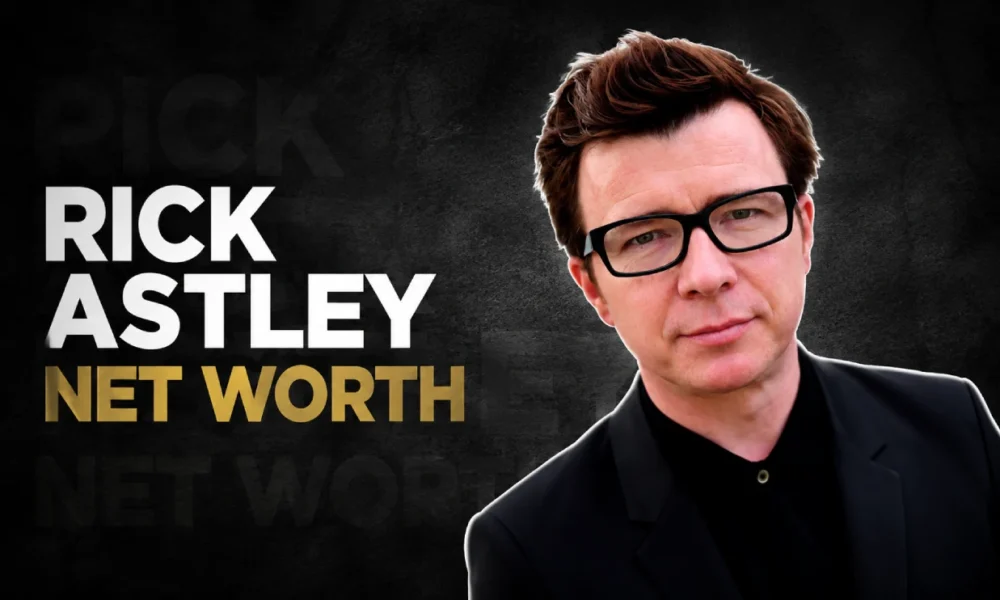
Rick Astley has an estimated net worth of $16 million as of 2026. That number tells two very different stories: one about a 21-year-old from a small English town who became a global pop star overnight, and another about a 40-year-old who stumbled into internet immortality through no effort of his own. Today, his income comes from a mix of touring, streaming royalties, YouTube ad revenue, and business investments — a financial structure built across three distinct decades.
Table Of Content
- Quick Overview: Rick Astley’s Net Worth at a Glance
- How Rick Astley Makes His Money
- From Newton-le-Willows to Global Superstardom
- The Burnout: Why He Retired at 27
- The Rickrolling Effect: How a Meme Changed Everything
- Rick Astley’s Career Earnings Timeline
- The Copyright Question: What He Owns vs. What He Earns
- Protecting His Brand: The Yung Gravy Lawsuit
- Rick Astley’s Assets and Lifestyle
- Rick Astley vs. His 80s Peers
- How Gen Z Found Rick Astley
- What Is Rick Astley Doing Now?
- FAQs
- Conclusion
Quick Overview: Rick Astley’s Net Worth at a Glance
| Category | Detail |
|---|---|
| Estimated Net Worth | $16 million |
| Age | 59 (born February 6, 1966) |
| Primary Income Sources | Touring, streaming royalties, YouTube ad revenue, business investments |
| Famous For | “Never Gonna Give You Up” (1987), Rickrolling meme |
| Annual Earnings | Estimated $1 million+ |
| Total Records Sold | ~40 million worldwide |
| YouTube Views | 1.6 billion+ on “Never Gonna Give You Up” |
| Spotify Milestone | 1 billion streams (June 2025) |
| Copyright Ownership | No — receives performer’s share only; song owned by Stock Aitken Waterman |
| Residence | Surrey, England |
How Rick Astley Makes His Money
Astley’s current income is more diversified than most people assume. He isn’t living off a single hit — he has built multiple revenue streams that, taken together, generate over $1 million per year.
Live Performances and Touring
Touring is where Astley earns the most today. Festival headlining appearances reportedly command over $200,000 per show, while regular festival bookings range from $50,000 to $100,000. He performs 20 or more shows annually across Europe, putting his touring income at roughly $800,000 to $1.2 million per year.
His 2023 co-headlining tour with British band Blossoms was a commercial success, netting him over $1 million from that run alone. That same year, his Glastonbury headline slot was one of the most-watched festival performances of the year — a statement that he is not a nostalgia act coasting on a single hit. His live shows blend classic hits with unexpected covers of artists like The Smiths and Foo Fighters, which broadens his appeal well beyond the 1980s fanbase.
Streaming Royalties
In June 2025, “Never Gonna Give You Up” crossed 1 billion streams on Spotify, placing Astley among a small group of 1980s artists to reach that milestone. Streaming royalties from Spotify, Apple Music, Amazon Music, and other platforms contribute an estimated $150,000 to $200,000 per year.
His post-comeback albums have added to this stream. 50 (2016) debuted at number one on the UK Albums Chart. Beautiful Life (2018) charted strongly. Are We There Yet? (2023) reached number two in the UK. Each release reinvigorates interest in his entire catalog, creating a compounding effect on streaming income.
YouTube Ad Revenue
The “Never Gonna Give You Up” music video has accumulated over 1.6 billion views on YouTube, driven almost entirely by the Rickrolling phenomenon. Based on standard CPM estimates, the video has generated approximately $2 million in ad revenue over its lifetime. Since Astley does not hold full copyright, his personal share reflects only his performer’s portion — but even that represents a steady, largely passive income stream estimated at $100,000 to $150,000 per year.
Album Sales
Astley’s debut album, Whenever You Need Somebody (1987), sold over 15 million copies worldwide. Across his career, total album and single sales stand at roughly 40 million units. Historical album sales continue to generate residual royalty income, estimated at $50,000 to $100,000 annually — a figure that has declined with the shift to streaming but never fully disappeared.
Business Ventures
Astley has been linked to Mikkeller Bar, a craft beer establishment in London’s Shoreditch neighbourhood. The precise nature of his financial involvement — whether as a direct co-owner, a brand partner, or a minority investor — is not entirely clear from public records.
This ambiguity is not unusual for Mikkeller locations. The Danish brewery’s global expansion has relied on complex partnership structures, often involving local LLCs and non-disclosure agreements. In the case of Mikkeller’s New York City operation at Citi Field, for example, ownership is divided among 14 individuals through multiple LLCs, with founder Mikkel Borg Bjergsø retaining intellectual property control and approval rights rather than direct financial ownership. Whether Astley’s London involvement follows a similar model or something more straightforward has not been publicly detailed.
Regardless of the specifics, the investment diversifies his income beyond music — and Astley’s known enthusiasm for real ale makes it a natural fit. He has also built a professional home studio, which allows him to self-produce albums and retain 100% of production profits rather than paying outside producers.
Social Media and Digital Presence
Astley maintains an active presence across YouTube, Instagram, and TikTok with a combined audience exceeding 5.4 million followers. Estimated earnings from these platforms — including YouTube partner revenue, sponsorships, and brand deals — total roughly $1.2 million to $1.6 million per year, based on publicly available influencer earnings models. This figure overlaps with the touring and streaming estimates above but reflects the broader digital ecosystem he has built.
Income Summary
| Income Source | Annual Earnings | Estimated Total Contribution |
|---|---|---|
| Live Performances and Tours | $800,000 – $1.2 million | ~$8 million |
| Streaming Royalties | $150,000 – $200,000 | ~$3 million |
| YouTube Ad Revenue | $100,000 – $150,000 | ~$2 million |
| Album Sales (Historical) | $50,000 – $100,000 | ~$2.5 million |
| Business Investments | $75,000 – $125,000 | ~$500,000 |
| Total Net Worth | $16 million |
From Newton-le-Willows to Global Superstardom
Early Life
Richard Paul Astley was born on February 6, 1966, in Newton-le-Willows, Lancashire — the fourth child of Horace and Cynthia Astley. His parents divorced when he was five, and he was raised by his father. The childhood was turbulent. Astley has spoken openly about witnessing domestic violence, describing it as something that “broke” a part of him and shaped much of his later life — including his drive to perform and seek attention through music.
At 10, he began singing in a local church choir. During his school years, he played drums in several local bands. After leaving school at 16, he worked as a driver for his father’s market-gardening business while continuing to pursue music on the side.
The SAW Hit Factory
Astley’s break came through Pete Waterman’s production company, where he worked as a studio assistant. Waterman noticed his vocal ability and introduced him to the hitmaking trio of Stock Aitken Waterman (SAW). In 1987, SAW wrote and produced “Never Gonna Give You Up,” and the results were immediate: the song reached number one in over 25 countries, won the 1988 Brit Award for Best British Single, and became the best-selling single of that year.
His debut album, Whenever You Need Somebody, sold 15 million copies. The follow-up, Hold Me in Your Arms (1988), achieved platinum and gold certifications internationally. Between his debut release and his fifth single, Astley outsold every other artist in the world. He was nominated for a Grammy Award for Best New Artist in 1989 (losing to Tracy Chapman). By his own account, he was a millionaire before turning 22 — a jarring shift for someone who had been driving vans just a couple of years earlier.
The Burnout: Why He Retired at 27
In 1991, Astley left Stock Aitken Waterman and shifted his musical direction toward soul, which he explored on subsequent albums. His 1991 single “Cry for Help” was his last to reach the top 10 in either the US or UK. Two years later, at 27, he retired from the music industry entirely.
The reasons were more visceral than simple fatigue. In an interview on ITV’s This Morning, Astley revealed that he had developed a severe fear of flying — a crippling limitation for an international pop star expected to travel constantly for promotion and touring.
“I was going to America to do a big TV show in New York, and I developed a fear of flying. I didn’t want to get on planes anymore, which is hard to be an international pop star if you won’t fly.”
He also described feeling consumed by the business side of music to the point where he rarely enjoyed the act of making it. The retirement gave him something unexpected: anonymity. He retreated into private life, focusing on his partner and daughter, and found that he preferred it.
“I’ve done way more gigging in the last 15 years than I did when I was famous. I’m a lot happier than when I was having my hits. It’s kind of perfect because, even though I’ve just sung for 10,000 people, and they’ve sung most of the words back to me… when I go to the bar, one person might recognize me. Sometimes none — it’s amazing.”
This voluntary withdrawal likely cost him millions in peak-era earnings. But it preserved his mental health and his reputation — two assets that would prove invaluable when the internet came calling.
The Rickrolling Effect: How a Meme Changed Everything
How Astley Discovered Rickrolling
Astley first became aware of the Rickrolling phenomenon in 2007, when a friend sent him what appeared to be a standard YouTube link. Clicking it, he found himself watching his own music video — a prank pulled on him by someone who knew exactly who he was. The bait-and-switch internet meme, where users share disguised links that redirect to the “Never Gonna Give You Up” video, had made him the centrepiece of the internet’s most enduring joke.
Rather than objecting, Astley embraced it with self-deprecating humour and warmth. That reaction — rare among celebrities who become memes — is what turned a viral prank into a genuine career revival.
“I don’t know how my career would have turned out without Rickrolling. But it would be stupid to say it hasn’t ultimately done me a lot of good.”
From $12 to Millions
In the early days of the meme, Astley famously earned just $12 from the initial wave of YouTube views. Without full copyright ownership, the bulk of early digital royalties flowed elsewhere. But the long-term effect proved far more valuable than any short-term payment.
The Rickrolling phenomenon introduced his music to an entirely new generation. It made him a beloved figure — someone audiences root for rather than mock. It led to renewed booking demand for festivals and live shows. Over time, as the YouTube view count climbed past 1.6 billion, the cumulative ad revenue grew to an estimated $2 million. His Spotify streams crossed 1 billion in June 2025.
“I’ve never even tried to find out what was actually made from the YouTube hits. I’ve never really thought about it.”
That disinterest in tracking his own viral earnings is unusual in an era when artists routinely audit their streaming statements down to fractions of a cent. It reflects a man who has made enough to be comfortable and who values creative peace over financial maximisation.
Paid Rickrolling Deals
Beyond passive streaming income, Astley has been paid directly for Rickrolling-themed appearances. He has confirmed receiving “a chunk of money” for singing “Never Gonna Give You Up” at the Macy’s Thanksgiving Day Parade in 2008 and in a Virgin Mobile commercial in 2015.
“I have been paid well twice, for Rickrolling,” he wrote on Reddit in October 2016.
Rick Astley’s Career Earnings Timeline
Astley’s financial journey follows a U-shaped curve that is rare in the music industry.
| Era | Period | Estimated Annual Earnings | Key Drivers |
|---|---|---|---|
| Peak Years | 1987 – 1993 | $2 – $3 million | Album sales (15M+ copies), global touring, chart dominance |
| The Quiet Years | 1994 – 2006 | $50,000 – $100,000 | Legacy royalties only; no active touring or major releases |
| Digital Renaissance | 2007 – Present | $1 million+ | Rickrolling-driven streaming, festival bookings, comeback albums, YouTube revenue |
Most artists who peak in their early twenties see their wealth plateau or decline. Astley, thanks to an internet meme and his willingness to engage with it, has experienced a second peak that in some years rivals or exceeds his original commercial success.
The Copyright Question: What He Owns vs. What He Earns
One of the most significant constraints on Astley’s earning potential is the copyright situation around “Never Gonna Give You Up.” The song was written and produced by Stock Aitken Waterman — not by Astley. This means that while the song generates substantial income from streaming, licensing, and sync placements, Astley receives only the performer’s mechanical royalty rather than the full songwriter’s share.
This is a common reality of the 1980s pop industry, where young artists routinely signed deals that assigned most rights to their producers or labels. Astley has spoken candidly about this, acknowledging that the financial structure of his early career was not designed in his favour. It is one of the reasons his net worth, while solid, is not as large as the song’s cultural footprint might suggest.
In more recent years, Astley has taken greater control over his creative output. His post-comeback albums have been made under different contractual arrangements, and he self-produces from his own home studio — ensuring that future streaming and licensing income flows more directly to him.
Protecting His Brand: The Yung Gravy Lawsuit
In 2023, Astley filed a lawsuit against rapper Yung Gravy over the song “Betty (Get Money),” which used a vocalist imitating Astley’s distinctive voice and wove in elements from “Never Gonna Give You Up.” Critically, Yung Gravy had not sampled the original recording — he had hired a soundalike singer to recreate Astley’s vocal style.
The case raised complex questions about the boundaries between inspiration, imitation, and infringement. Astley’s legal team argued under “right of publicity” — the principle that a person has the right to control how their likeness and persona are used commercially. The legal consensus was divided, but the lawsuit signalled that Astley is willing to defend the commercial value of his voice and image, not just the underlying copyright of his songs.
Rick Astley’s Assets and Lifestyle
Astley does not live a flashy lifestyle. He and his wife, Lene Bausager, whom he married in 2013, live in Surrey, England — a prosperous but understated area on the outskirts of London. The couple have one daughter.
His property holdings in the UK represent a significant portion of his overall fortune. Real estate in Surrey and London has appreciated substantially over the decades, meaning his property assets have grown in value alongside his career earnings.
Astley has spoken about preferring a quiet life over celebrity excess. He avoids the tabloid circuit and has maintained a reputation — uncommon in entertainment — for being grounded. His Mikkeller investment is as much a personal passion project as a business decision, reflecting a lifelong enthusiasm for real ale.
Rick Astley vs. His 80s Peers
Astley’s estimated net worth of $16 million places him in a solid but not exceptional position among his generational peers. What sets his financial story apart is not the headline number but the trajectory. While many artists who peaked in the 1980s saw their wealth erode as revenue dried up in subsequent decades, Astley’s income has grown in the streaming era.
The combination of legacy catalog royalties, a revived live career, and the extraordinary second life of a single internet meme has made his financial story unusual in British music. Most artists of his generation cannot claim both enduring mainstream chart success and a second act led by digital culture.
How Gen Z Found Rick Astley
One unexpected dimension of Astley’s continued relevance is the breadth of his audience. The Rickrolling meme introduced his music to millennials in 2007, and it has since trickled down to Gen Z and even Gen Alpha. Parents have reported finding their children voluntarily listening to “Never Gonna Give You Up” on YouTube — not because they were Rickrolled, but because they genuinely liked the song.
This generational bleed is significant from a financial standpoint. Each new cohort that discovers Astley’s music represents fresh streaming numbers, renewed YouTube views, and potential future concertgoers. When the song crossed 1 billion Spotify streams in 2025, Astley reflected:
“I never could have imagined back in 1987 that ‘Never Gonna Give You Up’ would still be going strong decades later. Thanks to streaming platforms, a whole new generation has been able to discover music like mine. Reaching 1 billion streams is something I never dreamed of.”
What Is Rick Astley Doing Now?
At 59, Astley is busier than artists half his age. He continues to headline festivals across Europe, with bookings that draw large audiences spanning multiple generations. His live performances have evolved well beyond the nostalgia formula — audiences respond enthusiastically to his covers of unexpected artists, reinforcing that he is a serious musician rather than someone coasting on a single hit.
In June 2025, “Never Gonna Give You Up” officially surpassed 1 billion streams on Spotify. The milestone generated fresh media coverage and social media attention, boosting streaming numbers and introducing the song to yet another wave of listeners.
He released a memoir, Never, in 2024, in which he reflected on Rickrolling and his career with characteristic candour. He is also reportedly working on new music as a follow-up to Are We There Yet? Given the chart performance of his recent releases — all of which have debuted in the UK top two — a new album would likely generate meaningful commercial returns and reignite another touring cycle.
FAQs
What is Rick Astley’s net worth in 2025?
Rick Astley’s net worth is estimated at $16 million, driven by touring income, streaming royalties, YouTube ad revenue, and business investments.
How much did Rick Astley earn from Rickrolling?
He initially earned just $12 from the early YouTube views. Over time, the video’s 1.6 billion views have generated an estimated $2 million in total ad revenue. Astley receives only his performer’s share since he does not own the copyright to the song. He has also been paid directly for Rickrolling-themed appearances at the Macy’s Thanksgiving Day Parade (2008) and in a Virgin Mobile commercial (2015).
Does Rick Astley own “Never Gonna Give You Up”?
No. The song was written and produced by Stock Aitken Waterman. Astley receives a performer’s royalty share rather than full copyright income. He has acknowledged that this structure limited his direct earnings from the song’s viral success.
Why did Rick Astley retire at 27?
He retired due to burnout and a developing fear of flying that made international touring impossible. He has said he felt consumed by the business side of music and rarely enjoyed being a musician.
How did Rick Astley react to Rickrolling?
He discovered the meme in 2007 when a friend emailed him a YouTube link that turned out to be his own music video. Rather than objecting, he embraced it with good humour. He has called the experience positive, saying he would “take being a beloved meme over being completely irrelevant any day.”
How much does Rick Astley earn per year?
Annual earnings are estimated at over $1 million, driven primarily by touring ($800K – $1.2M), streaming royalties ($150K – $200K), and YouTube ad revenue ($100K – $150K).
How much does Rick Astley earn per concert?
Festival headlining appearances reportedly command over $200,000 per show. Regular festival bookings range from $50,000 to $100,000. He performs more than 20 shows annually.
Is Rick Astley still performing?
Yes. He remains an active touring artist and festival headliner, primarily across the UK and Europe. He is also reportedly working on new music.
What businesses does Rick Astley own?
He has been linked to Mikkeller Bar, a craft beer establishment in London’s Shoreditch neighbourhood. The exact nature of his ownership stake has not been publicly detailed. He also built a professional home studio that allows him to self-produce albums and keep production profits.
How many records has Rick Astley sold?
Approximately 40 million records worldwide, including over 15 million copies of his debut album Whenever You Need Somebody.
Conclusion
Rick Astley’s estimated net worth of $16 million is, by the standards of global pop stardom, a modest figure. But the story behind that number is anything but modest.
He became a millionaire at 21, walked away voluntarily at 27 because he was burned out and afraid of flying, returned to find himself an internet legend through no effort of his own, and has since rebuilt a career that generates more annual income than it did at his commercial peak. The financial architecture of his success — passive streaming income driven by a meme, festival bookings fuelled by cross-generational appeal, and a philosophical willingness to not track every dollar — is unlike anything else in the music industry.
He has admitted that he has never tried to calculate his total YouTube earnings. That is either extraordinary trust in the universe or extraordinary contentment with what he already has. Either way, it has served him well.
Rick Astley is not the wealthiest star of his generation. But he may be the most financially resilient — and certainly the most surprising. In an industry that discards artists once their moment passes, he found a way to be relevant in every decade since the 1980s and to keep earning while doing it. That, more than any balance sheet figure, is the real measure of his success.

No Comment! Be the first one.