







Dee Snider Net Worth: How the Twisted Sister Frontman Built — and Rebuilt — a Multi-Million Dollar Fortune

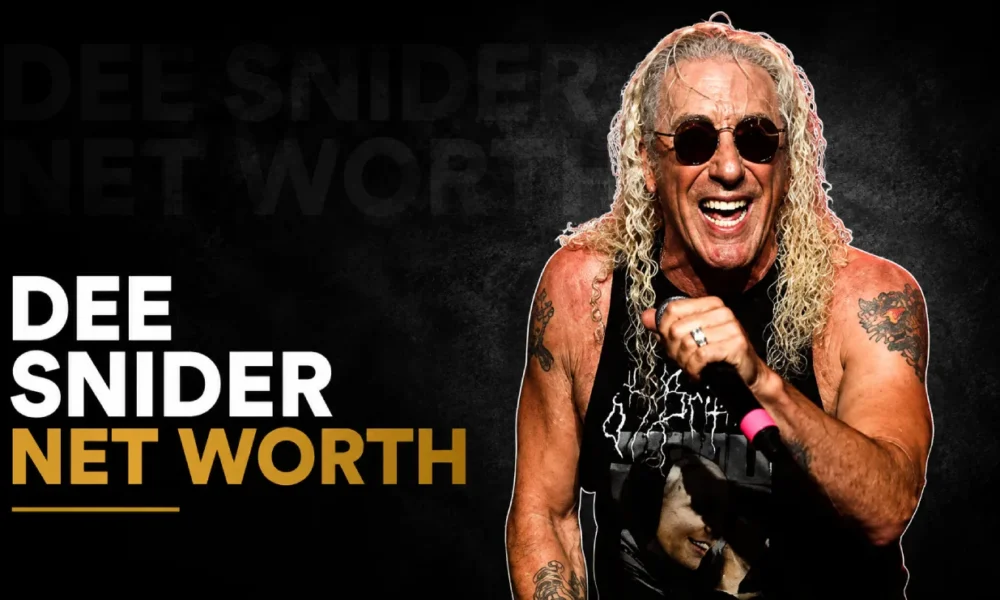
Dee Snider’s estimated net worth is $7–$10 million as of 2026. His wealth was assembled across five decades of music, broadcasting, voice acting, real estate, and two landmark catalog sales — rebuilt from zero after double bankruptcy in the 1990s.
Table Of Content
- At a Glance
- How Dee Snider Makes His Money
- Income Sources at a Glance
- Career Timeline and Financial Milestones
- The Bankruptcy Years: Losing Everything
- Suzette Snider: The Woman Behind the Image
- Real Estate Moves
- How Dee Snider Compares to Hair Metal Peers
- What Dee Snider Is Doing Now (2025–2026)
- Conclusion
Dee Snider went from stadium-filling rock star to dead broke, then rebuilt a multi-million dollar career over three decades. That $10 million figure reflects not Twisted Sister’s glory days alone, but a performer who diversified at every turn and made the right financial moves at the right time.
At a Glance
| Full Name | Daniel “Dee” Snider |
| Net Worth | $7–$10 million (estimated) |
| Date of Birth | March 15, 1955 |
| Birthplace | Astoria, Queens, New York |
| Primary Band | Twisted Sister (1976–1987, 2001–2016, 2026 reunion) |
| Years Active | 1976–present |
| Primary Income Sources | Music royalties, catalog sales, radio hosting, voice acting, television, real estate |
| Current Residence | Oak Ridge, North Carolina |
| Spouse | Suzette Snider (née Gargiulo), married since 1981 |
How Dee Snider Makes His Money
Music Royalties
Snider was Twisted Sister’s sole songwriter. Songwriters collect publishing royalties every time their music is played, streamed, or licensed for film, television, or advertising. Every time “We’re Not Gonna Take It” appears in a movie trailer, a political campaign ad, or a streaming playlist, money flows back to him — or to the entity that now holds those rights.
“We’re Not Gonna Take It” was released as a single on April 27, 1984, two weeks before the Stay Hungry album. It peaked at number 21 on the Billboard Hot 100 — Twisted Sister’s only Top 40 single — and was later ranked number 47 on VH1’s “100 Greatest ’80s Songs.” Its influences, as Snider has described them, include the glam rock band Slade, the Sex Pistols, and the Christmas carol “O Come, All Ye Faithful.”
According to Snider, “We’re Not Gonna Take It” and “I Wanna Rock” are “the two most licensed songs of the ’80s. They’re like where ‘We Are the Champions’ and ‘We Will Rock You’ were in the ’70s.” The songs have been featured in commercials for Extended Stay America, Claritin, Walmart, Stanley Steemer, and Yaz birth control, among others. “We’re Not Gonna Take It” served as the finale of Steven Spielberg’s Ready Player One, and the band’s heavy metal rendition of “Oh Come All Ye Faithful” from A Twisted Christmas was featured in the 2024 action film The Gorge.
“It’s almost a folk song,” Snider said. “Not like it’s acoustic, but folk in the sense that it just is a staple. It’s now taken a life of its own, so it’s not even a retro thing anymore. It just keeps popping up.”
The Publishing Catalog Sale: A Tax-Smart Retirement Play
Dee Snider sold his Snidest Music publishing catalog of 69 songs — including “We’re Not Gonna Take It” and “I Wanna Rock” — to Universal Music Publishing Group (UMPG) in 2015. The songs had been featured in national commercials, films, television, and the Broadway musical Rock of Ages, which had a three-year residency at the Venetian and then a one-year residency at the Rio All-Suite Hotel & Casino in Las Vegas until January 2017.
Snider has explained the decision in mathematical terms:
“It’s math. When you are getting your royalty checks every year, and they’re big — I’m in the 50-percent tax bracket between state and federal taxes — so they’re chopping off 50 percent. But capital gains on a sale of property is, like, 15, 20 percent. They give you 10 years’ worth of royalties in advance. When you do the math, you look at it and you go, ‘Okay, I’m gonna save 30 percent on taxes.’ And I can take this chunk of change and I can invest it and secure it and make it my retirement fund, which I did.”
By converting future royalty income into a single lump-sum payment taxed at the capital gains rate (~20%) rather than the income tax rate (~50%), Snider saved roughly 30 cents on every dollar compared to collecting annual checks. He then invested the proceeds as his retirement fund.
The timing mattered. Snider has said that in the 1990s, when he was broke, he would have sold for next to nothing — but nobody was interested. “Metal was a dirty word. You couldn’t touch my catalog with a 10-foot pole — thankfully, because I would have done it for pennies on the dollar.” By waiting until the songs had proven themselves as cultural fixtures, he received full market value.
The exact sale price has never been publicly disclosed. Snider has described it as “a lot of money.”
The 2024 Warner Music Group Deal: Selling the Full Legacy
In September 2024, Twisted Sister sold their remaining recording copyrights, trademarks, and name, image, and likeness (NIL) rights to Warner Music Group. The deal marked the end of Twisted Sister’s business operations after more than 50 years.
This was separate from the 2015 sale. The UMPG deal covered Snider’s personal songwriting catalog — the compositions. The Warner deal covered the band’s recordings, its trademarked name and logo, and the rights to the band members’ names, images, and likenesses as they relate to Twisted Sister. Together, these two transactions represent the full liquidation of Twisted Sister’s intellectual property.
Guitarist and manager Jay Jay French, who led the preparations for the sale, said the decision was “driven by several factors, including the aging of the band members and the fact that none of their kids wanted to continue in the Twisted Sister business.”
Fans can still expect to hear Twisted Sister music in films, commercials, and TV — licensing agreements remain active under new ownership.
Radio Hosting: Nearly 30 Years on Air
In 1997, Snider became host of The House of Hair, a syndicated heavy metal show that broadcast on more than 200 stations throughout North America. He has continued the show for nearly three decades — one of the most consistent income sources in his portfolio.
He also hosted morning radio shows on Clear Channel stations in Connecticut and later Philadelphia, building a regional audience and increasing his media profile.
Voice Acting, Television, and Entertainment Work
Snider built a six-figure voice-over career, serving as the voice of MSNBC for a period, narrating documentaries, and voicing cartoon characters. Key credits include:
- The PlayStation 2 game Jak and Daxter: The Precursor Legacy (main villain)
- Episodes of SpongeBob SquarePants
- Secret Mountain Fort Awesome
- Host of MTV’s Heavy Metal Mania (first episode, June 1985)
On television, Snider appeared on Celebrity Apprentice and CMT’s Gone Country, hosted specials on VH1, and worked as a commentator and personality. He directed the horror film Strangeland (1998), which he also wrote and starred in, and authored his autobiography Shut Up and Give Me the Mic.
These payouts are smaller individually than music, but they compound over a career and reinforce the brand value that keeps a performer hireable across industries.
Live Performances and Touring
Snider has continued to make select live appearances, joining Bret Michaels and Lita Ford on stage for guest spots. Live performance revenue — appearance fees and merchandise — remains a component of his income, even if it is no longer the primary driver.
Income Sources at a Glance
| Income Source | Era | Status |
|---|---|---|
| Music royalties (streaming, licensing, radio play) | 1984–present | Active |
| Personal catalog sale to UMPG (69 songs) | 2015 | Completed |
| Band IP sale to Warner Music Group | 2024 | Completed |
| The House of Hair radio hosting | 1997–present | Active |
| Voice acting and narration | 1990s–2010s | Reduced |
| Television and reality shows | 2000s–2010s | Reduced |
| Live touring and guest appearances | 1976–present | Active — select performances |
| Real estate gains | 2000s–2024 | Active |
| Book sales and publishing | 2012–present | Passive |
Career Timeline and Financial Milestones
- 1955 — Born Daniel Snider on March 15 in Astoria, Queens, New York. Raised in Baldwin, Long Island by his mother Marguerite, a retired art teacher of Swiss descent, and his father Bob, a retired New York State Trooper of Jewish heritage. Raised Episcopalian. Attended Baldwin Senior High School, where his vocal talent earned him a spot in the All-State Chorus.
- 1976 — Joined Twisted Sister, originally from Ho-Ho-Kus, New Jersey, at age 21. The band began performing at The Turtleneck Inn in Hunter Mountain, New York. Snider became the band’s sole songwriter.
- 1982 — Released debut album Under the Blade, building a following in the United Kingdom.
- 1983 — Released You Can’t Stop Rock ‘n’ Roll, featuring “The Kids Are Back” and “I Am (I’m Me).”
- 1984 — Stay Hungry was released on May 10. The album went multi-platinum with U.S. sales surpassing 3,000,000 copies. As sole songwriter, Snider received substantial publishing income.
- 1985 — Testified before the U.S. Senate against the Parents Music Resource Center (PMRC), which had included “We’re Not Gonna Take It” on their “Filthy Fifteen” list. His defense of artistic freedom — delivered in full rock-star regalia — made national headlines. That same year, he hosted the first episode of MTV’s Heavy Metal Mania. The band released Come Out and Play, which reached gold status after selling over 500,000 copies.
- 1987 — Love Is for Suckers released — originally conceived as a solo project. Twisted Sister dissolved after a truncated tour.
- Late 1980s–early 1990s — Formed the band Desperado. The project did not succeed. As grunge reshaped the music landscape, Snider faced double bankruptcy. He “lost every penny” and was riding a bicycle to a $200-a-week desk job answering phones.
- 1997 — Launched The House of Hair, broadcast on 200+ stations across North America.
- 2000s — Built a six-figure voice-over career. Appeared on reality television. Hosted morning radio in Connecticut and Philadelphia. Rebuilt financial stability through diversification.
- 2015 — Sold his Snidest Music publishing catalog of 69 songs to Universal Music Publishing Group. Motivated by a capital gains tax strategy — selling at roughly 20% tax versus receiving annual royalties taxed at 50%.
- 2016 — Released solo album We Are the Ones.
- 2018 — Released solo album For the Love of Metal.
- 2020 — Sold luxury condo at Turnberry Towers near the Las Vegas Strip for $583,000. Purchased a townhome in Redondo Beach, California for $2.1 million.
- 2024 — Sold Redondo Beach townhome for $2.9 million (~$800,000 gain). In September, Twisted Sister sold remaining recording copyrights, trademarks, and NIL rights to Warner Music Group. Moved to Oak Ridge, North Carolina.
- 2025 — Turned 70. Had a health scare that prompted a personal re-evaluation. Announced a Twisted Sister reunion for the band’s 50th anniversary in 2026, with Snider initiating the call to his bandmates.
- 2026 — Twisted Sister’s 50th anniversary reunion tour was announced but subsequently cancelled, with the band stating that “the future of Twisted Sister will be determined in the next several weeks.”
The Bankruptcy Years: Losing Everything
After Twisted Sister dissolved and grunge reshaped the music landscape, Snider faced total financial collapse.
He went through double bankruptcy:
“When I was in Twisted Sister, I put all my eggs in one basket… I never thought it would end, and then one day I woke up, and I was in my 30s, married with three children, and I’d lost everything.”
By 1994, he had “lost every penny I made. I was riding a bicycle to a desk job for $200 a week, answering phones in an office.” He diversified into radio, TV, and voice acting, and refused to depend on a single income stream again.
The bankruptcy also shaped his approach to the catalog sale. He has said: “I bottomed out in the ’90s; I was dead broke. If I had been made an offer for anything, for nothing, I would have sold. But there was zero interest — zero.” Nobody wanting his music in the 1990s turned out to be a blessing — it forced him to hold the catalog until it had fully appreciated.
Suzette Snider: The Woman Behind the Image
Suzette Gargiulo was 16 when she borrowed an ID and slipped into a Long Island club expecting to see a local girl band. Instead, she walked into a Twisted Sister show. The wild-eyed frontman — 21 years old, with almost no money, almost no following — noticed her immediately. After the show, he introduced himself: “I’m going to be famous one day.”
She believed him.
While still a teenager, Suzette began designing the band’s costumes. She built Twisted Sister’s visual identity — the makeup, the glam-metal outfits, the stage theatrics that made the band impossible to look away from during the MTV era. Every sequin, every smear of eyeliner, every element of the image the world came to recognize was her creation.
Dee and Suzette married young and built a family in the middle of financial uncertainty, endless touring, and the reality that most bands never make it. Through four children, through double bankruptcy, through the chaos that consumes most relationships born in rock and roll — they stayed together. As of 2026, they have been married for nearly five decades.
In the MTV era, visual identity was as commercially important as the music. Bands that looked generic sold fewer records. Twisted Sister’s instantly recognizable image — which Suzette designed — was a key factor in the band’s commercial success and in the long-term licensing value that ultimately made the catalog worth millions.
Real Estate Moves
| Property | Purchase | Sale | Approximate Gain |
|---|---|---|---|
| East Setauket, New York (family home, featured on MTV Cribs in 2005) | Long-term hold | Sold (date undisclosed) | — |
| Turnberry Towers, Las Vegas (luxury condo, 36th floor) | Purchased (date undisclosed) | 2020 — $583,000 | — |
| Redondo Beach, California (townhome) | September 2020 — $2.1 million | July 2024 — $2.9 million | ~$800,000 |
The Redondo Beach transaction is the most notable: a roughly $800,000 gain in under four years. After selling, Snider and his family moved to Oak Ridge, North Carolina.
Snider has been candid about financial lessons learned and appears to have managed his rebuilt assets with more discipline than in his Twisted Sister peak years.
How Dee Snider Compares to Hair Metal Peers
| Artist | Estimated Net Worth | Key Factor |
|---|---|---|
| Jon Bon Jovi | ~$410 million | Sustained commercial run, touring, business ventures |
| Tommy Lee (Mötley Crüe) | ~$70 million | Drumming royalties, touring, reality TV, brand deals |
| Vince Neil (Mötley Crüe) | ~$50 million | Vocalist royalties, solo touring, Las Vegas businesses |
| Nikki Sixx (Mötley Crüe) | ~$45 million | Songwriting, band longevity, bestselling memoir |
| Bret Michaels (Poison) | ~$16 million | Music, reality TV, touring |
| Sebastian Bach (Skid Row) | ~$10 million | Music, Broadway, reality TV, touring |
| Dee Snider (Twisted Sister) | ~$7–$10 million | Songwriting, catalog sales, radio, voice acting, real estate |
Note: All figures are estimates from publicly available sources and should be treated as approximate.
Snider is one of the few major rock artists who went completely broke and rebuilt without relying on reunion tours as the primary income source. His wealth came from catalog ownership, strategic sales, broadcasting, and diversification — a different path than most of his peers took.
What Dee Snider Is Doing Now (2025–2026)
In 2025, Snider turned 70 and had a health scare. “I turned 70 this year, and I had a health scare,” he said. “And I’m okay… But it really made me re-evaluate a lot of things.”
That led to something fans did not expect. After years of refusing to consider a Twisted Sister reunion — and publicly criticizing bands like KISS and Mötley Crüe for their farewell-to-reunion cycles — Snider called his bandmates himself. “I called them. They never called,” he admitted. “I said, ‘Guys, what do you think about doing it one more time?'”
A Twisted Sister 50th anniversary reunion was announced for 2026, featuring three core members: Snider, founding guitarist Jay Jay French, and longtime lead guitarist Eddie Ojeda. Bassist Mark “The Animal” Mendoza would not join, replaced by Russell Pzütto, and Joe Franco — who last recorded and performed with the band in 1987 — would play drums in place of the late A.J. Pero, who passed away in 2015.
Jay Jay French
“Beginning on February 2nd, 1976 in a little bar called The Turtleneck Inn in Hunter Mountain, NY, Dee Snider, Eddie Ojeda and I have called ourselves Twisted Sister and stood shoulder to shoulder for nearly five decades. We are proud to celebrate a milestone that once felt unthinkable: a 50th anniversary.”
Snider
“If you’re lucky enough to be in a band that people still want to see after fifty years, how can you not answer the call? In 2026, Twisted Sister will hit stages around the world because we still wanna rock.”
Conclusion
The reunion was short-lived. Twisted Sister subsequently cancelled the 2026 tour, noting that “the future of Twisted Sister will be determined in the next several weeks.” No further tour dates have been confirmed.
Separately, Suzette Snider’s father passed away in early 2026, prompting the cancellation of a scheduled Dee Snider solo performance. Bret Michaels filled in and dedicated his set to the loss in Dee’s family.
Snider’s financial foundation remains solid. His music continues to be actively licensed, the Warner deal provided a significant lump sum, and his property portfolio has appreciated. The question is whether the 50th anniversary reunion ultimately materializes — and what it could mean for his earning potential.
No Comment! Be the first one.