








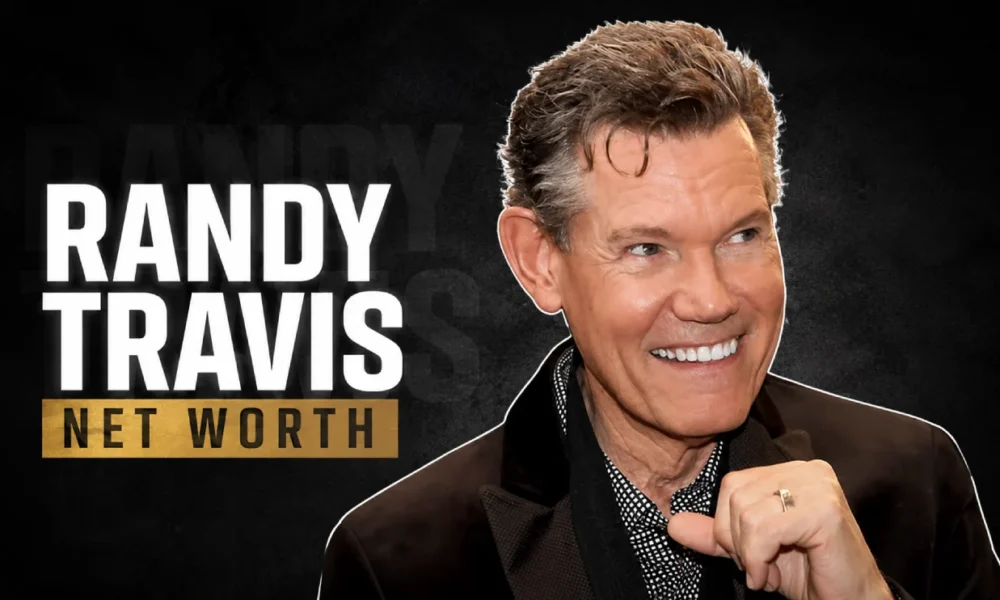
Few names in country music carry the weight that Randy Travis does. With a voice as deep and warm as a Southern evening, Travis helped define the neotraditionalist movement in country music and became one of the most celebrated artists the genre has ever produced. But beyond the platinum records and Hall of Fame inductions lies a financial story equal parts triumph and hardship — one that tells you as much about the man as his music ever could.
Table Of Content
- At a Glance
- From Marshville to Music City — A Financial Origin Story
- How Randy Travis Made His Money
- Career Milestones That Built His Wealth
- Randy Travis in 2026: A Remarkable Comeback
- Randy Travis’s Assets and Real Estate
- The 2013 Stroke — A Financial Turning Point
- Philanthropy and The Randy Travis Foundation
- Randy Travis’s Net Worth vs. Other Country Legends
- Conclusion
So just how much is Randy Travis worth, and how did he build that fortune? Here is everything you need to know, updated for 2026 with his remarkable return to the stage and the recording studio.
At a Glance
| Full Name | Randy Bruce Traywick |
| Date of Birth | May 4, 1959 |
| Birthplace | Marshville, North Carolina, USA |
| Profession | Singer, Songwriter, Actor, Author |
| Genres | Country, Gospel, Christian Country |
| Net Worth | $12 Million |
| Primary Income Sources | Music royalties, licensing, catalog sales, book deals, streaming |
| Career Span | 1978 – Present (active touring 2025–2026) |
| Albums Sold | 25+ million worldwide |
| Studio Albums | 22 |
| #1 Singles | 20+ |
| Grammy Awards | 7 |
| Major Honors | Grand Ole Opry member, Country Music Hall of Fame inductee (2016), Hollywood Walk of Fame |
| Notable Setback | Severe stroke (2013) — ended active performing for a decade, but returned to touring in 2025 |
| Recent Music | AI-assisted singles (2024–2025), vault album (2026) |
| More Life Tour | 50+ shows, 60,000+ fans (2025), extended through 2026 |
While impressive by most standards, $12 million represents a fraction of what Travis might have accumulated during his peak years. His story is a classic American arc with unexpected turns — exceptional talent pulled him from modest beginnings into the spotlight, and a string of hit albums totaling over 25 million copies sold made him a superstar. Today, his fortune is sustained primarily by royalties, licensing income, and the enduring commercial appeal of his country and gospel catalog, now boosted by a triumphant return to the road.
From Marshville to Music City — A Financial Origin Story
Randy Travis was born Randy Bruce Traywick on May 4, 1959, in Marshville, North Carolina. His mother, Bobbie, worked at a textile factory; his father, Harold, owned a construction business. At age 8, Travis began singing in the church choir and playing guitar, and by his early teens, he and his brother Ricky were performing as the Traywick Brothers at local talent contests and clubs.
His early path was anything but smooth. Travis dropped out of high school and was arrested several times for offenses including burglary and auto theft. In 1975, he won a talent contest at a Charlotte nightclub called Country City USA, and the club’s owner, Elizabeth Hatcher, hired him as a cook while letting him perform regularly. After another arrest, Elizabeth became his legal guardian and manager.
That relationship proved to be the pivotal turning point of his life. Travis began recording for Paula Records in 1978, releasing the singles “Dreamin'” and “She’s My Woman.” In 1982, Elizabeth ended her marriage and relocated to Nashville with Randy. Their relationship became romantic, and they married in 1991.
After releasing the independent 1982 album Live at the Nashville Palace (under the name Randy Ray), Travis signed with Warner Bros. Records. Elizabeth guided his early career trajectory, but their personal and professional partnership eventually unraveled. The couple divorced in 2010 — a separation that carried real financial weight given her dual role as spouse and longtime manager. Dividing shared assets and restructuring his professional affairs added strain during a period when his career was already in transition.
How Randy Travis Made His Money
Album Sales and Record Deals
The foundation of Travis’s wealth was built on record-breaking album sales. His 1986 debut, the 3× Platinum Storms of Life, reached number one on the Billboard Top Country Albums chart and produced two Gold-certified singles — “On the Other Hand” and “Diggin’ Up Bones.” He followed it with the 5× Platinum Always & Forever in 1987, then back-to-back 2× Platinum albums Old 8×10 (1988) and No Holdin’ Back (1989). Every single from Always & Forever hit number one on the Billboard Hot Country Songs chart.
Throughout the 1990s, Travis maintained his commercial footing with Platinum albums Heroes & Friends (1990) and High Lonesome (1991) and the Gold-certified This Is Me (1994). He placed more than 20 singles at number one, including “Forever and Ever, Amen,” “Deeper Than the Holler,” “Too Gone Too Long,” “Whisper My Name,” “Hard Rock Bottom of Your Heart,” and “It’s Just a Matter of Time.” Each certified record translates directly into royalty payments that continue generating income today.
Touring and Live Performances
During his prime years in the late 1980s and throughout the 1990s, touring was one of Travis’s most significant income streams. Packed venues and nationwide tours brought in millions annually, with each successful album cycle feeding directly into higher ticket demand. His ability to consistently sell out shows reflects his standing as one of country music’s most bankable performers. After a long hiatus due to his stroke, he returned to the road with the More Life Tour in 2025, performing over 50 shows to more than 60,000 fans.
Acting Career
Travis parlayed his country celebrity into a second career in Hollywood. He appeared in films such as The Rainmaker (1997), Baby Geniuses (1999), Texas Rangers (2001), and National Treasure: Book of Secrets (2007), along with television series including Matlock (1992–1993) and Touched by an Angel (1994–2003). Acting never replaced music as his primary revenue source, but it added meaningful diversification to his income.
Gospel Music
In 2000, Travis made a deliberate artistic shift, releasing Inspirational Journey on Word Records — his first full-length Christian country album. The move opened an entirely new revenue stream by connecting him with gospel audiences known for their loyalty and consistent buying habits. He followed it with the Gold-certified albums Rise and Shine (2002) and Worship & Faith (2003), both of which earned Grammy Awards. The 2002 single “Three Wooden Crosses” crossed back to mainstream country radio, reaching number one on the Hot Country Songs chart. Travis won eight GMA Dove Awards during this phase, and the gospel catalog continues to generate royalties alongside his country hits.
Books and Memoir
Travis co-authored several books, including the autobiography Forever and Ever, Amen: A Memoir of Music, Faith, and Braving the Storms of Life, written with Ken Abraham. The publishing deals added another income stream while deepening his public profile and reinforcing the commercial appeal of his back catalog.
Royalties, Licensing & Streaming
Even with limited active performances between 2013 and 2024, Travis earned steadily through music royalties. Radio airplay, streaming platforms, and film and commercial licensing keep his catalog working on his behalf — and those revenue streams are essentially perpetual.
As of 2025, Travis’s music generates substantial monthly streaming revenue, with his YouTube channel growing to 600,000 subscribers. These modern revenue streams, combined with traditional royalties and the recent resurgence in his touring activity, have kept his financial foundation stable and growing.
His catalog received a notable boost in 2009, when Carrie Underwood recorded a duet version of his earlier hit “I Told You So.” The collaboration reached number one on the Canadian Country chart and number two on the Hot Country Songs chart, earning Travis his seventh Grammy Award and introducing his music to a younger generation of listeners.
Career Milestones That Built His Wealth
Travis did not just sell records — he reshaped an entire genre, and that cultural influence translated directly into financial staying power. Here are the defining milestones:
- 1986 — Released debut album Storms of Life (3× Platinum), reaching #1 on the Billboard Top Country Albums chart; inducted into the Grand Ole Opry
- 1987 — Always & Forever (5× Platinum) earned his first Grammy Award and the CMA’s Male Vocalist of the Year award; every single from the album hit #1
- 1988–1989 — Released back-to-back 2× Platinum albums: Old 8×10 and No Holdin’ Back
- 1990–1994 — Continued commercial success with Platinum albums Heroes & Friends and High Lonesome, plus the Gold-certified This Is Me; charted multiple #1 singles, including “Hard Rock Bottom of Your Heart,” “Forever Together,” and “Whisper My Name”
- 1998 — Left Warner Bros. Records for DreamWorks Records, releasing You and You Alone and A Man Ain’t Made of Stone
- 2000–2003 — Shifted to gospel music on Word Records; released Inspirational Journey, followed by Gold-certified Rise and Shine and Worship & Faith; “Three Wooden Crosses” reached #1 on Hot Country Songs
- 2004 — Received a star on the Hollywood Walk of Fame
- 2008 — Received a guitar on the Music City Walk of Fame; released Around the Bend on Warner Bros.
- 2009 — Carrie Underwood’s duet version of “I Told You So” reached #2 on Hot Country Songs and earned Travis his seventh Grammy Award
- 2016 — Appeared in the “Forever Country” music video alongside 29 artists for the CMA Awards’ 50th anniversary; inducted into the Country Music Hall of Fame and performed “Amazing Grace” — his first public performance since his stroke
- 2024 — Released “Where That Came From,” his first AI-assisted new music in over a decade; named co-recipient of the Nashville Symphony Harmony Award with John Esposito
- 2025 — Released second AI song “Horses in Heaven”; More Life Tour played 50+ shows to 60,000+ fans; released first Christmas music since stroke, “Where My Heart Is”
- 2026 — More Life Tour extended through 2026; released vault songs “Fish On” (July) and “I Don’t Care” (August); preparing first new album in nearly 20 years
Career Awards
Over the course of his career, Travis released 22 studio albums, 2 live albums, and 17 compilations. His accolades include 7 Grammy Awards, 11 Academy of Country Music Awards, 10 American Music Awards, 5 Country Music Association Awards, and 8 GMA Dove Awards.
Randy Travis in 2026: A Remarkable Comeback
The story of Randy Travis’s net worth in 2026 cannot be told without acknowledging his extraordinary return to music. After years of silence following his 2013 stroke, Travis has mounted one of the most remarkable comebacks in country music history — and it’s generating new income streams while cementing his legacy.
AI Music and the Return of His Voice
In May 2024, Travis released “Where That Came From” — his first new music in over a decade. The song was created using artificial intelligence to recreate his voice from vocal stems recorded before his stroke. The idea came from Warner Nashville chair Cris Lacy, who saw an opportunity to let Travis’s voice be heard again.
“When they sent it to us, I remember it like you remember 9/11. Randy sat there, and he’s like, you know, the puzzled look, and then his head went down, then it came up, then he smiled, then he teared up.”
He followed with “Horses in Heaven” in January 2025 and a Christmas track, “Where My Heart Is,” in November 2025. Each release reminded fans why his voice remains one of the most beloved in country music history.
The More Life Tour: Back on the Road
In 2025, Travis launched the “More Life Tour” — his first major touring effort since the stroke. The tour played over 50 shows to more than 60,000 fans, selling out venues across the country. Due to overwhelming demand, it was extended into 2026 with 21 new dates.
In April 2026, Travis shared an emotional moment from the tour — he was wheeled onto stage to a standing ovation, proving that his connection with fans remains as strong as ever.
Remaining 2026 Tour Dates:
| Date | Venue | Location |
|---|---|---|
| August 21 | Georgia Mountain Fall Festival — Anderson Music Hall | Hiawassee, GA |
| September 23 | F.M. Kirby Center | Wilkes-Barre, PA |
| September 24 | Lansdowne Theater | Lansdowne, PA |
| September 25 | Flagstar at Westbury Music Fair | Westbury, NY |
| September 26 | Pullo Center | York, PA |
| September 27 | The Egg Performing Arts Center | Albany, NY |
| October 1 | Garde Arts Center | New London, CT |
| October 2 | Colonial Theatre | Keene, NH |
| October 3 | Plymouth Memorial Hall | Plymouth, MA |
New Music After 18 Years: The Vault Album
2026 marks the 40th anniversary of Travis’s debut album, Storms of Life. To celebrate, Travis is releasing his first album of new music in nearly two decades — a collection of previously unreleased recordings from his archive, assembled by longtime producer Kyle Lehning.
The first two singles have already dropped:
- “Fish On” (July 10, 2026) — written with his longtime bus driver Ron Avis
- “I Don’t Care” (August 7, 2026) — written with Michael Curtis
“Having my longtime producer, Kyle Lehning, do what he does best has made bringing it back to life even more meaningful.”
The full album is expected later this year, giving fans their first collection of fresh Travis recordings in nearly 20 years.
AI & Vault Music Timeline:
| Year | Song | Type |
|---|---|---|
| 2024 | “Where That Came From” | AI-assisted |
| 2025 | “Horses in Heaven” | AI-assisted |
| 2025 | “Where My Heart Is” | Vault (Christmas) |
| 2026 | “Fish On” | Vault |
| 2026 | “I Don’t Care” | Vault |
| 2026 | Untitled Album | Vault (full album) |
Randy Travis’s Assets and Real Estate
Travis’s wealth extended well beyond music into property.
- Santa Fe Luxury Ranch (Built 2002) — A 20,000-square-foot property on 220 acres featuring a shooting range, bowling alley, gym, horse stables, 10 fireplaces, and a pool. Listed for $14.7 million in 2014, the price dropped over eight years before the property sold in 2021.
- Nashville Condo (Sold 2019) — Approximately 1,800 square feet, purchased for $500,000 in 2010 and sold for $545,000, yielding a modest $45,000 gain.
As of 2026, Travis and his wife, Mary Davis, reside in Texas, where he maintains a private lifestyle away from the entertainment industry. His real estate holdings, though scaled back from their peak, remain part of his overall financial picture.
The 2013 Stroke — A Financial Turning Point
No honest account of Randy Travis’s net worth can ignore the event that changed everything.
In July 2013, Travis was hospitalized with viral cardiomyopathy caused by a respiratory infection. His heart stopped. Doctors placed him in a medically induced coma, and when he emerged, they discovered he had suffered a massive stroke. His lungs collapsed during a second coma, and he was placed on life support. His then-fiancée, Mary Davis, was told he had only a 1% chance of survival.
He survived — but the consequences were severe and permanent. Travis was left with limited speech, a disabled left hand, and impaired singing ability. Live performance, a critical income source for musicians, was effectively eliminated for nearly a decade. The recovery process was lengthy, and the medical expenses that came with it compounded the financial strain.
The years leading up to the stroke had already been turbulent. Legal difficulties in 2012 and early 2013 — including a DWI conviction that resulted in probation and a $2,000 fine — added costs and public scrutiny to an already difficult stretch.
His recovery, though, has been remarkable. Travis committed to years of physical therapy, gradually regaining mobility and communication. By November 2014, he was learning to write and play guitar again. By October 2016, he had recovered enough of his voice to perform “Amazing Grace” at his Country Music Hall of Fame induction.
The Comeback Continues
In 2025, Mary Travis revealed in an exclusive interview that she defied medical advice to “pull the plug” during Randy’s stroke recovery — a decision she never doubted. That decision paved the way for his remarkable return to the stage.
Today, Travis continues his More Life Tour, releases new music from his archives, and remains active through the Randy Travis Foundation. His recovery is ongoing — he still uses a wheelchair and has limited speech — but his presence in the country music world is stronger than it has been in over a decade.
Philanthropy and The Randy Travis Foundation
Beyond music, Travis and his wife Mary have built a philanthropic legacy through the Randy Travis Foundation, established in 2016. The foundation focuses on stroke and aphasia awareness, music education, and enrichment opportunities for at-risk youth.
Recent foundation highlights include:
- 2024 — Travis and Warner Music Nashville CEO John Esposito named co-recipients of the Nashville Symphony Harmony Award for their philanthropic work
- 2025 — The foundation purchased the former Burlington Coat Factory building at Jackson’s Metrocenter Mall
- 2025 — Partnered with Absolutely Ridiculous to provide baseball equipment to over 100,000 kids in need
In August 2026, Travis made a surprise hospital visit to City of Hope Cancer Center in Chicago to cheer up a fan battling cancer. Though he has been largely unable to speak since his stroke, his presence alone made the visit unforgettable.
Randy Travis’s Net Worth vs. Other Country Legends
In country music, $12 million is a respectable fortune — though it sits well below the genre’s highest earners.
Dolly Parton leads the field with an estimated net worth of $650 million in 2026. Garth Brooks and Shania Twain both come in around $400 million.
Worth noting: Travis’s earning potential was severely curtailed by his stroke at age 54 — a point when many artists are still at full commercial capacity. Had he continued performing, recording, and touring through his 60s as Brooks and Twain have done, his financial trajectory would almost certainly look different. His return to the road in 2025 and 2026 is helping to bridge that gap, but the lost decade of touring income remains a significant factor in his net worth compared to his peers.
Conclusion
The truth about Randy Travis is that his financial story cannot be separated from his human one. He went from a troubled teenager facing criminal charges in North Carolina to a Country Music Hall of Famer with over 25 million albums sold. He built a $12 million fortune, lost much of his earning capacity to illness, and then — against all odds — mounted one of the most remarkable comebacks in music history.
In 2026, as he celebrates the 40th anniversary of Storms of Life, Travis is touring again, releasing new music from his archives, and building a philanthropic legacy through his foundation. His music will continue generating royalties for years to come. More than the dollars, his legacy lives in the artists he inspired, the genre he helped steady, and the songs that still play on country radio decades after their release.

No Comment! Be the first one.