








Ed Sullivan Net Worth: What’s Verified, What’s Estimated, and Why His Legacy Outweighs Any Number

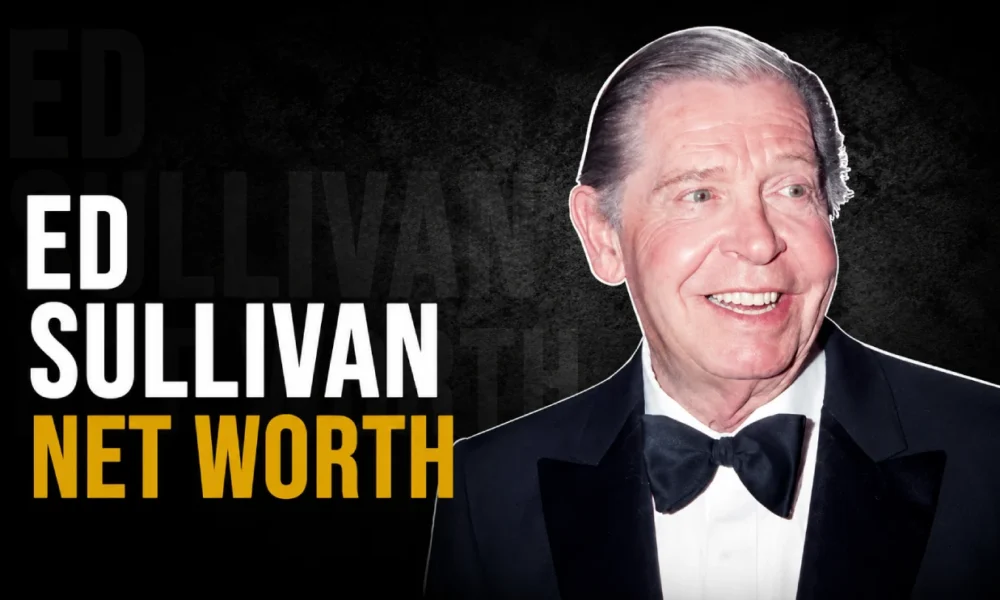
Ed Sullivan’s net worth at the time of his death in 1974 is most commonly estimated at $10–20 million, which works out to roughly $63–126 million in 2025 dollars after adjusting for inflation. However, no verified financial records — no tax returns, no probate filings, no confirmed salary data — have ever been made public. Every number you see online is an educated guess, not a proven fact.
Table Of Content
This article separates what is documented from what is speculation. You will find the best available estimate with honest caveats, a breakdown of how Sullivan earned his living, the economics of 1950s–60s variety television, and the full story of a man whose real legacy is measured in cultural impact, not dollars.
Quick Facts
| Detail | Information |
|---|---|
| Full Name | Edward Vincent Sullivan |
| Born | September 28, 1901 — Harlem, New York City |
| Died | October 13, 1974 (age 73) — New York City |
| Cause of Death | Esophageal cancer |
| Burial | Ferncliff Cemetery, Hartsdale, New York |
| Occupations | Television host, newspaper columnist, sports and entertainment reporter |
| Years Active | 1932–1974 |
| Spouse | Sylvia Weinstein Sullivan (married 1930; she died March 16, 1973) |
| Children | One daughter, Betty Sullivan (married show producer Bob Precht) |
| Signature Show | The Ed Sullivan Show (CBS, 1948–1971; originally Toast of the Town) |
| Estimated Net Worth at Death | $10–20 million (unverified) |
| Inflation-Adjusted (2025) | ~$63–126 million (unverified estimate only) |
| Verified Financial Records | None publicly available |
Ed Sullivan’s Net Worth — The Estimate
The $10–20 Million Figure
The most frequently repeated estimate for Sullivan’s net worth at his death is $10–20 million. This number does not come from any tax return, probate filing, estate disclosure, or confirmed salary record. It appears to be a rough calculation that circulated across celebrity-net-worth websites, and it has been copied from one site to another without anyone tracing it back to a primary source.
That said, the figure is not implausible. Sullivan hosted one of the highest-rated programs on American television for 23 consecutive years, wrote a nationally syndicated newspaper column throughout that same period, and took on master-of-ceremonies roles and personal appearances on the side. A man with that kind of sustained, multi-stream income over two decades could reasonably have accumulated a fortune in that range. But “reasonable” and “confirmed” are not the same thing.
Inflation-Adjusted Value in 2025 Dollars
If the $10–20 million estimate is taken at face value, a standard Consumer Price Index adjustment brings it to approximately $63–126 million in 2025 dollars. But this kind of adjustment is inherently rough. Estates are not held entirely in cash — they typically include real estate, investments, collectibles, and other assets that appreciate (or depreciate) at very different rates than consumer prices. Add in estate taxes, private liabilities, and unknown holdings, and any inflation-adjusted number becomes, at best, a very rough indicator.
Why No Verified Number Exists
Sullivan died in 1974, well before celebrity finances were tracked the way they are today. Entertainment contracts were private. There was no centralized database of celebrity estates, no TMZ, and no Forbes list tracking television host salaries. Today’s net-worth websites often copy numbers from each other without citing original documents, which is why the same unconfirmed $10–20 million figure keeps appearing across dozens of sites.
The absence of a verified number does not mean Sullivan was not wealthy — it simply means we cannot point to a document that proves the size of his wealth.
Who Was Ed Sullivan?
Ed Sullivan was an American television host, impresario, sports and entertainment reporter, and syndicated columnist for the New York Daily News and the Chicago Tribune New York News Syndicate. He was the creator and host of the television variety program Toast of the Town, which in 1955 was renamed The Ed Sullivan Show. Broadcast from 1948 to 1971, it set a record as the longest-running variety show in U.S. broadcast history.
Television critic David Hinckley called it “by almost any measure, the last great American TV show” and “one of our fondest, dearest pop culture memories.” Critic David Bianculli put it another way: “Before MTV, Sullivan presented rock acts. Before Bravo, he presented jazz and classical music and theater. Before the Comedy Channel and The Tonight Show, Sullivan discovered, anointed, and popularized young comedians. Before there were 500 channels, before there was cable, Ed Sullivan was where the choice was.”
Early Life and Career
Sullivan was born on September 28, 1901, in Harlem, New York City, to Elizabeth F. (née Smith) and Peter Arthur Sullivan, a customs house employee. His twin brother Daniel was sickly and died as a small child. The family later moved to Port Chester, New York, where Sullivan grew up in a small red brick home at 53 Washington Street. He was of Irish descent.
Sullivan was a gifted athlete in high school, earning 12 athletic letters at Port Chester High School. He played football as a halfback, basketball as a guard, track as a sprinter, and baseball as a catcher and team captain. He was also a boxer in his younger years. His experience with integrated high-school sports teams in New York shaped his views on race early: as Sullivan later recalled, when teams traveled to Connecticut and encountered Black players, it was simply accepted as commonplace, and that early experience fed his instinctive opposition to racial discrimination throughout his career.
From Newspaperman to Television Icon
Sullivan landed his first journalism job at The Port Chester Daily Item, a local newspaper he had written for during high school. He went on to work for The Hartford Post, The New York Evening Mail, the Associated Press, the Philadelphia Bulletin, and several other New York papers through the early 1920s. In 1927, he joined The New York Evening Graphic as a sports writer and eventually became its sports editor.
In 1929, when Walter Winchell left the Evening Graphic for The Daily Mirror, Sullivan was named the paper’s Broadway columnist. He soon moved to the city’s largest tabloid, the New York Daily News, where his column “Little Old New York” covered Broadway shows and entertainment gossip. He also delivered show-business news broadcasts on radio. By the 1940s, he was one of the most connected entertainment figures in New York — a rival to Winchell himself — with the El Morocco nightclub serving as his unofficial headquarters.
In 1947, Sullivan emceed the Harvest Moon Ball for the New York Daily News. The event was televised — still a novelty at the time — and CBS took notice. The network hired him to host their new variety show. Toast of the Town debuted on June 20, 1948, and would air continuously on CBS Sunday nights at 8 p.m. for an extraordinary 23 years.
Career Timeline
- 1901 — Born in Harlem, New York City.
- 1920s — Sportswriter for multiple New York newspapers; begins hosting radio programs with Broadway themes.
- 1927 — Fiancée Sybil Bauer, an Olympic swimmer, dies of cancer at age 23.
- 1929 — Named Broadway columnist at the New York Evening Graphic.
- 1930 — Marries Sylvia Weinstein on April 28.
- 1932 — Begins writing his “Little Old New York” column at the New York Daily News, which he continues until his death.
- 1933 — Writes and stars in the film Mr. Broadway.
- 1948 — Toast of the Town debuts on CBS (June 20).
- 1955 — The program is officially renamed The Ed Sullivan Show.
- 1956 — Elvis Presley appears on the show, causing a sensation and massive ratings.
- 1964 — The Beatles make their U.S. television debut, drawing an estimated 73 million viewers — at the time the most-watched event in television history.
- 1967 — CBS Studio 50 is officially renamed the Ed Sullivan Theater in his honor.
- 1971 — The final episode airs after a 23-year run.
- 1973 — Sylvia Weinstein Sullivan dies on March 16.
- 1974 — Ed Sullivan dies of esophageal cancer on October 13 at age 73. A ceremony is held at St. Patrick’s Cathedral in New York City. He is buried at Ferncliff Cemetery in Hartsdale, New York.
How The Ed Sullivan Show Worked
Format, Ratings, and Cultural Reach
The Ed Sullivan Show was a Sunday-night variety program that ran on CBS from 1948 to 1971. Its format was straightforward: a mix of comedy, music, dance, Broadway excerpts, classical performances, novelty acts, and the occasional plate spinner or puppet (the Italian mouse character Topo Gigio became a recurring favorite). Sullivan’s stiff on-camera manner and wooden delivery became a pop-culture trademark — comedian Alan King joked, “Ed Sullivan can’t sing, can’t dance and can’t tell a joke, but he does it better than anyone else.”
At its peak, the show was one of the most-watched programs in America. The February 9, 1964, Beatles episode drew an estimated 73 million viewers, making it the most-watched television event at that time. Sullivan had a remarkable ability to book acts at precisely the moment they were about to break through — or to give them the platform that made them household names.
How Sullivan Earned His Living
Sullivan’s income came from multiple streams, though the exact dollar amounts for any of them remain unconfirmed:
- CBS salary — His primary income was almost certainly his pay as host and de facto producer of a top-rated network variety show. At the show’s height, the host of such a program would have earned a substantial, steady salary. Some sources mention figures of several hundred thousand dollars per year, but no pay stubs or contracts have been made public.
- Newspaper column — Sullivan continued writing his “Little Old New York” column for the New York Daily News throughout his entire broadcasting career, from 1932 until his death in 1974. This provided a parallel income stream and kept him embedded in the New York entertainment scene.
- Radio work and personal appearances — Beginning in the late 1920s, Sullivan hosted radio programs with Broadway themes and served as master of ceremonies for live events, benefit reviews, and theater productions.
- Sponsorship economics — The Ed Sullivan Show was a major advertising vehicle. By the 1960s, a 60-second spot on a top-rated variety show could cost advertisers $60,000–$80,000 (equivalent to roughly $500,000–$700,000 today). Lincoln-Mercury was a long-standing sponsor. While the bulk of ad revenue went to CBS, the host of such a valuable property would have negotiated accordingly.
Without pay records or tax documents, all earnings claims should be treated as speculative. What is clear is that Sullivan maintained a 23-year run at the top of American television while simultaneously writing a daily newspaper column — a sustained, high-earning career that spanned decades.
Personal Life
A Tragic Early Loss
Before his marriage, Sullivan was engaged to Sybil Bauer, a champion swimmer who held multiple world records and won a gold medal at the 1924 Paris Olympics. Bauer died of cancer in 1927 at just 23 years old. The loss was devastating for Sullivan, who was deeply in love with her.
Marriage to Sylvia Weinstein
In 1926, Sullivan met Sylvia Weinstein. Their courtship was complicated from the start — Sylvia was Jewish and Sullivan was Catholic, and both families strongly opposed the relationship. Sylvia initially tried to tell her family she was dating a man named “Ed Solomon,” but her brother figured out the truth. After an on-again, off-again courtship that lasted three years, they were married in a City Hall ceremony on April 28, 1930.
The couple became fixtures of New York nightlife, eating out five nights a week at spots like the Stork Club, Danny’s Hideaway, and Jimmy Kelly’s. Ed was friends with U.S. Presidents and received audiences with various Popes. He lived much of his adult life at the Delmonico Hotel in Manhattan, kept late hours, and had a well-known fondness for pork chops as a late breakfast.
A detail that speaks volumes about their partnership: Sullivan reportedly called Sylvia after every single broadcast to hear what she thought of the show. Her feedback mattered to him more than anyone else’s. When Sylvia died on March 16, 1973 — just 18 months before Ed’s own death — those close to the couple said he was never the same.
Daughter Betty and the Sullivan Legacy
Sullivan and Sylvia had one daughter, Elizabeth (Betty), named after Ed’s mother. Betty married Bob Precht, who served as the producer of The Ed Sullivan Show. The family connection kept the show’s production closely tied to Sullivan’s own household and likely played a role in the creative consistency that defined the program’s long run.
Cause of Death and Final Years
The cancellation of The Ed Sullivan Show in 1971 marked the end of an era, and Sullivan’s final years were difficult. His beloved wife Sylvia died in March 1973, and those who knew him said the loss was crushing. Just over a year later, on October 13, 1974, Ed Sullivan died of esophageal cancer at the age of 73.
A ceremony was held at St. Patrick’s Cathedral in New York City — a measure of the esteem in which he was held — before he was laid to rest at Ferncliff Cemetery in Hartsdale, New York.
Ed Sullivan’s Cultural Legacy
Breaking Racial Barriers on Television
One of Sullivan’s most important and lasting contributions was his insistence on featuring African American performers on national television at a time when segregation still defined much of American life. Beginning in 1948, when he introduced Pearl Bailey to mainstream audiences, Sullivan became one of the first major television hosts to consistently book Black artists.
He was confronted about this repeatedly. Southern sponsors threatened to pull their advertising when he kissed Pearl Bailey on the cheek and again when he shook hands with Nat King Cole. Every single time, Sullivan refused to back down. Over the years, he gave landmark television exposure to Harry Belafonte, Sammy Davis Jr., Ella Fitzgerald, The Supremes, The Temptations, and many more. He treated all his performers with genuine warmth and respect, sending a message of dignity and equality into living rooms across a deeply divided country.
Ed Sullivan’s willingness to showcase Black artists — and the genuine respect and warmth he showed them — represented a powerful act of cultural courage during one of America’s most segregated eras.
Launching Legends
Sullivan had an uncanny eye for talent. The list of artists who made their first or most important television appearances on his show reads like a hall of fame:
- Elvis Presley — His 1956 appearances caused a national sensation and massive ratings.
- The Beatles — Their February 9, 1964, U.S. television debut drew 73 million viewers and kicked off Beatlemania in America.
- The Rolling Stones — Introduced to American audiences through the Sullivan show.
- The Supremes — Multiple appearances helped make them household names.
- The Jackson 5 — Early national television exposure.
- The Doors — One of their most famous TV appearances.
- Dean Martin and Jerry Lewis — Early television breakthrough.
- Dick Van Dyke — Television debut on the show.
- Hank Williams — Rare television appearance.
- Jack Benny — A longtime Sullivan favorite.
But Sullivan was just as likely to book ballet, opera, classical music, Broadway show tunes, or novelty acts like the Singing Nun, Señor Wences, or a team of plate spinners. He became, in effect, the arbiter of American popular taste for over two decades.
The Ed Sullivan Theater
The theater from which Sullivan broadcast his show — located at 1697 Broadway, between 53rd and 54th streets in Midtown Manhattan — was originally built in 1927 as Hammerstein’s Theatre, designed by architect Herbert J. Krapp with a neo-Gothic interior resembling a cathedral, complete with a domed ceiling and stained-glass walls. CBS began using it as a broadcast studio in the 1930s, and The Ed Sullivan Show was broadcast from the venue from 1953 to 1971.
In 1967, CBS officially renamed the building the Ed Sullivan Theater — one of the greatest honors of Sullivan’s career. The theater went on to house The Late Show franchise from 1993 to 2026, first under David Letterman and then under Stephen Colbert. The theater’s interior is a New York City designated landmark and is listed on the National Register of Historic Places. After The Late Show aired its final broadcast from the venue on May 21, 2026, the theater’s future use remains to be seen, but its association with Sullivan’s name ensures its place in television history.
Recognition and Honors
- TV Guide ranking: In 1996, Sullivan was ranked number 50 on TV Guide‘s “50 Greatest TV Stars of All Time.”
- Hollywood Walk of Fame: Sullivan has a star at 6101 Hollywood Boulevard.
- Ed Sullivan Theater: The CBS broadcast venue was renamed in his honor in 1967 and remains a designated New York City landmark.
- Longest-running variety show: The Ed Sullivan Show holds the record as the longest-running variety show in U.S. broadcast history — 23 consecutive years on CBS.
- Documentary tribute: The documentary Sunday Best: The Untold Story of Ed Sullivan has explored his role in breaking racial barriers and unifying American audiences through music and entertainment.
Conclusion
This article relies on established biographical references to present what is factually known about Ed Sullivan’s life and career. Key sources include the following published works:
- James Maguire, Impresario: The Life and Times of Ed Sullivan (Billboard Books, 2006)
- Gerald Nachman, Right Here on Our Stage Tonight!: Ed Sullivan’s America (2009)
- Jerry Bowles, A Thousand Sundays: The Story of the Ed Sullivan Show (Putnam, 1980)
- Encyclopedia Britannica, “Ed Sullivan” biographical entry
- The official Ed Sullivan website (edsullivan.com)
No net-worth number is treated as verified in this article. Where dollar estimates appear, they are clearly labeled as unconfirmed and are included only to transparently answer the reader’s most common question. The goal is to separate documented history from internet guesswork, so that you can trust the facts even when a single, precise “net worth” answer does not exist.
Ed Sullivan’s real value is not a number. It is 23 years of Sunday-night television that introduced America to Elvis and the Beatles, broke racial barriers by featuring Black performers when sponsors and much of the country objected, and turned a stiff, stone-faced newspaperman into the most powerful tastemaker in the history of American broadcasting. No spreadsheet can capture that.

No Comment! Be the first one.