








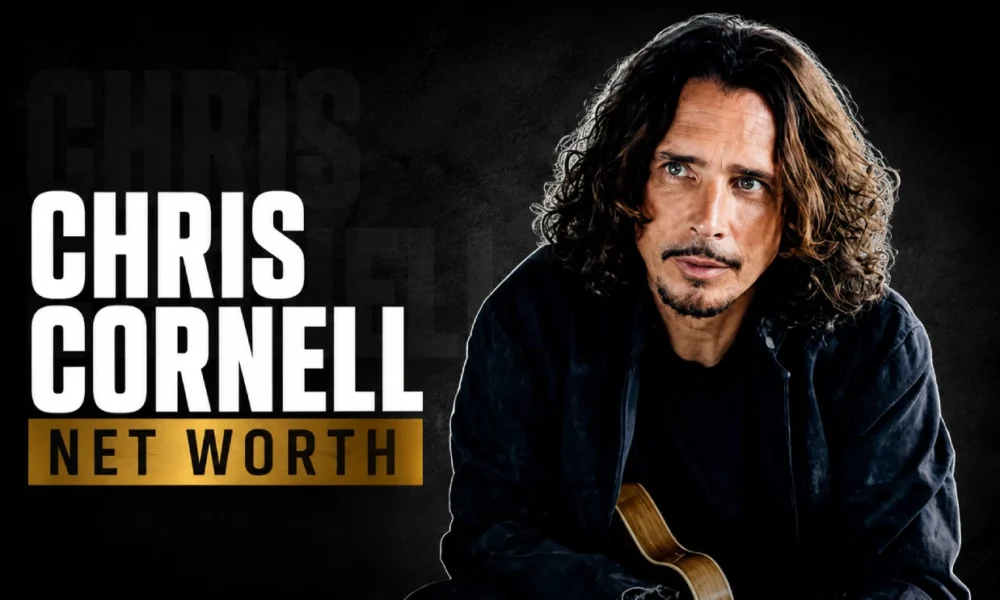
What does a rock legend’s financial life actually look like — and what does it teach the rest of us about building wealth? Chris Cornell was one of the most celebrated voices in rock history. As the frontman of Soundgarden and Audioslave, he shaped an entire era of music.
Table Of Content
- Who Was Chris Cornell?
- Chris Cornell’s Net Worth: The $40M vs. $60M Debate
- How Did Chris Cornell Build His Wealth?
- Assets vs. Liabilities — What Made Up His Net Worth
- The Estate Legal Battle: What Really Happened
- Posthumous Releases: New Music on the Horizon
- What Happens to a Celebrity’s Net Worth After Death?
- Lessons From Chris Cornell’s Financial Life
- How You Can Build Your Own Net Worth Like a Rock Star
- Common Mistakes That Shrink Net Worth (Even for High Earners)
- Conclusion
But behind the albums and arena tours was a financial story far more complex than a single net worth figure — one that involves estate battles, posthumous releases, and crucial lessons about what happens when wealth meets legacy.
Who Was Chris Cornell?
Chris Cornell (1964–2017) was an American rock musician, singer, and songwriter. He co-founded Soundgarden in 1984, one of the bands that defined the Seattle grunge movement alongside Nirvana and Pearl Jam. He also fronted Audioslave, a supergroup formed with members of Rage Against the Machine, and released several successful solo albums.
Over a career spanning more than three decades, Cornell built his wealth through multiple channels — record sales, touring, songwriting royalties, licensing deals, and more. His financial profile is a strong case study in how creative professionals accumulate and maintain wealth, and how their families navigate the aftermath.
Chris Cornell’s Net Worth: The $40M vs. $60M Debate
At the time of his death in May 2017, Chris Cornell’s net worth was widely estimated at approximately $60 million. However, some outlets reported a lower figure of $40 million. This discrepancy isn’t unusual — celebrity net worth figures are estimates pieced together from known income sources, reported real estate transactions, and industry knowledge. What’s clear is that Cornell’s estate, managed by his widow Vicky Cornell, was substantial enough to spark years of legal battles over royalties, unreleased music, and intellectual property rights.
Net Worth Formula: Net Worth = Total Assets − Total Liabilities
| Source / Context | Estimate |
| Major Celebrity Net Worth Databases | $60 million |
| Alternative Financial Reports | $40 million |
| Estate Representative (Asset Value) | $20M+ in assets |
How Did Chris Cornell Build His Wealth?
Music Royalties (The Long Game)
Royalties are one of the most powerful wealth-building tools in the music industry. Every time a Soundgarden or Audioslave track is streamed, played on the radio, licensed in a film, or used in an advertisement, the songwriter earns a royalty payment.
Cornell co-wrote some of the most iconic songs in rock history — Black Hole Sun, Spoonman, Like a Stone, Burden in My Hand. These songs continue generating income long after their original release. That’s the beauty of intellectual property as an asset: it can produce passive income for decades, even after the creator is gone.
The numbers behind Cornell’s catalog are staggering. Across his entire discography, Cornell has sold 14.8 million albums, 8.8 million digital songs, and generated over 300 million on-demand audio streams in the U.S. alone, with more than 30 million records sold worldwide. Streaming now accounts for the vast majority of global recorded music revenue — meaning Cornell’s catalog continues to generate substantial passive income years after his passing. A single major rock track earning regular placements in streaming, TV, and film sync deals can generate tens of thousands of dollars per year. Multiply that by a catalog of hundreds of songs across multiple bands and solo records, and you begin to see how royalties compound into serious wealth.
Touring Revenue and Live Performances
Live performance is where many musicians earn the bulk of their active income. Soundgarden’s reunion tours in the 2010s were major commercial events. Arena tours can gross millions per show after expenses, and a headlining act of Soundgarden’s stature commands top-tier guarantees.
A portion of touring revenue goes to expenses — crew, production, travel, venue fees, and management cuts. But after costs, a band at that level typically retains a significant share. Over the course of multiple reunion tours and festival appearances, touring income would have contributed substantially to Cornell’s wealth.
Solo Career and Side Projects
Beyond Soundgarden and Audioslave, Cornell maintained a steady solo career. His 2009 album Scream and his acoustic work drew different audiences and opened additional income streams. He also contributed to film soundtracks, including the James Bond theme You Know My Name for Casino Royale (2006) — a high-profile sync deal that boosted both his visibility and his licensing income.
Multiple income streams reduce financial risk. If one revenue source slows down, others keep the cash flowing. This is a principle that applies to everyday earners too, not just rock stars.
Assets vs. Liabilities — What Made Up His Net Worth
Understanding someone’s net worth means looking at both sides of the ledger.
| Known Assets | Potential Liabilities |
| Real Estate: Properties in Los Angeles, Rome, Paris, and New York | Mortgage debt on multiple properties |
| Vehicles: Vintage sports cars and custom motorcycles | Tax liabilities (California’s top rate exceeds 13%) |
| Music Catalog: Songwriting royalties from Soundgarden, Audioslave, and solo work | Legal and management fees (including years of estate litigation) |
| Awards: 13 music awards | Business-related debts or contractual obligations |
| Unreleased Recordings: 7 Soundgarden songs potentially worth millions | |
| Investment Accounts and Savings |
For high-income earners, taxes are often the single largest liability. California, where Cornell spent much of his career, has a top state income tax rate above 13%. Combined with federal rates, the effective tax burden on top earners can exceed 50% in peak income years.
The Estate Legal Battle: What Really Happened
Cornell’s widow, Vicky Cornell, first sued the surviving members of Soundgarden in December 2019, two and a half years after the singer’s death. The lawsuit alleged that the band was withholding “hundreds of thousands of dollars” in royalties and refusing to hand over seven unreleased recordings.
The dispute escalated significantly. In 2021, Vicky offered the band members $4 million each, then $7 million each, to buy out their collective interests in the Soundgarden partnership — both offers were firmly declined. The band responded publicly, stating that the dispute had never been about money for them, but about their life’s work and legacy.
Finally, in April 2023, Soundgarden and Cornell’s estate announced they had reached an “amicable out-of-court resolution”. The settlement cleared the way for the final songs Cornell was working on before his death to finally see the light of day.
“The reconciliation marks a new partnership between the two parties, which will allow Soundgarden fans around the world to hear the final songs that the band and Chris were working on.”
Posthumous Releases: New Music on the Horizon
Eight years after Cornell’s death, Soundgarden is working on a final album featuring unreleased material. Bassist Ben Shepherd shared in early 2025 that the band is working on a track called “The Road Less Traveled,” co-written by Cornell and drummer Matt Cameron. The album would be Soundgarden’s first full-length since King Animal (2012).
“To hear, as a fan… and band member, a song or two Chris brought in a few years ago turn before my very ears and finger blisters into a full blown Soundgarden tune is like feeling a glacier fall away off your chest.”
“It’s a massive emotional roller coaster. A lot of highs, a lot of lows. The highs are based on the fact that the music is seeing its light of day.”
What Happens to a Celebrity’s Net Worth After Death?
When Chris Cornell died in May 2017, his estate passed to his wife, Vicky Cornell, and their two minor children. Cornell had signed his last will in 2004, listing Vicky and the Cornell Family Trust as beneficiaries. Without proper planning, estates can face significant legal battles and tax erosion. The U.S. federal estate tax applies to estates above approximately $13.6 million (as of 2025 thresholds), meaning large estates can lose a substantial chunk to taxes before heirs receive anything.
But even with a will in place, the estate faced significant challenges:
- 2019: Vicky sued Soundgarden members over unpaid royalties and rights to 7 unreleased songs.
- 2021: Disputes over the valuation of Cornell’s interest in Soundgarden partnerships, leading to rejected buyout offers.
- 2023: An out-of-court settlement finally cleared the way for new music.
- Ongoing: Separate disputes emerged over family trusts and provisions for children from previous relationships.
For everyday families, this is a reminder that estate planning matters at every income level — not just for the ultra-wealthy. A simple will and beneficiary update on retirement accounts can save your family significant money and stress, but complex assets like intellectual property require even more detailed planning.
Lessons From Chris Cornell’s Financial Life
Several clear principles emerge from Cornell’s financial story, each grounded in real events from his life:
- Intellectual property is a long-term asset — but it needs proactive protection. Cornell’s 7 unreleased songs became the center of a multi-year legal battle. His catalog of 14.8M albums and 300M streams continues generating income, but only because his estate fought to protect those rights. Without active management, even valuable IP can be tied up or underutilized.
- Multiple income streams reduce risk — and create complexity. Cornell earned from Soundgarden, Audioslave, solo work, film soundtracks (including the James Bond theme “You Know My Name”), and licensing. But each stream came with its own legal and financial entanglements, proving that diversification requires equally diversified legal and tax planning.
- High income doesn’t guarantee smooth wealth transfer. Despite a multi-million dollar net worth, Cornell’s estate faced lawsuits, disputes, and a $300,000 buyout offer for a stake valued at $16M. The gap between earning and smoothly passing on wealth is built on clear agreements and communication — not just dollar signs.
- Your legacy is more than your net worth. The fact that fans are eagerly awaiting new Soundgarden music in 2025 shows that creative legacies outlive balance sheets. True wealth includes the cultural impact and the systems you leave behind to sustain it.
How You Can Build Your Own Net Worth Like a Rock Star
You don’t need platinum albums to apply these principles. Here’s a practical framework:
- Track your net worth monthly. List all your assets (savings, investments, property value, car) and subtract all your liabilities (mortgage, car loan, credit card debt, student loans).
- Build income-producing assets. Index funds, rental property, a side business — these generate returns over time without constant active effort.
- Protect your income. Life insurance and disability insurance prevent a single setback from wiping out years of progress.
- Think about taxes. Maximize contributions to tax-advantaged accounts like a 401(k) or IRA. Reducing your taxable income is one of the fastest ways to accelerate net worth growth.
- Formalize your estate plan today. Don’t wait until it’s too late. Wills, trusts, and clear beneficiary designations are non-negotiable, especially if you own any form of intellectual property or digital assets.
Common Mistakes That Shrink Net Worth (Even for High Earners)
- Lifestyle inflation: Spending rises with income, leaving little to invest.
- No emergency fund: A single unexpected expense triggers high-interest debt.
- Ignoring retirement accounts: Delaying investing by even five years can cost hundreds of thousands in compound growth.
- No estate plan: Dying without a will means the courts decide where your money goes — and often, expensive legal battles follow.
Conclusion
Chris Cornell’s estimated $60 million net worth was built over decades of creative output, multiple income streams, and the enduring power of intellectual property. But his financial story doesn’t end with his death — it continues through estate settlements, posthumous releases, and the ongoing management of his legacy.
The core takeaways apply to anyone:
- Build assets that produce income over time
- Diversify how you earn — but understand the complexity
- Mind the gap between income and spending
- Plan for what happens to your wealth after you’re gone
Start by calculating your own net worth today. The number doesn’t matter as much as the habit of tracking it, improving it, and protecting it over time. That’s how real financial legacies are built.


No Comment! Be the first one.