








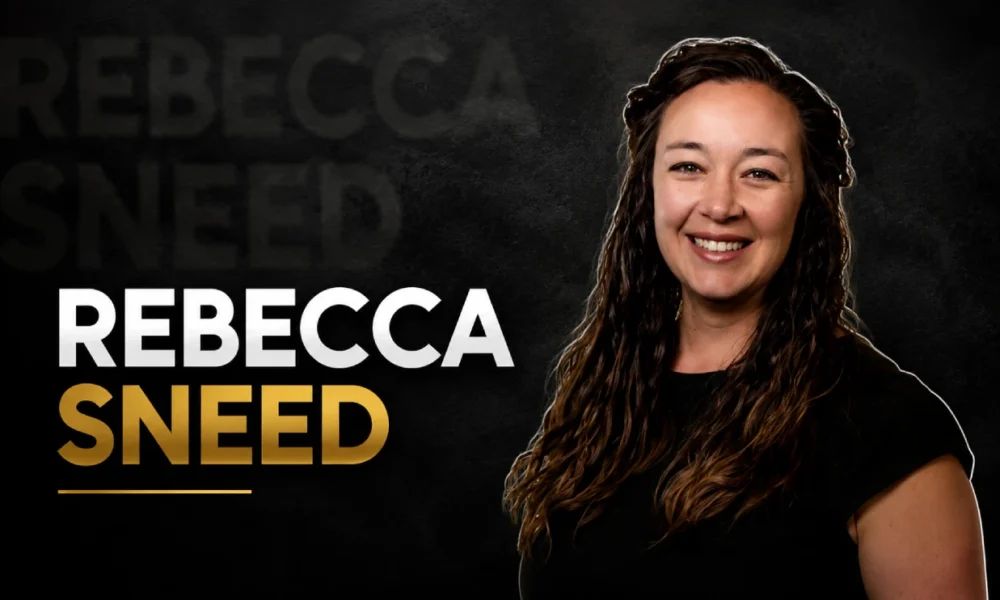
Rebecca Sneed is a legal professional and criminal defense advocate who became widely known through her reported connection to Scott Peterson — the man convicted of murdering his pregnant wife, Laci Peterson, in 2002. She has been a vocal supporter of his post-conviction appeals and was publicly involved in efforts that led to the California Supreme Court vacating his death sentence in 2020.
Table Of Content
This article covers who Rebecca Sneed is, her professional background, her role in the Peterson case, and every major legal development through April 2026 — including the Los Angeles Innocence Project’s habeas petition and its denial.
Who Is Rebecca Sneed?
Rebecca Sneed is a legal professional based in the United States with a background in criminal defense law. She first entered public awareness through her reported connection to Scott Peterson, though specific details about her early life, educational timeline, and the full scope of her legal career remain largely outside the publicly available record.
What is known is that her engagement with the Peterson case has been shaped by legal knowledge — not casual fascination. Her public commentary on the case has consistently focused on procedural arguments, evidentiary standards, and the constitutional requirements of a fair trial.
Professional Background in Criminal Defense
Sneed’s work in criminal defense law is central to her public profile. Her understanding of appellate procedure, jury selection standards, and evidentiary rules has informed her involvement in the Peterson case and her ability to discuss it in specific, legal terms rather than emotional ones.
This professional grounding distinguishes her from many who become publicly associated with high-profile criminal cases. Her advocacy has centered on specific legal arguments — particularly around juror screening errors and the integrity of evidence presented at trial — rather than generalized claims of innocence.
Rebecca Sneed and Scott Peterson: How They Became Connected
Scott Peterson was convicted in November 2004 of the first-degree murder of his wife Laci and the second-degree murder of their unborn son, Conner. He was sentenced to death. The case became one of the most extensively covered criminal cases in American history — scrutinized in courtrooms, documentaries, podcasts, and books for over two decades.
Rebecca Sneed entered the public conversation as someone who had come to believe, based on her own review of the case materials, that Peterson did not receive a fair trial. She reportedly married him while he was incarcerated on death row at San Quentin State Prison in California.
Whether one agrees with her position or not, her decision was not impulsive. By her own account in public statements, it was based on time spent examining the case record and communicating with Peterson directly.
Her Public Advocacy
Sneed has spoken in interviews about her belief in Peterson’s innocence and her conviction that serious problems with jury selection and trial conduct undermined the verdict. Her public presence has been consistent: calm, focused on procedural arguments, and grounded in legal language rather than emotional appeal.
This approach has earned her both supporters among those who share her doubts about the conviction and significant criticism from those who believe justice was properly served. Either way, her advocacy is specific and procedural — not vague.
The Scott Peterson Case: What Happened
Laci Peterson, 27, was eight months pregnant when she vanished from the couple’s Modesto, California home on Christmas Eve 2002. Scott Peterson reported her missing that day. He told police he had been fishing alone in the San Francisco Bay.
A massive search effort followed. Investigators chased nearly 10,000 tips and considered parolees and convicted sex offenders as possible suspects. Four months later, in April 2003, the bodies of Laci and her unborn son, Conner, were found washed ashore in the San Francisco Bay — near the location where Scott Peterson said he had been fishing.
Peterson was arrested four days after the remains were discovered. His secret affair with massage therapist Amber Frey, who had begun dating him a month before his wife’s death, became a central element of the prosecution’s case. Frey secretly worked with police and later testified that Peterson had told her his wife was dead before she had actually disappeared.
A jury found Peterson guilty following a six-month trial in 2004. He was sentenced to death by lethal injection.
The 2020 Death Sentence Reversal
On August 24, 2020, the California Supreme Court unanimously overturned Scott Peterson’s death sentence — while upholding his murder convictions.
The court’s ruling, authored by Justice Leondra Kruger, found that the trial judge had made “a series of clear and significant errors in jury selection” that violated long-standing United States Supreme Court precedent. Specifically, the trial court had improperly dismissed numerous prospective jurors based solely on written questionnaire responses in which they expressed personal opposition to the death penalty.
“A juror may not be dismissed merely because he or she has expressed opposition to the death penalty as a general matter.”
— California Supreme Court, People v. Peterson (2020)
More than a dozen of these dismissed jurors had indicated in other responses that they would be willing to impose the death penalty in some cases. The trial court nonetheless refused the defense’s request to question these jurors about their ability to follow the law — a direct violation of the Witherspoon v. Illinois and Wainwright v. Witt legal standards.
Justice Kruger criticized both the trial court and prosecutors for allowing these errors to occur, writing: “It is in no one’s interest for a capital case to begin with the certainty that any ensuing death verdict will have to be reversed and the entire penalty case retried.”
Prosecutors chose not to pursue a second capital sentencing trial. In 2021, Peterson was resentenced to life in prison without the possibility of parole. At the resentencing hearing, Laci Peterson’s family members addressed Peterson directly, calling him “evil,” “sociopathic,” and remorseless.
Scott Peterson’s Legal Status in 2026
As of April 2026, Scott Peterson, 53, is serving his life sentence at Mule Creek State Prison in California. His murder convictions stand. However, his legal fight has continued through multiple avenues — and each has been rejected so far.
The Juror Misconduct Claim
One of the central legal arguments in Peterson’s post-conviction fight has involved juror Richelle Nice, a member of the original trial jury. Nice was accused of attempting to be on the jury solely to convict Peterson. She was reportedly four-and-a-half months pregnant when she filed a restraining order during the trial period — and allegedly concealed relevant information during jury selection.
This juror misconduct argument was raised in a bid for a new trial in 2022. A judge denied that request the same year. A separate habeas petition alleging juror bias remains pending before the California Supreme Court.
The Los Angeles Innocence Project Takes the Case (2024)
In 2024, the Los Angeles Innocence Project (LAIP) — which has no association with the New York City-based Innocence Project — took on Peterson’s case. The LAIP is led by Director Paula Mitchell, a former habeas corpus law professor at Loyola Law School, and Deputy Director Hannah Brown.
Led by investigator Danielle Leaf, who conducted over 50 interviews with witnesses, the LAIP began pursuing new avenues for challenging the conviction. In 2024, the LAIP sought to have additional items tested for DNA using recent technological advances. A judge rejected all but one of the items proposed for new testing that same year.
New Evidence Claims
The LAIP has argued that Peterson was denied his rights to due process and a fair trial because jurors did not hear evidence that could have affected the outcome. Their claims center on several categories of new evidence:
1. New scientific research on timing of death
The prosecution’s expert, Dr. Greggory DeVore, told the jury that Peterson killed Laci and Conner on the night of December 23 or morning of December 24 — times when Peterson and Laci were home alone together. The LAIP presented new scientific studies, published long after the 2004 trial, showing that Laci and Conner were not killed until four to twelve days after Laci disappeared from the home — times when Peterson could not have been involved.
2. 3D modeling of body placement
Prosecution expert Dr. Ralph Cheng testified that the bodies were placed in the San Francisco Bay south of Brooks Island — the exact location where Peterson had been fishing on December 24. The LAIP presented advances in three-dimensional modeling technology, unavailable at the time of trial, that contradict this testimony. The new models suggest the bodies were most likely put into the water off the Albany Bulb — a different location entirely.
3. The Medina burglary
The LAIP uncovered evidence that a burglary occurred across the street from the Peterson home on December 24, the day Laci disappeared. The defense had argued at trial that Laci’s disappearance may have been connected to that burglary, but was unable to establish a firm link. The LAIP claims prosecutors suppressed evidence related to the burglary and its timing, and that police intentionally destroyed exculpatory evidence connected to it.
4. Scott Peterson’s personal declaration
As part of the legal proceedings, Peterson wrote a 140-page declaration — his most detailed first-person account of the events. In a 2023 letter from prison, he stated: “I am innocent and had nothing to do with these horrible crimes that were committed against my wife and son.”
5. The April 2026 Habeas Petition Denial
In August 2025, the LAIP filed a habeas corpus petition in San Mateo County Superior Court — a nearly 700-page filing presenting their new evidence claims and arguing that Peterson was wrongfully convicted.
On April 28, 2026, San Mateo County Superior Court Judge Elizabeth Hill denied the petition. In her order, Judge Hill ruled that all 14 claims raised by Peterson and the LAIP were either “procedurally barred, meritless, or both.” She found nothing “new, admissible, nor material” in the filing and stated that Peterson had “not alleged facts sufficient to bring any of the procedurally barred claims within an exception for fundamental miscarriage of justice or actual innocence.”
“We disagree with and are disappointed by the court’s ruling on every level. The ruling demonstrates a profound misunderstanding and misapplication of the law applied to habeas corpus petitions.”
— Hannah Brown, Deputy Director, Los Angeles Innocence Project
LAIP Director Paula Mitchell, who has been investigating Peterson’s case for over three years, added that “habeas corpus proceedings are extremely complex and the law of habeas is often misunderstood by superior court judges who review those cases.” The LAIP stated it intends to file the petition in a higher court.
Prosecutors and police involved in the original 2004 trial have continued to stand behind the conviction.
What Happens Next?
The LAIP has announced its intention to appeal Judge Hill’s ruling to a higher court. Peterson also has a separate habeas petition pending before the California Supreme Court, focused specifically on the juror misconduct allegations. Both avenues remain open, though neither has produced a favorable ruling for Peterson to date.
Key Timeline: The Scott Peterson Case
| Date | Event |
|---|---|
| December 24, 2002 | Laci Peterson, 27, vanishes from the family’s Modesto home on Christmas Eve |
| April 2003 | Bodies of Laci and Conner found in the San Francisco Bay |
| November 2004 | Scott Peterson convicted of first-degree and second-degree murder; sentenced to death |
| 2005 | Peterson transferred to death row at San Quentin State Prison |
| August 24, 2020 | California Supreme Court unanimously vacates death sentence due to juror screening errors |
| 2021 | Resentenced to life in prison without the possibility of parole |
| 2022 | Judge denies new trial request based on juror misconduct claims |
| 2023 | Peterson writes letter from prison proclaiming innocence |
| 2024 | Los Angeles Innocence Project takes on the case; DNA testing requests mostly denied |
| April 2025 | LAIP files petition in state appeals court (rejected months later) |
| August 2025 | LAIP files habeas corpus petition in San Mateo County Superior Court |
| April 28, 2026 | Judge Elizabeth Hill denies habeas petition; all 14 claims rejected |
Rebecca Sneed’s Role in Context
Rebecca Sneed occupies a specific and unusual position in the landscape of high-profile criminal cases. She is not a celebrity seeking attention. She is a legal professional who has made specific, procedural arguments about a trial she believes was constitutionally flawed — and those arguments have, at least partially, found traction in the courts.
The California Supreme Court’s 2020 decision to vacate Peterson’s death sentence was based on the same category of juror selection errors that Sneed has publicly highlighted. Whether her broader advocacy contributed directly to the legal strategy that produced that ruling is not publicly documented, but the alignment is notable.
What makes Sneed difficult to dismiss is the combination of personal commitment and professional vocabulary. She does not speak in the emotional register that media coverage often expects from those connected to convicted individuals. Her public presence is measured and focused on legal process — and that has made her a credible voice to some and a controversial one to others.
As of mid-2026, with the LAIP’s habeas petition now denied and an appeal pending, the legal questions Sneed has raised remain unresolved. The case continues.
Conclusion
Rebecca Sneed is a figure who invites strong reactions — and that is largely a function of the case she has chosen to publicly support. The Peterson case remains one of the most divisive in modern American criminal history, and anyone who advocates publicly for the convicted man’s innocence walks directly into that controversy.
What distinguishes Sneed is the professional lens she brings. She is not simply speaking out of personal loyalty. She has made specific procedural arguments about jury selection, evidentiary standards, and constitutional rights — arguments that found partial validation when the California Supreme Court vacated Peterson’s death sentence in 2020.
As of April 2026, the legal landscape has shifted again. The Los Angeles Innocence Project’s habeas petition — presenting new scientific evidence, 3D modeling, and witness testimony — has been denied by Judge Elizabeth Hill. The LAIP plans to appeal. A separate juror misconduct petition remains pending before the California Supreme Court.
Scott Peterson remains at Mule Creek State Prison, serving life without parole. His murder convictions stand. Whether future legal challenges will change that outcome is an open question — and one that Rebecca Sneed, along with the legal teams now involved, continues to pursue.





No Comment! Be the first one.