







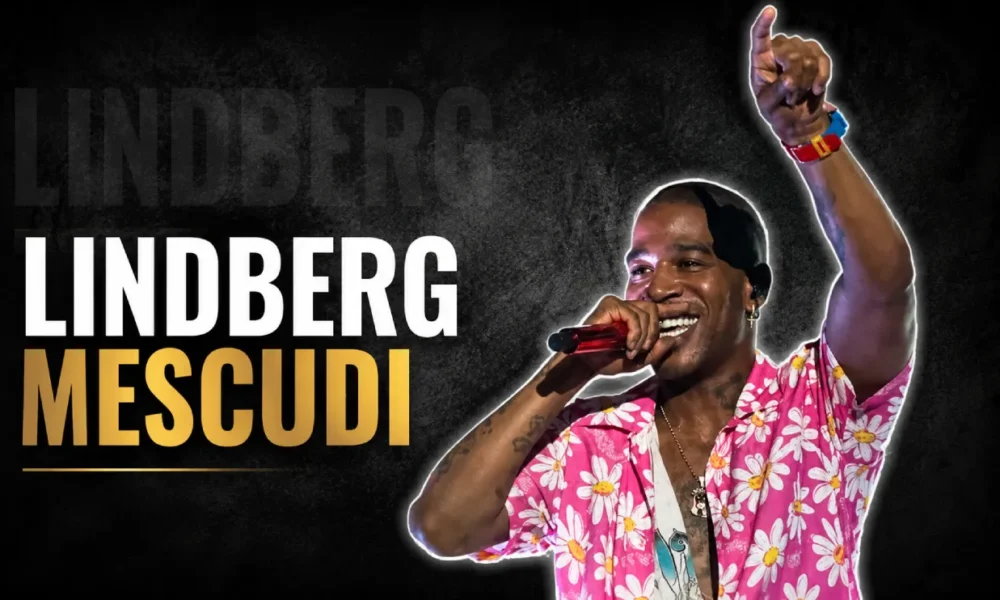
Lindberg Styles Mescudi was a World War II veteran, substitute teacher, and house painter of African-American and Mexican descent. He was also the father of rapper Kid Cudi. Lindberg died of cancer on July 31, 1995, when his youngest son Scott was 11 years old. That loss became the emotional foundation of one of hip-hop’s most influential careers — shaping albums, breaking stigma around mental health, and changing how a generation talks about grief.
Table Of Content
- Quick Facts
- Early Life and Multicultural Heritage
- World War II Military Service
- Career: House Painter and Substitute Teacher
- Marriage to Elsie Harriet
- The Mescudi Family
- Lindberg’s Death and Its Impact on Young Scott
- From Loss to Art: The Man on the Moon Trilogy
- Mental Health Struggles and Rehab
- Embracing His Mexican Roots: The Juan Pablo Alter Ego
- Kid Cudi as a Father: Breaking the Cycle
- Conclusion
Quick Facts
| Full Name | Lindberg Styles Mescudi |
| Born | June 21, 1927 — Cleveland, Cuyahoga County, Ohio |
| Died | July 31, 1995 (age 68) — Parma, Cuyahoga County, Ohio |
| Cause of Death | Cancer |
| Ethnicity | African-American and Mexican |
| Military Service | World War II (Army Air Forces / Air Force) |
| Occupations | House painter, substitute teacher |
| Spouse | Elsie “Harriet” Banks (married 1979) |
| Children | Maisha, Dean, Domingo, and Scott (Kid Cudi) |
| Parents | Charles Manitow Mescudi (father), Essie Viola Lawson (mother) |
Early Life and Multicultural Heritage
Lindberg was born in Cleveland, Ohio, to Charles Manitow Mescudi, a man of Mexican heritage from New Mexico, and Essie Viola Lawson, an African-American woman from Pennsylvania. He grew up during the Great Depression alongside five siblings: three older brothers — Udeal, Cois, and Marvin — an older sister named Essie Ella Rannet, and a younger brother named Charles.
Growing up in a multicultural household in 1930s Cleveland shaped Lindberg’s ability to navigate multiple identities. His mixed African-American and Mexican background placed him at an intersection that was uncommon for the era, and the experience of bridging two cultures became something his youngest son would later carry into music and public life.
World War II Military Service
Lindberg served in the military during World War II. He is widely described as an Air Force veteran, though it is worth noting that the U.S. Air Force did not become an independent branch until 1947. During WWII, it operated as the Army Air Forces. Regardless of the exact designation, Lindberg served during one of the most demanding periods in American military history.
After the war ended in 1945, he returned to Cleveland and transitioned to civilian life. For Black and mixed-race veterans of that era, the post-war transition often came with barriers in housing, employment, and education — even with GI Bill benefits. Lindberg built his life anyway, relying on the same discipline that carried him through the war.
Career: House Painter and Substitute Teacher
Lindberg worked as a house painter — a physically demanding trade that provided steady income for his family over decades. He also worked as a substitute teacher, which reflected his investment in community and education.
Neither profession brought fame or wealth. But both demonstrated a consistency and work ethic that left a mark on his children. Kid Cudi has spoken about how his parents’ example shaped his own relentless approach to creative output — a trait that would define his career for better and, eventually, for worse.
Marriage to Elsie Harriet
In 1979, at age 51, Lindberg married Elsie “Harriet” Banks. Elsie, originally from Tennessee, was 30 at the time. She worked as a choir teacher at Roxboro Middle School in Cleveland Heights, Ohio. The 21-year age gap between them did not prevent a strong partnership — both shared a commitment to family, creativity, and education.
Elsie’s musical background contributed to a household where artistic expression was encouraged alongside discipline. She would later raise their children as a single mother after Lindberg’s death and remains a visible presence in Kid Cudi’s life today.
The Mescudi Family
Lindberg and Elsie had four children together: Maisha, Dean, Domingo, and Scott Ramon Seguro Mescudi, born January 30, 1984, as the youngest. The family lived in the greater Cleveland area — Kid Cudi grew up in Shaker Heights and later Solon, Ohio.
The household emphasized perseverance, honesty, and self-expression. Lindberg modeled these values through multiple jobs and his military background. Kid Cudi attended Shaker Heights High School before transferring to Solon High School, where he was eventually expelled for threatening to punch the principal. He earned his GED and briefly studied film at the University of Toledo before dropping out after one year.
These early years — the values at home, the struggles at school, the absence that was coming — all fed into the artist who would later emerge.
Lindberg’s Death and Its Impact on Young Scott
Lindberg Mescudi died of cancer on July 31, 1995, in Parma, Cuyahoga County, Ohio. He was 68. His youngest son was 11.
The loss was immediate and severe. Kid Cudi later described the aftermath without sentiment: “I got really good at masking the madness over the years, being the youngest of four, staying in my place, being quiet, entertaining myself.” He suffered from insomnia and insisted his mother sleep near him. Beginning in the fourth grade — and intensifying after his father’s death — he began experiencing recurring dreams about his own death.
These experiences — childhood grief, suppressed emotion, isolation — became the raw material for everything that followed.
From Loss to Art: The Man on the Moon Trilogy
Kid Cudi’s breakthrough was built on the emotional architecture of losing his father. His debut album, Man on the Moon: The End of Day (2009), went quadruple platinum, and its lead single “Day ‘n’ Nite” became a global hit. But it was the album’s deeper cuts that revealed the wound underneath.
“Soundtrack 2 My Life” directly addresses his mother’s work ethic, his father’s death, and the depression that consumed him. The track became a blueprint for a new kind of hip-hop — one that treated emotional pain as a subject, not a weakness.
The loss echoes through his entire discography:
- “Cudi Zone” — dreamlike detachment as a coping mechanism
- “Solo Dolo” — loneliness treated as a permanent condition
- “Mr. Rager” (from Man on the Moon II: The Legend of Mr. Rager, 2010) — substance use and escapism rooted in unresolved trauma
- “The Pale Moonlight” and other tracks from Man on the Moon III: The Chosen (2020) — confrontation with demons and a hard-won sense of peace
As Cudi told HipHopDX: “It’s definitely important to me to make mention of my father because I think that does play a major part in why I am who I am, like my character and how I think and how I move in life.”
No rapper before Kid Cudi had centered vulnerability this completely. The “Man on the Moon” trilogy opened a lane for emotional honesty in hip-hop that artists like Travis Scott, Logic, and Juice WRLD would later follow.
Mental Health Struggles and Rehab
In October 2016, Kid Cudi checked into a rehabilitation facility for depression and suicidal urges. He disclosed his struggles publicly in a Facebook post that became a turning point in hip-hop culture. For a genre that had long equated emotional suppression with strength, his admission broke a significant barrier.
Speaking at a 2022 fundraising dinner for New York-Presbyterian Hospital’s Youth Anxiety Center, Cudi traced those struggles directly to his father’s death and the years of suppression that followed. “I was darker than I ever had been in my life,” he said.
He also described how the pressure to release music annually compounded his issues: “That was one of the things that drove me mad up until 2016, because I was dropping an album every year and that took its toll on me. Since rehab, I’ve been pacing myself with work. I don’t drop an album every year anymore; I do it every other year.”
Kid Cudi’s openness about therapy, medication, and recovery — and his willingness to connect it all back to childhood loss — has encouraged millions of fans to seek help. That cultural shift traces back to a boy in Cleveland who lost his father at 11 and never fully processed it until his 30s.
Embracing His Mexican Roots: The Juan Pablo Alter Ego
Lindberg’s Mexican heritage did not disappear after his death. It surfaced in Kid Cudi’s art unexpectedly — through an alter ego named Juan Pablo.
Kid Cudi described Juan Pablo to MTV as a Black kid raised by a Mexican family: “He feels that he’s Mexican to the point where he tries to make his appearance like a Mexican. He talks like a Mexican, but it’s not good Spanish. He’s got swag, but he’s so silly because he doesn’t understand that he’s not Mexican. But people let him do his thing because he has so much confidence in himself. I think the message is to be yourself and be confident in who you are.”
During a concert, a fan handed Kid Cudi a Mexican flag, which he wore across his back like a cape. He later posted: “Whoever gave me this flag, it’s goin’ in my house #juanpablo.”
This connection to his father’s Mexican side — played for humor, pride, and identity — shows how Lindberg’s multicultural heritage continued to shape his son’s creative world decades after his passing.
Kid Cudi as a Father: Breaking the Cycle
Kid Cudi became a father when his daughter, Vada Wamwene Mescudi, was born in 2010. He launched a sneaker line called “Vadawam 326,” embedding her birthdate in the name — a gesture that echoed the kind of dedication his own father showed through work and presence.
He has spoken about wanting to be present for Vada in ways that his father’s early death made impossible for both of them. The shift toward pacing his career — fewer albums, more time at home — represents a conscious effort to break the cycle of absence.
In 2025, Kid Cudi married Lola Abecassis Sartore. Through his family life, he continues rebuilding what his father started: a household built on love, creative expression, and showing up.
Conclusion
Lindberg Styles Mescudi lived 68 years. He never heard “Day ‘n’ Nite” on the radio. He never watched his son accept a Grammy — Kid Cudi won two in 2012 for “All of the Lights” with Kanye West. He never saw “The Scotts” with Travis Scott reach number one on the Billboard Hot 100 in 2020.
But the values he instilled during those first 11 years — perseverance, creative courage, and the importance of honesty — became the foundation of a career that sold millions of records and changed how an entire generation processes grief and mental health.
Lindberg’s widow, Elsie, still lives in Cleveland. She has attended award shows and public events with her son, including the Critics’ Choice ceremony in December 2022. She carries forward the family bonds that Lindberg established before cancer took him at 68.
Influence does not require fame. Sometimes it requires 11 years of being a present father.

No Comment! Be the first one.