









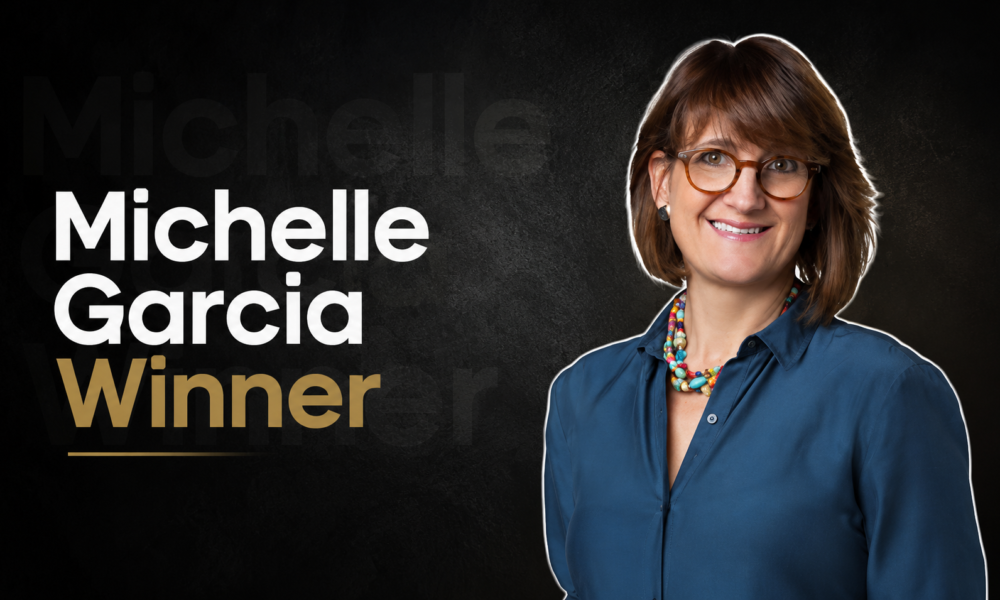
Michelle Garcia Winner is a speech-language pathologist who created Social Thinking — a methodology that teaches people to understand the thinking behind social behaviour. Therapists, teachers, and parents worldwide use her framework to support individuals with autism, ADHD, and other social-cognitive challenges.
Table Of Content
- Who Is Michelle Garcia Winner?
- Early Life and Education
- The Social Thinking Methodology
- Published Books and Resources
- Social Thinking as an Organisation
- Evidence Base and Research
- Social Thinking vs. Other Social Skills Approaches
- Neurodiversity and Social Thinking
- How to Get Started
- Conclusion
- FAQs
This article covers who she is, how she built the methodology, what the research says, how it compares to other approaches, and how to get started with it.
Who Is Michelle Garcia Winner?
Michelle Garcia Winner, MA, CCC-SLP, is the founder and CEO of Social Thinking and Think Social Publishing, Inc. She is a clinician, author, speaker, and social-cognitive therapist with a career spanning more than 30 years. She maintains an active caseload of clients in addition to consulting with families, schools, and organisations on the Social Thinking Methodology.
She is not a pop-psychology figure. She built her reputation through direct clinical practice, published materials, and professional training programmes delivered across the United States and internationally.
Early Life and Education
Winner’s interest in autism began while attending the University of California-Santa Barbara in 1979. That interest became the reason she pursued speech-language pathology as a career.
Her first two mentors were Dr. Carol Prutting, an early pioneer in social pragmatics research, and Dr. Robert Koegel, the founder of Pivotal Response Therapy (an approach aligned with applied behaviour analysis).
She attended graduate school at Indiana University-Bloomington, where she became involved with the Indiana Resource Center for Autism (IRCA) under the leadership of Nancy Dalrymple. At IRCA during the 1980s, Winner worked extensively with teens and young adults who had significant intellectual learning challenges, limited speech and language development, and very restricted social learning abilities. She combined her knowledge of communication with behaviourism to help these students develop basic functional communication and social skills.
In the late 1980s, she returned to California and transitioned to working in hospitals and post-acute rehabilitation centres with patients recovering from head injuries or strokes. This work exposed her to higher-level brain functioning and cognitive rehabilitation — a perspective that later shaped how she thought about social cognition.
In 1995, she became the speech-language pathologist for a public high school district. Her caseload included many students with strong intelligence and language ability but poor social communication skills. The existing approaches — memorising dialogue scripts and practising isolated behaviours — did not work for these students. They needed to understand why social interaction matters, not just how to do it. This gap gave birth to the Social Thinking Methodology.
She opened her private practice, the Center for Social Thinking, in 1998. Demand was immediate and has not slowed. She also founded Think Social Publishing, Inc. to handle growing public speaking demand and to publish books on the methodology. To date, she has written or co-authored 38 books.
The Social Thinking Methodology
Core Premise
Social Thinking rests on one idea: before you can act socially, you have to think socially.
Most social skills programmes teach behaviours — make eye contact, take turns, say hello. Social Thinking teaches the thinking that makes those behaviours meaningful. Rather than instructing a child to “look at someone when they talk to you,” the framework explains why eye contact matters: it signals that you are paying attention, which makes the other person feel respected. When a person understands the reason behind the behaviour, it becomes easier to apply across different situations.
The focus is never to cure or fix, because there is nothing to cure or fix. — Michelle Garcia Winner and Pamela Crooke, 2026
The methodology works best with individuals who have solid expressive and receptive language ability. It targets people who can talk but struggle to understand the social dynamics around them.
Key Concepts
Winner and her team developed a specific vocabulary to make abstract social ideas concrete. These are the core concepts:
- Thinking about You, Thinking about Me — In any social interaction, both people are forming impressions of each other at the same time. Recognising this two-way process is the starting point of social thinking.
- Expected vs. Unexpected Behaviour — Instead of labelling behaviour as “good” or “bad,” the framework uses “expected” (what most people anticipate in a situation) and “unexpected” (what surprises or confuses others). This removes moral judgment and focuses on social reality. Winner and her team coined these terms, which practitioners have now widely adopted in social communication therapy.
- Social Behaviour Mapping — A visual tool that connects a specific behaviour to how others feel when they observe it, how they react, and how the person feels as a result. It makes cause-and-effect visible for people who do not perceive it naturally.
- Size of the Problem / Size of My Reaction — A concept that helps individuals match the intensity of their emotional response to the actual significance of a problem. Spilling juice is not the same as missing a flight.
- Superflex — A character-based curriculum for younger children (roughly ages 4–10). A superhero named Superflex battles the “Unthinkables” — characters that represent common behavioural challenges like Rock Brain (rigid thinking) or One-Sided Sid (only talking about your own interests). Winner co-authored this with Stephanie Madrigal.
- Smart Guesses — Teaching individuals to combine what they see, hear, and already know with what they notice about how others are thinking and feeling, rather than jumping to conclusions.
One important note from practitioners: concepts like “expected” and “unexpected” work best when taught as part of the full framework, not as standalone vocabulary. Teaching these terms without first building an understanding of thoughts, feelings, and perspective-taking tends to produce limited results.
Who It Helps
Winner originally designed the methodology for autistic individuals with average to above-average intelligence who struggled significantly in social contexts. Over time, practitioners have applied it to a wider range of profiles:
- Autism Spectrum Disorder (ASD)
- ADHD
- Social anxiety
- Nonverbal learning disability (NVLD)
- Twice-exceptional (2e) learners
- Emotional regulation challenges
Materials span preschool through adulthood, including workplace settings.
| Age Group | Recommended Curriculum |
|---|---|
| Pre-K to Early Elementary (ages 4–7) | The Incredible Flexible You; We Thinkers! |
| Elementary (ages 7–10) | Superflex curriculum |
| Tweens and Teens | Think Social!; Social Thinking and Me; Thinksheets for Tweens and Teens |
| Adults | Thinking About You Thinking About Me; workplace-focused materials |
Published Books and Resources
Winner has produced a large catalogue of books, curricula, and teaching guides. The most widely used include:
- Thinking About YOU Thinking About ME — Her foundational text laying out the Social Thinking philosophy for clinicians and educators.
- Social Thinking and Me — A two-book set that Winner wrote directly for students (a concepts book paired with an activity book).
- Superflex: A Superhero Social Thinking Curriculum — Winner co-authored this with Stephanie Madrigal. One of the most widely used pieces of the curriculum in elementary schools.
- The Incredible Flexible You — A curriculum series for pre-K through early elementary.
- We Thinkers! — A two-volume curriculum for younger learners building foundational social concepts.
- Think Social! A Social Thinking Curriculum for School-Age Students — A comprehensive school-based guide for group instruction.
- Thinksheets for Tweens and Teens — Over 160 worksheets that break down abstract social concepts into concrete mini-lessons for pre-adolescents and adolescents, covering topics like social anxiety, body language, filtering thoughts, and fitting in.
Speech-language pathologists, special education teachers, school psychologists, and occupational therapists all use these materials. The Social Thinking website sells them directly.
Social Thinking as an Organisation
Think Social Publishing, Inc. (operating as Social Thinking) is based in San Jose, California. The organisation:
- Publishes all curriculum materials developed under the methodology
- Runs professional training conferences and workshops across the U.S. and internationally
- Offers online learning resources for professionals and parents
- Maintains a website (socialthinking.com) with free articles, strategies, and research references
- Employs a collaborative of trained speakers and clinicians who deliver official training
School districts across all 50 U.S. states and in multiple countries now use the company’s frameworks. The organisation has trained tens of thousands of educators and clinicians through its workshop programmes.
Evidence Base and Research
Social Thinking occupies a specific position in the evidence landscape. Practitioners across the world widely adopt it, but the published research base is still developing compared to more formally studied approaches like ABA-based social skills training.
What the Evidence Shows
- Practice-based evidence is strong. Winner developed the methodology through direct clinical work, and thousands of practitioners report positive outcomes. She maintains an active caseload and continually updates the approach based on clinical insights.
- A growing number of peer-reviewed studies examine components of the Social Thinking framework, with several published between 2020 and 2024. The Social Thinking website maintains a research bibliography.
- A meta-analysis in the Journal of Autism and Developmental Disorders found that children who participated in structured social skills groups — including Social Thinking-based groups — showed significant improvements in social knowledge, social performance, and friendship quality compared to control groups.
- The U.S. Surgeon General supports ABA-based approaches for autism interventions. Social Thinking is not ABA-based; it is a cognitive-linguistic framework. This is an important distinction when evaluating evidence.
The honest assessment: Social Thinking delivers clinical results in practice and continues to grow in published research, but it does not yet match the volume of randomised controlled trials that some competing approaches have. Professionals who use it tend to value its practical applicability and cognitive depth over strict evidence-based metrics.
Social Thinking vs. Other Social Skills Approaches
Social Thinking is one of several widely used approaches for teaching social skills. Here is how it compares:
| Feature | Social Thinking | PEERS (UCLA) | ABA-Based Social Skills | Skillstreaming |
|---|---|---|---|---|
| Focus | Cognitive understanding of social dynamics | Concrete rules for making and keeping friends | Behavioural change through reinforcement | Modelling and role-play of specific skills |
| Approach | Teaches the “why” behind social behaviour | Structured, manualised programme (16 weeks) | Breaks skills into small, teachable steps | Direct instruction with guided practice |
| Age Range | Pre-K through adulthood | Teens and young adults primarily | All ages | Children and adolescents |
| Parent Involvement | Materials available for parents; varies by provider | Concurrent parent sessions are core to the programme | Parent training often included | Limited |
| Evidence Base | Growing; practice-based evidence strong | Multiple RCTs; strong published evidence | Most extensively researched approach for autism | Moderate; used widely in schools |
| Best For | Individuals who benefit from understanding social cognition; broad applicability | Teens who want specific friendship skills with structured practice | Individuals who need behavioural skill-building with measurable outcomes | Classroom-based social skills instruction |
Clinicians and educators can combine elements from multiple frameworks depending on the individual’s needs. These approaches are not competing — they serve different purposes.
Neurodiversity and Social Thinking
The relationship between Social Thinking and the neurodiversity movement deserves a direct conversation.
The Core Debate
The neurodiversity movement holds that differences in brain function should be recognised and respected — that conditions like autism and ADHD represent different ways of learning, not disorders to fix. This perspective has driven significant change in how clinicians approach social skills work.
Some autistic self-advocates have raised concerns that frameworks like Social Thinking place the burden on autistic individuals to adapt to neurotypical norms, rather than encouraging mutual understanding. The question — whether social differences are deficits to correct or simply differences to navigate — drives an active and important debate.
Winner’s Response
Winner and her co-author Pamela Crooke have addressed this directly. In a 2026 article titled “Respecting Neurodiversity by Helping Social Learners Meet Their Personal Goals,” they stated that neurodiversity should be acknowledged and celebrated, and that the focus of Social Thinking is never to cure or fix. They frame the methodology as helping individuals — neurotypical or neurodivergent — understand how the social world works so they can make informed choices about how to engage with it.
How the Methodology Has Changed
The team has updated its materials over time to move away from deficit-based language. The framework increasingly positions itself as teaching social understanding rather than demanding social conformity.
Practitioners also note that concepts like “expected vs. unexpected” work as practical social observations — not as moral judgments. The goal is to give individuals information about how social situations work so they can choose how to respond, not to enforce compliance.
This remains a space where the conversation is ongoing, and the methodology continues to adapt.
How to Get Started
For Parents
- Visit socialthinking.com — the site has free articles and strategy guides that introduce the core concepts.
- Start with the foundational idea: your child needs to understand why social behaviours matter, not just what to do. Read “Thinking About YOU Thinking About ME” for the full framework.
- For younger children (ages 4–7), explore We Thinkers! or The Incredible Flexible You.
- For school-age children, ask your child’s school SLP or special education team if they use Social Thinking materials. Many do.
- Consider attending a parent-focused workshop or online course offered through the Social Thinking site.
For Educators and Therapists
- Browse the Social Thinking website for free articles, teaching tools, and the research bibliography.
- Choose a curriculum that matches your students’ age group (see the table in the “Who It Helps” section above).
- Attend an official Social Thinking training — the organisation runs conferences and workshops across the U.S. and internationally, with online options available.
- Look for the official STTSC (Social Thinking Training & Speakers’ Collaborative) badge to ensure training comes from Think Social Publishing.
- Start with the foundational concepts (thoughts and feelings, group plan, expected/unexpected) before introducing advanced tools like Social Behaviour Mapping.
Conclusion
Michelle Garcia Winner built a framework that gives teachers, therapists, and parents a shared vocabulary for helping people who find social interaction difficult — not because they lack intelligence or motivation, but because they process social information differently.
The methodology is not a cure, and it is not the only option. But it addresses something that most social skills programmes skip: the thinking behind the behaviour. For many individuals, that shift — from “do this” to “understand why this matters” — is what makes social skills stick.
The evidence base continues to grow. The methodology continues to evolve in response to the neurodiversity conversation. And the practical tools remain available to anyone who wants to use them, from parents at home to clinicians in schools.
If you work with children or adults who struggle socially, the Social Thinking website (socialthinking.com) is a concrete starting point. Much of the foundational content is free, and the books are written for educators and parents — not just specialists.
FAQs
What is the Social Thinking method?
Social Thinking is a methodology that Michelle Garcia Winner developed to teach individuals the thinking behind social behaviour. It helps people recognise how their actions affect what others think and feel, making social skills more meaningful and more likely to transfer across different situations.
Who is Michelle Garcia Winner?
Michelle Garcia Winner is a speech-language pathologist (MA, CCC-SLP) and the founder and CEO of Social Thinking. She developed the methodology over three decades of clinical practice with individuals who have autism, ADHD, and related social-cognitive challenges. She has written or co-authored 38 books on the subject.
Is Social Thinking only for autism?
No. While Winner originally designed it for autistic individuals, practitioners now use Social Thinking with anyone who has social communication challenges, including those with ADHD, anxiety, nonverbal learning disability, and twice-exceptional profiles.
What age group does Social Thinking target?
The methodology covers preschool through adulthood. Different curricula target different age groups — from We Thinkers! for young children to Thinksheets for Tweens and Teens to workplace-focused materials for adults.
Is there scientific research behind Social Thinking?
The methodology has strong practice-based evidence and a growing body of published research. It does not yet match the volume of randomised controlled trials that ABA-based approaches have, but clinicians and educators across the United States and internationally use it and report practical effectiveness.
How is Social Thinking different from ABA?
ABA (Applied Behaviour Analysis) focuses on changing behaviour through reinforcement. Social Thinking focuses on teaching the cognitive understanding behind social behaviour — the “why,” not just the “what.” Clinicians can and do use the two approaches together.
Is Social Thinking neurodiversity-affirming?
Winner and her team have stated explicitly that the focus is never to cure or fix anyone. The methodology aims to help individuals understand how the social world works so they can make their own choices about how to engage with it. The team has updated its materials over time to reflect neurodiversity-affirming language.
Where can I find Social Thinking resources?
The official website (socialthinking.com) offers free articles, downloadable guides, and a full catalogue of books and curricula. The organisation offers professional training through workshops and online courses.





No Comment! Be the first one.