








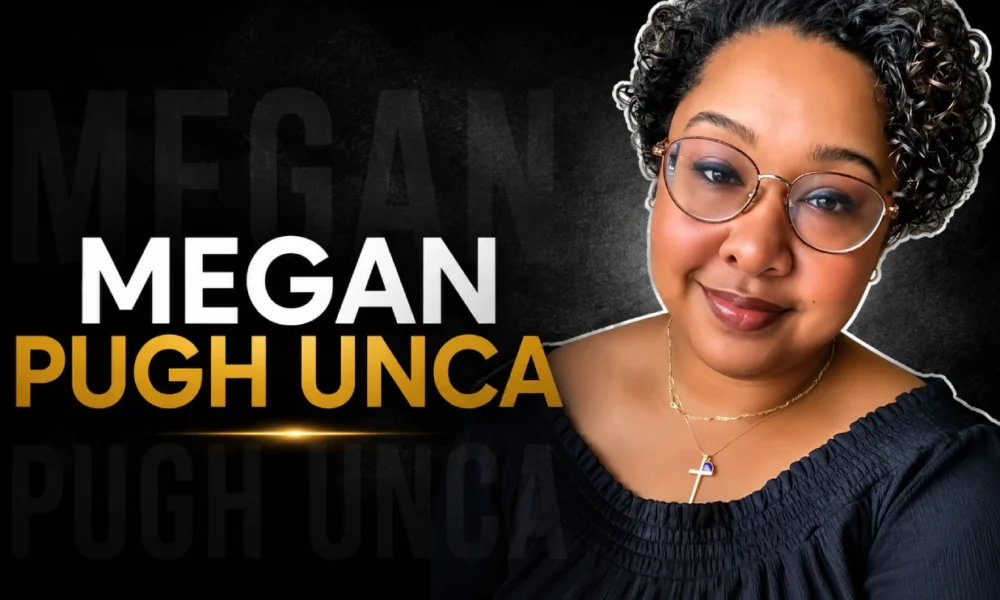
Megan Pugh served as Dean of Students at UNC Asheville from July 2022 until June 2025, when her employment ended shortly after a secretly recorded video published by the activist organization Accuracy in Media showed her expressing continued support for DEI-related practices. The video, the university’s swift response, and the intense backlash that followed turned a campus personnel matter into one of the most widely covered stories in higher education this year.
Table Of Content
- Who Is Megan Pugh?
- The UNC System’s DEI Ban: The Policy Context
- What the Secretly Recorded Video Shows
- Accuracy in Media: The Organization Behind the Recording
- How UNC Asheville Responded
- Campus and Community Reaction
- The Legal and Ethical Questions
- How This Compares to Similar Cases
- What Has Happened Since June 2025
- Conclusion
- Sources and Further Reading
This article covers everything the public record shows — Pugh’s background, the policy landscape she was operating in, what the video actually showed, who recorded it, and the legal and ethical questions the case raised. It also covers what has happened since.
| Full Name | Megan Pugh |
| Former Role | Dean of Students, UNC Asheville |
| Tenure | July 2022 – June 2025 |
| Prior Role at UNCA | Director, Office of Multicultural Affairs |
| Controversy | Secretly recorded video expressing DEI support after UNC System DEI ban |
| Recorded By | Accuracy in Media (AIM) |
| Outcome | Employment ended; university did not confirm whether she was fired or resigned |
Who Is Megan Pugh?
Megan Pugh’s career at UNC Asheville predates her time as Dean of Students. Before stepping into that role in July 2022, she served as the Director of the Office of Multicultural Affairs at the same institution — a position that put her at the center of diversity and inclusion programming on campus.
During her time at UNCA, Pugh received the Mighty Oak Resilience Staff Award, recognized for her persistence and dedication in supporting and advocating for BIPOC students, faculty, and staff. The award reflected what many students said they experienced directly in their interactions with her.
Students described her as kind, compassionate, dedicated, and generous — someone they encountered from freshman orientation through graduation. She maintained an open-door policy that made her accessible across the campus community. According to one recent UNCA graduate, Pugh “served as a voice” and “someone that stood for them in every room.” Another student said, “I don’t think I would have made it to graduation if it weren’t for her.”
Her earlier role in Multicultural Affairs and her transition to Dean of Students placed her at the intersection of student life and DEI-related work — a position that became increasingly complicated after the UNC System moved to ban DEI programs in 2024.
The UNC System’s DEI Ban: The Policy Context
To understand the Megan Pugh story, you need to understand the policy she was operating under. In May 2024, the University of North Carolina Board of Governors voted 22–2 to eliminate its DEI program across all 16 campuses. The ban replaced existing diversity, equity, and inclusion frameworks with a new policy called “Equality Within the University of North Carolina.”
Under the ban, all DEI offices and related positions within the UNC System were either removed or adjusted by September 2024. The practical effect varied by campus. At UNC Asheville, the university no longer had a standalone DEI office, and DEI-related work was redistributed across multiple programs throughout the institution.
Pugh herself acknowledged this shift. She explained that because UNCA no longer had a dedicated DEI office, the work had become distributed across the university — a structural change she was navigating within the constraints of the new system-wide policy.
| Aspect | Before the Ban | After the Ban |
|---|---|---|
| Dedicated DEI Offices | Yes — campus-level offices across all 16 UNC institutions | No — offices eliminated or restructured |
| DEI Staff Positions | Dedicated DEI officers and coordinators | Positions eliminated or responsibilities redistributed |
| Programming | Targeted DEI initiatives and programming | Absorbed into broader student services or discontinued |
| Governing Policy | Varied by campus | “Equality Within the University of North Carolina” — system-wide |
| Compliance Oversight | Internal campus-level | Board of Governors-level enforcement |
The ban was part of a broader national trend. By mid-2025, more than 100 universities across the United States had reduced, restructured, or eliminated their DEI offices — a wave driven by a combination of state legislation, board-level decisions, and political pressure.
What the Secretly Recorded Video Shows
In early June 2025, Accuracy in Media published a secretly recorded video featuring Pugh. The recording was made without her knowledge. In it, an unidentified interviewer engages Pugh in conversation about DEI-related subjects at the university.
The exchange that drew the most attention went as follows: when the interviewer states, “I’m so glad that you guys are still doing equity work,” Pugh responds, “We probably still do anyway, but, you know, gotta keep it quiet.” She then adds, “But, I love breaking rules.”
“We probably still do anyway, but, you know, gotta keep it quiet… But, I love breaking rules.”
— Megan Pugh, in a secretly recorded conversation published by Accuracy in Media
The clip was short. It was edited. And the full context of the conversation — what was discussed before and after the quoted exchange — was not made publicly available by AIM. This is an important detail. A secretly recorded, selectively edited clip does not provide the same context as a full, unedited conversation. What Pugh meant by “keep it quiet” and “breaking rules” — whether she was describing actual policy violations or speaking informally about the constraints she felt — remains a matter of interpretation.
What is clear is that the video was enough to trigger an immediate institutional response.
Accuracy in Media: The Organization Behind the Recording
Accuracy in Media (AIM) is not a new organization. It was founded in 1969 by Reed Irvine as a media watchdog group that challenged what it perceived as liberal bias in mainstream journalism. For decades, it operated as a relatively conventional media criticism organization.
In recent years, under the leadership of President Adam Guillette, AIM has shifted its focus significantly. The organization now conducts undercover video operations targeting public school officials and university administrators — particularly those involved in DEI-related work, critical race theory, or progressive campus policies.
AIM’s methodology is consistent: an operative poses as a sympathetic individual — someone who appears to share the target’s views — and engages them in conversation while secretly recording. The resulting clips are then edited and published, often with accompanying articles and social media campaigns designed to generate public pressure for the target’s removal.
The same week the Pugh video was published, AIM released a similar secretly recorded video targeting an administrator at UNC Charlotte. That person was also fired following the video’s release.
AIM describes its work as accountability journalism. Critics — including established journalism organizations and press freedom advocates — argue that its methods cross ethical lines that legitimate newsrooms do not cross. Standard practice at reputable media organizations requires reporters to identify themselves and their organization when working on a story. AIM’s operatives do the opposite: they actively conceal their identity and purpose.
The organization’s funding model and organizational structure are matters of public record through its tax filings, though detailed financial breakdowns have not been widely reported.
How UNC Asheville Responded
The university’s response was fast. UNC Asheville confirmed that “following a prompt review of the matter, the individual is no longer employed by the university.” A university spokesperson declined to say whether Pugh was fired or resigned, citing a policy against commenting on personnel matters.
In an email to faculty and staff, Chancellor Kimberly van Noort addressed the incident directly. She said the video “was secretly recorded by an individual who misrepresented their identity to gain access to University offices.” The chancellor’s framing emphasized the deceptive nature of the recording — suggesting the university viewed the method of obtaining the video as problematic, independent of its content.
“The video was secretly recorded by an individual who misrepresented their identity to gain access to University offices.”
— Chancellor Kimberly van Noort, in an email to UNCA faculty and staff
What the university did not say was equally notable. There was no statement defending Pugh’s record of service. There was no acknowledgment of her years of work at the institution. And there was no indication that the university considered the selective, edited nature of the video before acting. Whether the speed of the response reflected genuine policy concern or institutional self-protection in a politically charged environment is a question the public record does not definitively answer.
Campus and Community Reaction
The response on campus was sharp, immediate, and deeply felt.
1. Students and Alumni
A student-created petition calling for Pugh’s reinstatement circulated quickly, gathering signatures from current students and recent graduates. One student wrote that Pugh had been “instrumental to my success and the success of the students here at UNCA.” Multiple students spoke on record about how Pugh had been a champion for marginalized students throughout her tenure. Recent graduates said the university’s reaction was fast and, in their view, disproportionate to what the video actually showed.
2. Faculty and Staff
The broader campus community had reason to be uneasy independent of the Pugh case. In 2023, the university had removed banners supporting LGBTQ rights and Black Lives Matter from campus and also removed a Black Lives Matter mural on the main road through campus. More recently, UNCA eliminated four liberal arts programs. For many faculty and staff, Pugh’s departure felt like part of a larger pattern of institutional contraction.
3. National Media
The story attracted coverage across a wide range of outlets — from the Asheville Watchdog and WLOS News 13 locally to ABC affiliates and Fox News nationally. Conservative outlets framed the story around DEI defiance and accountability. Other outlets focused on the ethics of undercover recording and the broader implications for academic freedom.
The intensity of the reaction reflected something specific about Pugh’s role. Unlike a back-office administrator, the Dean of Students is one of the most visible and personally connected positions on any university campus. Students interact with the Dean of Students at orientation, during crises, and at graduation. When that person is suddenly gone — and the reason is a selectively edited secret recording — the emotional response is personal, not just political.
The Legal and Ethical Questions
Was the Recording Legal?
North Carolina is a one-party consent state for audio recordings. Under North Carolina law, as long as one participant in a conversation consents to the recording, the recording is generally legal. Since the AIM operative was a participant in the conversation and consented to their own recording, the act of recording itself likely did not violate state wiretapping or surveillance laws.
However, legality and ethics are not the same thing. The chancellor’s statement that the operative “misrepresented their identity to gain access to University offices” raises separate questions. Gaining access to a private office through deception could potentially constitute trespass or fraud, depending on the specific circumstances — though no such charges have been publicly reported in this case.
Was Pugh’s Termination Lawful?
North Carolina is an at-will employment state, which means that in general, employers can terminate employees for any reason or no reason at all, as long as the reason is not specifically prohibited by law. However, public university employees have some additional protections that private-sector workers do not.
Public employees have certain First Amendment protections for speech on matters of public concern. Whether Pugh’s comments in the video constitute protected speech on a matter of public concern — or whether they represent a statement of intent to violate institutional policy — is the kind of question that employment lawyers would debate and that courts would ultimately decide.
The “I love breaking rules” comment is particularly ambiguous. It could be read as a literal admission of policy violation. It could equally be read as an offhand, informal remark made in what Pugh believed was a private, friendly conversation. The distinction matters enormously in a legal context.
Has Pugh Taken Legal Action?
As of the most recent public reporting, no lawsuit filed by Megan Pugh against UNC Asheville, the UNC System, or Accuracy in Media has been publicly documented. However, employment disputes of this nature are sometimes resolved through channels that do not become part of the public record — including negotiated settlements, mediation, or administrative complaints. The absence of a public lawsuit does not necessarily mean no legal action has been taken or considered.
How This Compares to Similar Cases
| Case | Institution | Method | Outcome |
|---|---|---|---|
| Megan Pugh | UNC Asheville | Secret recording by AIM | Employment ended; university did not confirm whether fired or resigned |
| UNC Charlotte Administrator | UNC Charlotte | Secret recording by AIM (same week) | Fired following video publication |
| Various University Administrators | Multiple institutions nationwide | Undercover operations by activist organizations | Outcomes range from resignation to termination to no action |
The pattern is consistent enough to be called a strategy: identify administrators involved in DEI-adjacent work, send an operative who appears sympathetic, record them making informal or unguarded statements, edit the footage for maximum impact, and publish it alongside a coordinated pressure campaign. The speed at which universities have acted in response — often within days of publication — suggests the model is effective at achieving its stated goal.
The broader context includes state-level legislative action in Texas, Florida, and other states where DEI offices have been banned or restricted by law, not just by board policy. The UNC System’s approach — a board-level ban rather than a legislative one — is one variation of a national trend.
What Has Happened Since June 2025
The months following Pugh’s departure have been quieter than the initial news cycle, but the story has not disappeared.
- Megan Pugh’s current status: Pugh has not made extensive public comments since her employment at UNCA ended. Whether she has taken a new position in higher education or elsewhere has not been widely reported. Her public presence has been limited, which is not unusual for administrators navigating the aftermath of a high-profile departure.
- UNC Asheville’s Dean of Students office: The university has continued to operate its Dean of Students function, though the specific leadership and any changes to the office’s scope or priorities following Pugh’s departure have not been a major focus of public reporting.
- Accuracy in Media’s continued activities: AIM has continued its undercover campus operations beyond the UNCA and UNC Charlotte cases. The organization’s model — which has proven effective at generating both media coverage and personnel consequences — shows no sign of slowing down.
- UNC System policy developments: The “Equality Within the University of North Carolina” policy remains in effect across all 16 campuses. How individual campuses are interpreting and implementing the policy continues to evolve.
This section will be updated as new information becomes available from public records, university statements, and verified reporting.
Conclusion
The Megan Pugh case is not just one administrator’s story. It is a case study in a set of pressures that university administrators across the country are now navigating simultaneously.
The chilling effect is real. When a private conversation with a friendly stranger can end your career, the rational response is to say less — to avoid candid discussions about institutional values, student needs, or policy constraints. Multiple higher education professionals have described a growing climate of caution on campuses where DEI work has been banned or restricted. The question is not just whether specific policies are being followed, but whether the people responsible for student welfare feel safe speaking openly about their work at all.
The definition of “DEI work” is expanding. Under the UNC System’s ban, traditional DEI offices were closed. But the work those offices did — supporting first-generation students, addressing racial equity in retention, creating inclusive campus environments — did not disappear. It was redistributed. The Pugh case raises the question of whether any work that touches on equity or inclusion now carries professional risk, regardless of whether it happens under a DEI label.
Undercover activism is replacing traditional accountability journalism. AIM’s model does not look like traditional investigative reporting. There is no editorial independence, no attempt at balanced sourcing, and no effort to seek comment before publication. The operative does not identify themselves. The footage is edited. The goal is not to inform the public but to generate a specific outcome. Whether one views this as a legitimate form of accountability or a form of political targeting depends largely on whether one agrees with the underlying cause — which is itself a troubling standard for evaluating journalistic ethics.
For students, alumni, and anyone concerned about the direction of higher education, the Pugh case is worth watching — not because it is unique, but because it is becoming routine.
Sources and Further Reading
- Asheville Watchdog — The most detailed and locally grounded reporting on the Megan Pugh case, including direct quotes from university communications and community responses.
- WLOS News 13 — Local ABC affiliate coverage with on-camera interviews and campus reporting.
- ABC11 (WTVD) — Regional television coverage of the story and its aftermath.
- UNC System official communications — Board of Governors meeting records and the published text of the “Equality Within the University of North Carolina” policy.
- Accuracy in Media’s website — AIM’s own published materials, including the original video and accompanying articles.
- Chronicle of Higher Education — Broader national reporting on the DEI office closures trend across American universities.
This article was last updated in August 2026. It is compiled from verified public records, university statements, and established media reporting. Where information is unverified, disputed, or unavailable, this is noted explicitly. This article will be updated as new developments become part of the public record.




No Comment! Be the first one.