









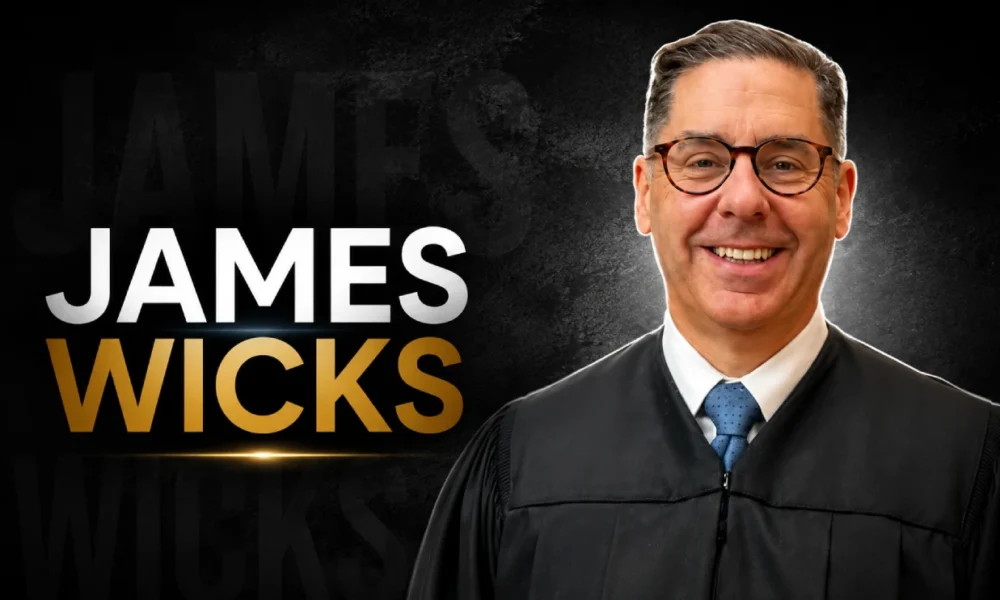
James Wicks is an American animation producer and entrepreneur best known as the founder of Studio Cell, a VTuber-focused animation studio that launched in late 2022 and collapsed in May 2023 after public allegations of undelivered projects and mismanaged client payments — including over $35,000 owed to VTuber Bao the Whale. His story is one of real ambition, real failure, and real consequences in one of digital entertainment’s fastest-growing sectors.
Table Of Content
- James Wicks and Studio Cell at a Glance
- Who Is James Wicks?
- Early Career and Entrepreneurial Roots
- Studio Cell — The Launch (Late 2022)
- The Unraveling — What Went Wrong
- The Breaking Point — Bao the Whale Goes Public (May 2023)
- James Wicks’s Response
- The Collapse
- The Aftermath
- What the Studio Cell Story Reveals About the VTuber Industry
- Lessons for Creators and Entrepreneurs
- Conclusion
Some careers leave behind awards and acclaim. Others leave behind lessons. James Wicks belongs firmly in the second category. If you’ve been searching for information about who James Wicks is, what Studio Cell was, or why his name still circulates in VTuber communities, this is the complete picture.
What is a VTuber?
A VTuber (Virtual YouTuber) is a content creator who uses a digitally generated avatar — often anime-styled — to create videos, stream live content, and engage with audiences. VTubers typically commission custom animation, models, and visual assets from specialized studios and freelancers. The global VTuber market was valued at approximately USD 2.54 billion in 2024 and is projected to exceed USD 4.9 billion by 2031.
James Wicks and Studio Cell at a Glance
| Date | Event |
|---|---|
| ~2019 | Co-founds Sawa Con, a Louisiana-based anime and gaming convention |
| Pre-2022 | Serves as Chief Marketing Officer at Tonari Animation |
| Pre-2022 | Founds ConnectVT, a Discord-based VTuber networking platform |
| 2022 | Terminated from Tonari Animation |
| Late 2022 | Founds Studio Cell; invests approximately $70,000 of personal funding |
| Early 2023 | Secures projects with OniGiri, Bao the Whale, Saruei, Nemu, Vienna, girl_dm_, Geega, and Captain Hannah |
| Jan–Feb 2023 | First signs of production delays; OniGiri’s lore video falls behind schedule |
| March 18, 2023 | Wicks reports being hospitalized (attempted suicide); released March 24 |
| Late March–April 2023 | Attempts to get projects back on track; further breakdowns occur |
| May 29–30, 2023 | Bao the Whale goes public; other clients and contractors share similar experiences; Wicks releases a 35-page response |
| Late May–June 2023 | Studio Cell ceases operations; Wicks deletes social media accounts and withdraws from public platforms |
Who Is James Wicks?
James Wicks is an American animation producer and entrepreneur who became publicly known through his work in the VTuber animation space. He is best known as the founder of Studio Cell, an independent studio launched in late 2022 to produce animated content for virtual creators.
Before Studio Cell, Wicks had a limited public profile. He was not a mainstream entertainment figure, and his professional background contained few details available in the public record. What is known comes primarily from his own statements, community discussions, and industry coverage following the Studio Cell controversy of 2023.
His full name is sometimes listed as James Wick, without the ‘s,’ and the two spellings appear interchangeably across community forums and coverage.
Early Career and Entrepreneurial Roots
Co-Founding Sawa Con (~2019)
Long before Studio Cell, Wicks had already demonstrated an entrepreneurial mindset. Around 2019, he co-founded Sawa Con alongside Jarrett Martin — a Louisiana-based anime and gaming convention designed to connect fans, creators, and industry participants.
Sawa Con was modest in scale but meaningful in direction. It showed a consistent thread in Wicks’s career: a drive to build community-facing ventures within anime and digital culture. Whether that impulse ultimately served him well is a different question, but it was genuinely present from early on.
Chief Marketing Officer at Tonari Animation
His next notable role placed him inside the animation industry itself. Wicks served as Chief Marketing Officer at Tonari Animation, a small US-based outsourcing studio with ties to the growing VTuber sector.
In that role, he focused on the business side — client relationships, partnerships, and brand positioning — rather than creative production. It was an important distinction. Wicks understood the market, the clients, and the commercial potential of VTuber animation. Whether he understood the operational complexity of actually running a studio was another matter entirely.
Wicks was eventually terminated from Tonari Animation. The specific reasons for his termination were never fully disclosed publicly, but by that point, Wicks had gathered enough industry exposure to attempt something larger on his own.
ConnectVT — Building the Network
Before launching Studio Cell, Wicks founded ConnectVT — a Discord-based platform designed to connect VTubers, animators, and industry collaborators in one space. It was a smart, community-first play. VTubers depend heavily on networks for sourcing talent and projects, and ConnectVT positioned Wicks as a connector within that ecosystem.
It also gave him direct access to potential clients. By the time he was ready to launch Studio Cell, he had a ready audience of VTubers who already knew his name and trusted his network. ConnectVT’s fate after the Studio Cell collapse remains unclear — the platform appears to have gone inactive following the controversy.
Studio Cell — The Launch (Late 2022)
In late 2022, James Wicks founded Studio Cell with a focused mission: to produce high-quality animated content — music videos, lore animations, stream animations, backgrounds, and visual assets — specifically for the VTuber market.
The concept was well-timed. VTubers were experiencing significant growth globally, and independent creators with large audiences were actively looking for professional animation partners. Larger studios were either too expensive or too slow. Studio Cell positioned itself as the solution: responsive, community-rooted, and built specifically for virtual creators.
Wicks invested approximately $70,000 of his own funding to get the studio off the ground. Early projects were secured quickly. Studio Cell took on work for several independent VTubers, including OniGiri, Bao the Whale, Saruei, Nemu, Vienna, girl_dm_, Geega, and Captain Hannah. On paper, this was a genuine start.
The Unraveling — What Went Wrong
Early Warning Signs
Behind the optimistic launch, problems were developing almost immediately. The most visible early sign involved the OniGiri lore video — a project expected in early 2023 that arrived months behind schedule.
In his own later response, Wicks admitted to “a lot of early bumps and headaches” starting with OniGiri’s project. He acknowledged: “My communication on the delivery date was shit, with the expected delivery by end of February 2023 and the final being delivered March 2023 with even more corrections needed. It took till May to deliver an acceptable final piece.”
Nemu’s project ran similarly over time, with Wicks approaching her to extend the deadline with an expansion budget to compensate for the late delivery.
Operational Breakdown
These were not just inconveniences. For VTubers, content is central to their entire livelihood. Delays in promised animations affect streaming schedules, community expectations, and the creator’s own brand. When a studio takes payment upfront and misses deadline after deadline, the trust relationship deteriorates quickly.
What was becoming clear internally was that Studio Cell’s production pipeline was not functioning properly. Projects were being mismanaged. Communication between the studio and clients was inconsistent. The infrastructure needed to handle multiple simultaneous animation projects simply was not in place.
Clients would later describe Wicks’s management as “excruciatingly awful” and “abysmal,” and label him a “compulsive liar.” The total client payments exceeded $70,000 — with Bao alone having paid $35,000 and Saruei contributing $23,000.
The Breaking Point — Bao the Whale Goes Public (May 2023)
The situation reached a breaking point on May 29–30, 2023, when VTuber Bao the Whale publicly shared her experience with Studio Cell. She disclosed that she had paid more than $35,000 for animation projects — and had received almost nothing in return.
Her statement was detailed, credible, and immediately resonant. Within days, other VTubers and contractors began sharing similar accounts. Payments had been taken. Work had not been delivered. Freelancers reported not being fully compensated for completed contributions.
The story spread quickly through VTuber-focused platforms, content creator communities, and social media. James Wicks was identified as the central figure and decision-maker behind Studio Cell’s operations.
James Wicks’s Response
Facing an organized and growing wave of allegations, Wicks released a lengthy public statement — a 35-page document that included screenshots of his conversations with clients. In it, he acknowledged that Studio Cell had failed operationally. He described missed deadlines, disorganized production stages, poor communication, and financial strain caused by the rapid depletion of the studio’s initial $70,000 funding on salaries, music licensing, and production costs.
The response was controversial for several reasons. In sharing screenshots of his conversations with Bao, Wicks inadvertently leaked an upcoming original song she had not yet released, prompting Bao to publicly confirm the leak on social media.
Wicks also disclosed deeply personal information, revealing that he had attempted suicide on March 18, 2023, and was released from supervision on March 24. He stated that after his release, he was “ambushed by legal representation and an accountant” he had been communicating with on Bao’s behalf, and acknowledged failing to return her funds promptly during that period.
At the same time, his statement pushed back on elements of the narrative, claiming that former members of his studio had violated NDAs by reaching out to clients and stating they had not been paid — a claim Wicks called untrue. He threatened legal action against artists and vendors who spoke out about his management.
Bellamy Brooks, a former team member, publicly countered this account, confirming NDA breaches occurred and alleging that Wicks had “spies in our system” after being fired, leading to secret project information leaking and requiring a security lockdown.
The combination of admission, deflection, personal disclosure, and legal threats did not satisfy those who had lost money or time. The perception of the response was broadly negative.
The Collapse
By the end of May 2023, Studio Cell was effectively over. Operations ceased. Projects were halted. Wicks deleted his social media accounts and withdrew from public platforms as the backlash reached its peak.
The impact extended beyond the headline clients. Freelancers and contractors who had contributed work to Studio Cell projects reported not being fully compensated. For many of these artists — often independent creators themselves — the financial loss was significant relative to their earnings.
The studio that had launched with $70,000, genuine industry connections, and real ambition was gone within a year.
The Aftermath
Legal and Financial Consequences
Publicly available information about formal legal proceedings resulting from the Studio Cell collapse is limited. Wicks himself referenced legal disputes in his response, specifically regarding alleged NDA violations by former team members. Whether affected clients pursued legal action for the return of their payments has not been extensively documented in public reporting.
Studio Cell’s formal business dissolution status, if filed, has not been a matter of public record in widely available coverage. As of the most recent available information, no criminal charges related to the Studio Cell operations have been publicly reported.
Impact on Affected Creators
The financial impact on affected VTubers was substantial. Bao the Whale’s $35,000 loss and Saruei’s $23,000 loss represented significant investments in projects that were never delivered. Beyond the direct financial damage, the delays and non-delivery affected content schedules, community engagement, and the trust these creators placed in third-party studios.
The experience contributed to a broader conversation within the VTuber community about due diligence, contract protections, and the risks of commissioning work from unproven studios — conversations that continue to shape how creators approach vendor relationships.
James Wicks Today
Following the collapse of Studio Cell, James Wicks has maintained a low profile. His social media presence was deleted following the controversy, and as of mid-2026, there is no public record of subsequent professional ventures in the animation or VTuber space. Whether he has pursued work outside of public view is unknown.
His legacy in the VTuber and indie animation space is defined by this single episode — not as a success story, but as a reference point for what can go wrong when vision outpaces execution.
What the Studio Cell Story Reveals About the VTuber Industry
James Wicks’s story is not unique in its structure, even if its specifics are his own. The VTuber industry’s explosive growth — the market was valued at approximately USD 2.54 billion in 2024 and is projected to reach USD 4.94 billion by 2031 — created a demand for animation services that outpaced the supply of reliable, well-managed studios. That gap attracted entrepreneurs who understood the opportunity but underestimated the complexity.
Running an animation studio means managing multiple freelancers, aligning production timelines, maintaining client communication, and delivering finished assets at quality and on schedule — all simultaneously, often on tight budgets. It is hard work that requires operational infrastructure, not just vision and networking.
| Dimension | Studio Cell | Industry Best Practice |
|---|---|---|
| Payment Structure | Full or large deposit payment upfront | Milestone-based payments tied to deliverables |
| Client Communication | Inconsistent, with long gaps | Regular status updates with a dedicated point of contact |
| Production Pipeline | Underdeveloped, reactive | Defined stages with review gates and sign-off processes |
| Financial Planning | $70,000 depleted rapidly with no contingency | Budgeted runway with reserve funds for overruns |
| Track Record | New studio, no completed portfolio | Demonstrated completed projects and client references |
| Contracts | Unclear terms and enforcement | Written contracts with deliverable specifications and penalties |
| Scale | Took on 8+ simultaneous projects immediately | Gradual scaling matched to team capacity |
Studio Cell had the vision. It did not have the infrastructure. The VTuber animation market has evolved since 2023 — awareness of these operational pitfalls has grown, and creators are more cautious about vetting studios before committing significant funds. But the structural gap between demand and reliable supply persists.
Lessons for Creators and Entrepreneurs
For VTubers Commissioning Animation
For independent creators, the Studio Cell collapse reinforced a hard lesson: due diligence before committing to a studio matters. Here are the red flags to watch for:
- No verifiable portfolio of completed projects
- Pressure for full payment upfront without a milestone-based structure
- Vague or missing contractual terms
- Inconsistent or delayed communication from the start
- No clear production timeline with defined review stages
- A founder with no documented professional history in the field
- Over-reliance on community trust and personal relationships rather than demonstrated capability
- Taking on many simultaneous projects without a proven team to support them
Before committing funds, creators should:
- Request a portfolio with verifiable, completed work and client references
- Insist on a written contract specifying deliverables, timelines, revision limits, and refund terms
- Structure payments around milestones — never pay 100% upfront
- Set regular check-in schedules with documented progress updates
- Research the studio’s business registration, leadership, and any prior public complaints
- Start with a small, low-risk project before committing to large-budget work
For Entrepreneurs Entering Creative Industries
The lesson runs equally deep for those looking to build studios or service businesses in digital entertainment. Funding opens doors, but it does not run a business. Wicks’s $70,000 investment was real — but it was consumed by salaries, licensing costs, and production expenses before sustainable revenue could be established.
Without strong project management systems, clear production workflows, realistic financial modeling, and transparent client communication, even well-intentioned ventures can collapse under the weight of their own ambitions. The gap between understanding a market and being able to operationally serve it is wider than most first-time founders expect.
Conclusion
James Wicks entered one of digital entertainment’s most dynamic sectors with genuine energy and a well-timed idea. Studio Cell was not born out of nothing — it emerged from real industry experience, community trust built through ConnectVT and Tonari Animation, and a clear understanding of what VTubers needed.
But good timing and a good idea are not enough when execution breaks down. The collapse of Studio Cell was not a mystery. It was the consequence of trying to scale faster than the systems in place could support — taking on eight simultaneous clients with an underdeveloped production pipeline, depleting startup capital without sustainable revenue, and failing to communicate honestly when things went wrong.
The VTuber industry has continued to grow since 2023, with the market expanding into a multi-billion-dollar sector. But growth creates opportunity for both builders and those who overestimate their readiness. The Studio Cell story serves as a clear-eyed reminder that in any creative services industry, trust is built through delivery — and once broken, it does not come back.
That is the James Wicks story, and it is worth understanding — not as a cautionary tale about one person, but as a case study in what happens when ambition outruns infrastructure, and the real people who pay the price when it does.



No Comment! Be the first one.