








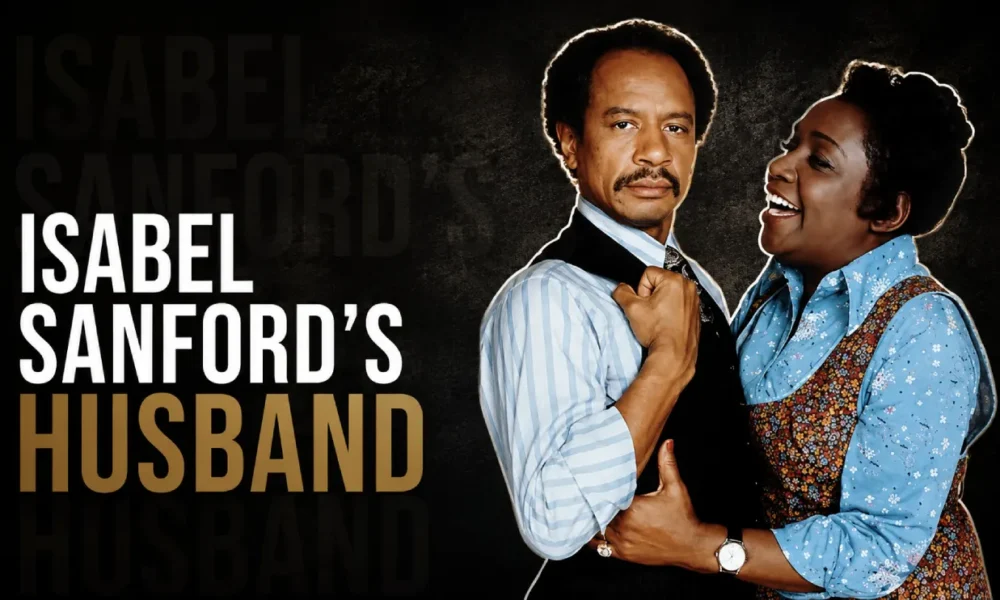
A month after actress Isabel Sanford arrived in California with just her dreams and three children, devastating news arrived from New York: her husband, William Edward Richmond, had died at age 47. Sanford would go on to win an Emmy Award in 1981 — becoming the first Black woman to win Outstanding Lead Actress in a Comedy Series, a feat unmatched until Quinta Brunson’s win in 2024 — but Richmond never lived to see any of it.
Table Of Content
- At a Glance
- Isabel Sanford: The Woman Behind the Legacy
- Early Life
- Their Marriage: 1945–1960
- William Edward Richmond’s Career as a House Painter
- The Tragedy: Richmond’s Death in 1960
- After Richmond: Isabel Sanford’s Path to Television History
- The Emmy Milestone: From Isabel Sanford to Quinta Brunson
- Net Worth and Interesting Facts
This is the story of the quiet house painter whose life, however briefly intersecting with one of television’s most important careers, reveals something about the unseen figures who stand behind history-making moments.
While millions knew Louise “Weezy” Jefferson as the sharp-tongued wife on The Jeffersons — the CBS comedy that ran from 1975 to 1985 and became one of the longest-running Black-led sitcoms in American television history — few knew about the real-life marriage that influenced Isabel Sanford’s groundbreaking performance. That marriage was a complex union with William Edward “Sonny” Richmond that ended in tragedy just as her career was beginning. Sanford, who passed away on July 9, 2004, at age 86 in Los Angeles, carried the memory of that chapter throughout her life.
At a Glance
| Attribute | Details |
|---|---|
| Full Name | William Edward Richmond |
| Nickname | Sonny Richmond |
| Estimated Birth Year | Approximately 1913–1915 |
| Death Date | July 31, 1960 |
| Age at Death | Approximately 44–47 years |
| Profession | House Painter |
| Nationality | American |
| Famous For | Husband of actress Isabel Sanford |
| Children | 3 (Sanford K. Richmond, William Eric Richmond, Pamela Richmond Ruff) |
| Marriage Duration | 1945–1960 |
| Net Worth | Information not publicly available |
Isabel Sanford: The Woman Behind the Legacy
Before understanding William Edward Richmond’s place in history, it helps to understand the remarkable woman he married.
Isabel Sanford — born Eloise Gwendolyn Sanford on August 29, 1917, in Harlem — was the youngest of seven children and the only one to survive infancy. Her mother, Josephine, was devoutly religious and actively discouraged her daughter’s theatrical ambitions, viewing entertainment as “the road to degradation.” Sanford defied her mother, performing at amateur nights at the Apollo Theater and joining Harlem’s American Negro Theatre.
She also worked as a keypunch operator at IBM to support herself financially while pursuing acting, making her professional stage debut in 1946 in On Strivers Row and appearing in several off-Broadway productions. After her husband died in 1960, Sanford withdrew her retirement savings, boarded a Greyhound bus with her three children, and relocated to Los Angeles.
Within five years, she was on Broadway in James Baldwin’s The Amen Corner (1965). Two years later, she appeared in Guess Who’s Coming to Dinner (1967) alongside Sidney Poitier. That performance caught the attention of Norman Lear, who cast her as Louise Jefferson — first on All in the Family (1971), then on the spin-off The Jeffersons (1975–1985), which ran for 11 seasons and became one of the longest-running Black-led sitcoms in American television history.
In 1981, she won the Primetime Emmy for Outstanding Lead Actress in a Comedy Series — the first Black woman to receive that honor. She continued acting through the 1990s and early 2000s, with guest appearances on Living Single, Hangin’ with Mr. Cooper, The Fresh Prince of Bel-Air, and even The Simpsons. In January 2004, she received a star on the Hollywood Walk of Fame. She died on July 9, 2004, at age 86 in Los Angeles.
Beyond her career, Sanford was known for her quiet philanthropy.
“I don’t give to be thanked. I give because I want to help.” — Isabel Sanford
Early Life
Very little is documented about William Edward Richmond’s early life. He was born between approximately 1913 and 1915 and grew up during the Great Depression as a young Black man in New York City. His childhood, family background, and formal education have not been preserved in public records — a silence that reflects both the era’s limited documentation of working-class Black lives and Richmond’s own preference for privacy.
Their Marriage: 1945–1960
The Wedding and Early Years
William Edward Richmond married Isabel Sanford in 1945 in Manhattan, New York City. Their union produced three children: sons Sanford K. Richmond and William Eric Richmond, and daughter Pamela Richmond Ruff.
During the late 1940s and 1950s, the family lived in New York while Isabel balanced motherhood with her emerging theater career, performing in Harlem’s American Negro Theatre and at the Apollo Theater. Richmond worked steadily as a house painter, serving as the family’s primary breadwinner during a period when Isabel’s theatrical work brought little or no income.
A Complex Union
The marriage was not easy. Isabel later described their relationship as “tumultuous” — a period euphemism that, as biographers have noted, often covered what we would now openly call domestic violence. She acknowledged being the “boss” in the relationship, making most family decisions while Richmond focused on providing financially.
Despite these difficulties, the marriage lasted fifteen years and produced three children. Richmond was known among family for his gentle approach to parenting. According to accounts shared by Isabel, when the children misbehaved, Richmond would tell them to “wait ’til your mother gets home” — a phrase that reflected the family dynamics and Isabel’s dominant role in household decisions.
The Separation
By 1960, the marriage had deteriorated beyond repair. Isabel made the difficult decision to withdraw money from her retirement fund, board a bus with their three children, and relocate to Los Angeles to pursue better opportunities in entertainment.
Richmond remained in New York after the separation. Tragically, he died just weeks later.
William Edward Richmond’s Career as a House Painter
William Edward Richmond worked as a house painter in New York City — a skilled trade that, for a Black man in mid-20th-century America, represented a degree of economic stability in an era when many trades were effectively closed to African Americans through union discrimination and informal segregation.
House painting offered Richmond a degree of independence and the ability to earn a living wage. His steady income was essential during the 1940s and 1950s while Isabel balanced motherhood with her emerging theater career. His role as the family’s primary breadwinner allowed Isabel to pursue ambitions that, by her mother Josephine’s standards, bordered on reckless — Josephine had called show business “the road to degradation.”
Richmond never sought the spotlight himself, embodying the quiet support of countless working-class partners who enabled others’ breakthroughs. He maintained his privacy and focused on his trade, embodying the quiet strength of men whose contributions went largely unnoticed behind the lives of those in the public eye.
The Tragedy: Richmond’s Death in 1960
William Edward Richmond died on July 31, 1960, at age 47 in Brooklyn, New York — just one month after Isabel’s departure for California.
The circumstances surrounding his death remain somewhat unclear. Some published accounts reference drowning; others mention an altercation following the separation. Official records confirm the date and location, but specific circumstances remain unresolved.
Richmond never witnessed any of his wife’s major career milestones: her film debut in Guess Who’s Coming to Dinner (1967), her television breakthrough on All in the Family (1971), the launch of The Jeffersons on CBS (1975), her historic Emmy win in 1981, or her Hollywood Walk of Fame star received in 2004. He died knowing Isabel as a struggling actress and mother — not as one of the most recognized women in American television.
After Richmond: Isabel Sanford’s Path to Television History
Isabel Sanford’s rise after 1960 was nothing short of extraordinary — and it happened while she was raising three children as a single mother in a new city.
- 1960: Withdrew retirement savings, boarded a bus to Los Angeles with her three children.
- Early 1960s: Asked by Tallulah Bankhead to join the national production of Here Today.
- 1965: Made her Broadway debut in James Baldwin’s The Amen Corner.
- 1967: Cast as Tillie Binks in Guess Who’s Coming to Dinner alongside Sidney Poitier, Spencer Tracy, and Katharine Hepburn. Her performance earned strong reviews despite limited screen time.
- 1971: Cast by Norman Lear as Louise Jefferson on All in the Family.
- 1975: The Jeffersons premiered on CBS in January, becoming an immediate hit and ultimately running for 11 seasons.
- 1981: Won the Primetime Emmy Award for Outstanding Lead Actress in a Comedy Series — the first Black woman to achieve this honor.
- 1985: The Jeffersons was cancelled after 11 seasons.
- 1987: Starred in her own syndicated sitcom, Isabel’s Honeymoon Hotel, which was short-lived.
- 1990s: Guest appearances on Living Single, Hangin’ with Mr. Cooper, The Fresh Prince of Bel-Air, The Steve Harvey Show, and others. Reunited with Sherman Hemsley for a touring stage production of The Real Live Jeffersons, as well as commercials for Denny’s and Old Navy.
- January 2004: Received a star on the Hollywood Walk of Fame.
- February 2004: Made her final television appearance as an animated version of herself on The Simpsons.
- July 9, 2004: Died at age 86 in Los Angeles, just months after receiving her Walk of Fame star.
Across her career, Sanford earned five Golden Globe Award nominations and seven Primetime Emmy Award nominations.
The Emmy Milestone: From Isabel Sanford to Quinta Brunson
Isabel Sanford’s 1981 Emmy win was not just a personal triumph — it was a singular event in the history of American television awards. In the entire history of the Primetime Emmy Award for Outstanding Lead Actress in a Comedy Series, only five Black actresses have ever been nominated, with a combined total of just 13 nominations between them.
For 43 years, Isabel Sanford remained the only Black woman to have won in this category. That changed in January 2024, when Quinta Brunson won for her role as Janine Teagues on Abbott Elementary — making her only the second Black woman in history to achieve this distinction.
“This whole other layer of the historical aspect is mind-boggling to me. It adds a whole other layer to this that is extraordinary and wonderful.” — Tracee Ellis Ross, on being the first Black actress nominated in this category in 30 years
Between Sanford and Brunson, no Black woman even received a nomination for 30 years, from Phylicia Rashad’s 1986 nod for The Cosby Show until Tracee Ellis Ross’s nomination for black-ish in 2016. This context underscores just how extraordinary — and how isolated — Isabel Sanford’s achievement was.
| Actress | Show | Year(s) | Result |
|---|---|---|---|
| Diahann Carroll | Julia | 1969 | Nominated |
| Isabel Sanford | The Jeffersons | 1981 | Won |
| Nell Carter | Gimme a Break! | 1982, 1983, 1985 | Nominated |
| Phylicia Rashad | The Cosby Show | 1985, 1986 | Nominated |
| Tracee Ellis Ross | black-ish | 2016, 2017, 2018, 2020 | Nominated |
| Quinta Brunson | Abbott Elementary | 2023, 2024 | Won (2024) |
Fighting through tears at the 75th Emmy Awards, Brunson talked about how much she loved comedy and how happy she was “to be able to live my dream and act out comedy.” Her win connected a direct line back to Sanford’s 1981 breakthrough — a span of 43 years between two historic moments.
Net Worth and Interesting Facts
- A Private Man: Richmond never sought public attention or leveraged his wife’s growing connections in New York theater circles for personal gain. Despite Isabel’s rising profile, he remained entirely out of the public eye.
- The Nickname “Sonny”: Richmond was affectionately known as “Sonny” throughout his life, though the origin of this nickname has not been documented in any public interview or record.
- Gentle Parent: According to family accounts shared by Isabel, Richmond was the more lenient parent, often deferring discipline to Isabel with the phrase “wait ’til your mother gets home.”
- Limited Documentation: Very few photographs or personal records of Richmond exist today, making him one of the more mysterious figures connected to television history.
- A Name Few Remember: Isabel Sanford’s birth name was Eloise Gwendolyn Sanford. She changed it professionally before her television career.
- A Late Bloomer: Isabel was 54 years old when The Jeffersons premiered and 63 when she won her Emmy — remarkable ages for a career-defining breakthrough.
- Philanthropist: Isabel Sanford was known for giving generously to charitable causes, but she turned down public recognition for her donations, saying she gave because she wanted to help — not to be thanked.
As a skilled house painter in 1950s New York, Richmond earned a modest but respectable wage — enough to keep his family stable through the 1940s and 1950s. House painters during this era typically earned between $1.50 and $3.00 per hour. No estate records or financial documents relating to Richmond have been preserved or made public.




No Comment! Be the first one.