









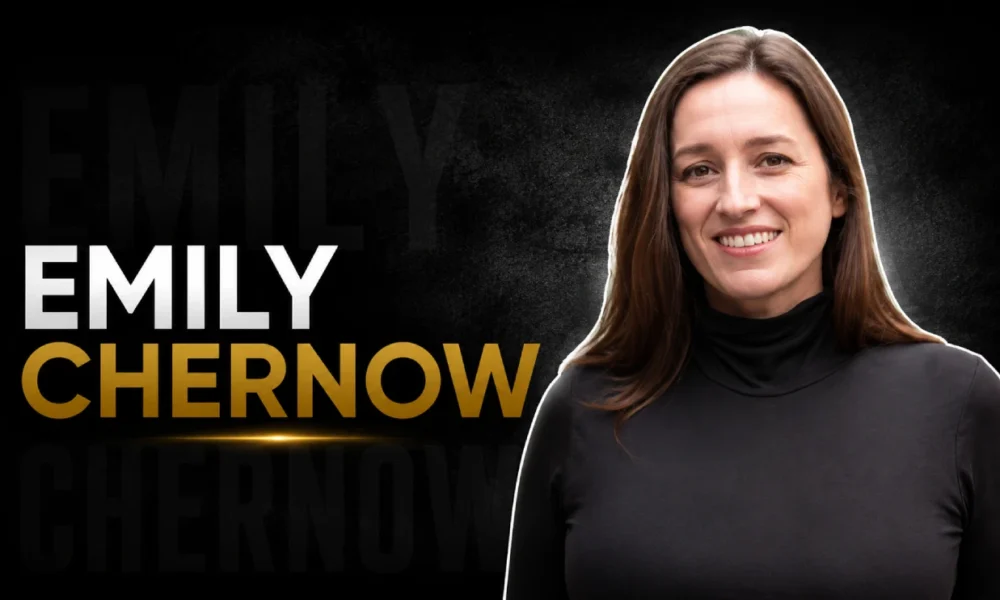
Emily Chernow is a licensed clinical social worker (LCSW) and psychotherapist based in New York City. She specializes in LGBTQ+-affirming therapy, anxiety, depression, OCD, trauma, ADHD, identity exploration, and life transitions. She holds an MSW from New York University and uses an integrative blend of psychodynamic therapy, CBT, IFS, ACT, mindfulness, narrative, and attachment-based approaches at her practice, EVOLVE Integrative Psychotherapy.
Table Of Content
- Who Is Emily Chernow?
- Academic Background and Credentials
- Where Emily Chernow Practices
- Clinical Specializations
- The State of LGBTQ+ Mental Health: Context for Emily’s Work
- Emily Chernow’s Therapeutic Approach
- What to Expect in a First Session
- Insurance, Fees, and Payment
- Why Emily Chernow Draws Interest
- Conclusion
If you’ve searched for Emily Chernow, you’re likely evaluating whether she might be the right therapist for you or someone you care about.
This profile goes beyond a basic directory listing — covering her background, clinical approach, fee structure, and what makes her practice distinct in a city with no shortage of therapists but a well-documented shortage of genuinely affirming ones.
Who Is Emily Chernow?
Emily Chernow is a licensed clinical social worker and psychotherapist based in New York City. She is known for her compassionate, affirming, and collaborative approach to therapy, particularly for people in the LGBTQ+ community, though her practice extends well beyond any single population.
She works with adolescents, adults, couples, and families across both individual and group therapy settings. Her practice is not one-size-fits-all. Rather than applying a single rigid framework, she tailors her methods to each client — drawing from multiple evidence-based modalities while keeping the human connection at the center.
Her core belief is that individuals are a culmination of their life experiences and should be treated as such. That philosophy shapes every aspect of how she works.
Academic Background and Credentials
Emily Chernow earned her Master of Social Work (MSW) from New York University’s Silver School of Social Work — consistently ranked among the top social work programs in the United States.
She holds licensure as a Licensed Clinical Social Worker (LCSW) in New York State, a credential administered by the New York State Education Department. Earning this designation requires:
- A master’s degree from a CSWE-accredited program
- A minimum of 2,000 hours of supervised post-graduate clinical experience
- Passage of the Association of Social Work Boards (ASWB) clinical-level exam
- Completion of mandated continuing education
For clients, this means meaningful assurance: an LCSW has demonstrated not just academic knowledge but supervised clinical competence, ethical accountability, and ongoing professional development.
Where Emily Chernow Practices
Emily Chernow practices at EVOLVE Integrative Psychotherapy, where she is part of a team that provides compassionate, evidence-based mental health care. The practice is built around the idea that therapy should be both clinically rigorous and deeply human — a space where clients feel supported, understood, and empowered to grow.
Her practice is located in New York City, and she can be reached directly at 917-994-1964 or by email at emily@evolveintegrativetherapy.com.
Clinical Specializations
LGBTQ+ Mental Health
Emily’s therapy is queer-affirming, meaning she respects and supports all sexual orientations and gender identities. She also takes a sex-positive approach — viewing sexuality as a natural and healthy part of life rather than something to feel ashamed about.
This matters more than it might initially seem. Research consistently shows that LGBTQ+ individuals experience disproportionately high rates of mental health challenges. According to The Trevor Project’s 2024 National Survey, 39% of LGBTQ+ young people seriously considered attempting suicide in the past year, with that number rising to 46% among transgender and nonbinary young people. Additionally, 66% of LGBTQ+ young people reported experiencing recent symptoms of anxiety, and 53% reported symptoms of depression.
These disparities are not random — they are driven by minority stress: the chronic experience of stigma, discrimination, and rejection that LGBTQ+ individuals face across multiple areas of life. Many LGBTQ+ individuals have also had negative or dismissive experiences with mental health professionals themselves, which creates an additional barrier to seeking care. Finding a therapist who is not just tolerant but genuinely affirming can be the difference between productive therapy and another experience of feeling misunderstood.
Emily Chernow has built her practice around creating that kind of safety.
OCD, Trauma, and ADHD
Beyond LGBTQ+-specific concerns, Emily has experience working with individuals navigating obsessive-compulsive disorder, trauma, and attention-deficit/hyperactivity disorder. These are conditions that frequently intersect with identity-related stress, anxiety, and depression — and they benefit from the kind of nuanced, multi-modal treatment approach she employs.
Anxiety, Depression, and Life Transitions
Anxiety and depression remain among the most common reasons adults and adolescents seek therapy — and among the most responsive to evidence-based interventions. Emily also specializes in supporting clients through life transitions: career changes, relationship shifts, grief, relocation, and the quieter forms of upheaval that don’t always come with a clear label but still demand significant emotional labor.
Identity Exploration and Relationship Challenges
Identity exploration — whether related to gender, sexuality, career, cultural belonging, or a broader sense of self — is a thread that runs through much of Emily’s work. She also works with individuals, couples, and families navigating relationship challenges, helping them strengthen communication, rebuild trust, and create more authentic connections.
The State of LGBTQ+ Mental Health: Context for Emily’s Work
Emily Chernow’s practice exists within a broader context that’s worth understanding — especially if you’re evaluating whether LGBTQ+-affirming therapy is meaningfully different from general therapy.
The research says it is. Studies on LGBTQ-affirmative cognitive-behavioral therapy — an evidence-based treatment specifically adapted to address the minority stress pathways affecting LGBTQ+ individuals — have shown it to be effective across multiple clinical trials and varying subgroups of the LGBTQ+ community. In randomized controlled trials, this approach has demonstrated efficacy in reducing substance use, comorbid mental health concerns, and related behavioral risks, with particularly strong outcomes for Black and Latino sexual minority men.
Research has also identified a significant supply problem: most mental health providers report having received relatively little training in LGBTQ-specific issues during their graduate education, and many lack clinical experience working with LGBTQ+ clients. This gap means that the few clinicians who do center queer-affirming care as a core practice value — rather than a sidebar — fill a critical need.
The significance of this gap becomes clearer when you consider that 50% of LGBTQ+ young people who wanted mental health care in 2024 were unable to access it, according to The Trevor Project’s national survey. The barriers range from cost and availability to a simple lack of providers who understand their experiences.
Emily Chernow’s Therapeutic Approach
Emily Chernow uses an integrative approach that draws from multiple evidence-based modalities. Rather than forcing every client into the same framework, she selects and blends methods based on what each person needs. Her primary modalities include:
Psychodynamic Therapy
Psychodynamic therapy explores how past experiences, relationships, and unconscious patterns shape present behavior. It’s reflective, exploratory, and often well-suited to people trying to understand why they keep repeating certain cycles — in relationships, work, or how they relate to themselves.
Cognitive-Behavioral Therapy (CBT)
CBT takes a more present-focused, practical approach. It helps people identify how their thoughts, feelings, and behaviors interact — and how to interrupt unhelpful patterns. For anxiety and depression especially, CBT offers concrete tools that clients can apply between sessions. When adapted for LGBTQ+ clients, CBT can also address the cognitive distortions that arise from minority stress, such as internalized stigma or chronic hypervigilance.
Internal Family Systems (IFS)
IFS is a transformative, evidence-based model that views the mind as naturally made up of multiple “parts,” each with its own perspective and role. It helps clients develop a relationship with their core Self — a place of calm, curiosity, and compassion — and from there, understand and heal the parts of themselves that carry pain, fear, or shame.
Acceptance and Commitment Therapy (ACT)
ACT helps clients develop psychological flexibility — the ability to be present with difficult thoughts and emotions without being controlled by them, while moving toward actions aligned with their values. It’s particularly useful for clients who feel stuck between what they feel and what they want their life to look like.
Mindfulness, Narrative, and Attachment-Based Approaches
Emily also incorporates mindfulness practices to help clients build awareness and emotional regulation, narrative therapy to help them re-author the stories they tell about their lives, and attachment-based approaches to understand how early relational patterns influence current relationships.
Queer Theory in Clinical Practice
The inclusion of queer theory in her work is particularly notable. It signals that her approach is not just clinically competent but culturally informed. Queer theory challenges normative assumptions about identity, gender, and sexuality — which can be especially freeing for clients who have spent years trying to fit into expectations that never quite fit them.
What to Expect in a First Session
Emily Chernow offers a free 15-minute initial consultation — a standard practice among NYC therapists that allows both parties to assess fit before committing. A first session with her likely includes:
- Intake and history — understanding your background, current concerns, and what brought you to therapy
- Goal setting — identifying what you hope to work toward, even if it’s initially vague
- Approach discussion — explaining how she selects from her range of modalities to match your specific needs
- Questions and fit assessment — giving you space to ask about her process, availability, and whether her style feels right
Finding the right therapist is deeply personal. The consultation exists specifically so neither party has to guess.
Insurance, Fees, and Payment
One of the more meaningful aspects of Emily Chernow’s practice is her approach to fees. Her practice offers an honor-based sliding scale ranging from $125–$195. She will not ask for proof of income or documentation of financial hardship — only that clients pay the highest rate they can afford based on their circumstances.
For many people, cost is a real barrier to mental health care. An honor-based sliding scale removes some of that friction while preserving client dignity. It reflects the same values that seem to run throughout her professional identity: respect for the person in front of her.
For questions about specific insurance acceptance or payment options, prospective clients should contact her practice directly at 917-994-1964.
Why Emily Chernow Draws Interest
Several factors contribute to why people search for Emily Chernow specifically:
- She fills an underserved niche. LGBTQ+-affirming therapists who combine psychodynamic depth with practical CBT tools, IFS, ACT, and other evidence-based modalities are not common — especially in a city where demand for mental health services consistently outpaces supply.
- Her range of modalities is unusually broad. Many therapists identify with one or two approaches. Emily’s integration of seven distinct modalities allows her to adapt to a wider range of client needs, from identity exploration to trauma processing to relationship repair.
- Her philosophy is clearly articulated. She believes individuals are a culmination of their life experiences and should be treated as such. That kind of clear positioning helps prospective clients quickly understand whether her approach aligns with what they need.
- She works across multiple relationship formats. Unlike therapists who only see individuals, Emily works with adolescents, adults, couples, and families — making her a resource for entire relational systems, not just individuals within them.
There is also an Emily H. Chernow who is an attorney based in Washington, DC, with no connection to this therapist. If you’re looking for legal services, that’s a separate individual. Context — therapy vs. law — will help you find the right person quickly.
Conclusion
Emily Chernow represents something specific and increasingly sought-after: a therapist who combines clinical rigor with genuine cultural competence. Her MSW from NYU, her LCSW credentials, her work with LGBTQ+ populations, and her integrative therapeutic approach reflect a practitioner who has been deliberate about every aspect of how she shows up for clients.
If you’re exploring therapy — whether for the first time or after previous experiences that didn’t feel right — her publicly available information suggests a practice built around accessibility, inclusivity, and evidence-based care.
Next step: Reach out for a free 15-minute consultation to assess whether her approach fits what you’re looking for. You can call 917-994-1964 or email emily@evolveintegrativetherapy.com.




No Comment! Be the first one.