









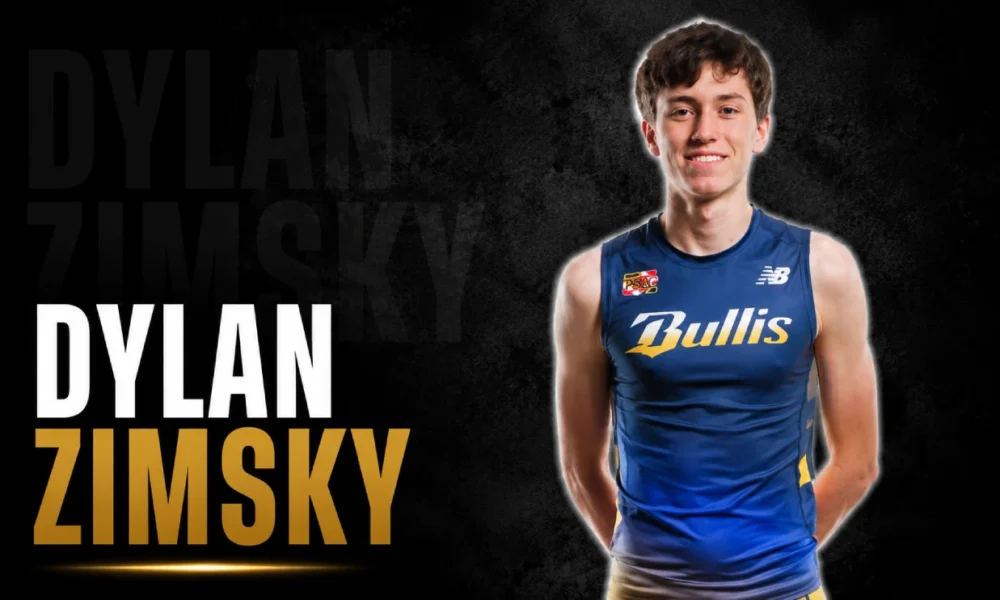
Dylan Zimsky is a competitive platform diver from Bethesda, Maryland. He trains with Montgomery Dive Club, attends Bullis School, and has verbally committed to Duke University as part of the high school graduating class of 2027. Ranked No. 10 nationally among boys’ diving recruits by SwimSwam, he competes across all three diving events: one-meter springboard, three-meter springboard, and platform.
Table Of Content
Who Is Dylan Zimsky?
Background
Zimsky is a junior-level athlete at Bullis School in Bethesda, Maryland. Despite his age, his name already appears alongside the most discussed prospects in the country. SwimSwam’s October 2025 recruit rankings placed him at No. 10 nationally in the boys’ class of 2027 — a list that functions as a recruiting signal for college programs across the NCAA.
Montgomery Dive Club: Where He Trains
Zimsky trains year-round with Montgomery Dive Club, one of the most established competitive dive programs in the mid-Atlantic region. The club operates as an invitation-only program designed to prepare athletes for USA Diving and collegiate competition.
The club’s training infrastructure includes:
- Two 1-meter springboards
- Two 3-meter springboards
- A 5, 7, and 10-meter tower
- A dedicated 1,600-square-foot dryland training facility with dry boards, trampolines, and harnesses, located next to the Kennedy Shriver Aquatic Center
This combination of water and dryland training is significant. Dryland work — trampolines, harnesses, and dry boards — lets divers drill approach mechanics and spatial awareness without the fatigue of repeated water entries. For a platform diver building an increasingly complex dive list, that training environment matters.
Note: The Kennedy Shriver Aquatic Center (KSAC), adjacent to the dryland facility, is currently closed for renovations. Final completion is expected in fall 2026. The Montgomery Dive Club continues to operate by utilizing alternative regional facilities during the renovation period.
Verbal Commitment to Duke
Zimsky has verbally committed to Duke University, which competes in the ACC — one of the most competitive conferences in NCAA swimming and diving. Duke pairs strong academic prestige with a program that has been investing in its diving roster.
A verbal commitment at this stage is non-binding. But it means Duke’s coaching staff has seen enough to commit attention to him more than two years before he would arrive on campus. That level of early interest from an ACC program indicates the coaching staff views his ceiling as high.
What Makes Zimsky Stand Out
Platform-First Diver
Zimsky is primarily a platform diver who also competes on one-meter and three-meter springboard. That combination matters more in college than it might seem from the outside.
Most college dual meets only include one-meter and three-meter springboard events. Platform diving enters the picture at invitationals and championship meets — the meets that decide conference titles and national qualifiers. A recruit who can compete on the platform as a freshman gives a coaching staff a third scoring event at the meets where points matter most. Recruits with that capability are uncommon at the high school level.
Clean Water Entries
In competitive diving, a “rip” entry refers to entering the water cleanly — hands first, with minimal surface splash. It is the last thing judges see before scoring a dive, and it carries significant weight in their overall impression.
A technically complex dive with a high difficulty rating can still produce a mediocre score if the entry is splashy. Zimsky’s ability to consistently produce clean entries, particularly off the platform, is a skill that many NCAA freshmen are still developing. It signals advanced body control and spatial awareness at a young age.
Technical Fundamentals
College diving coaches evaluate recruits differently than casual observers might expect. They are less focused on raw scores — which fluctuate based on judging panels and difficulty selection — and more focused on how the athlete moves: approach mechanics, takeoff quality, body position in the air, and entry technique.
Zimsky’s fundamentals are the kind coaches want to see already established. Basic form, body lines, and approach consistency are harder to coach once an athlete reaches the college level. Coaches prefer recruits who arrive with those elements already in place.
| Evaluation Factor | Why It Matters |
|---|---|
| Entry quality (splash control) | Last thing judges score; shapes the overall impression of each dive |
| Platform-specific experience | Rare in high school recruits; adds championship-meet scoring value |
| Springboard ability | Required for most regular-season dual meets |
| Dive list difficulty | Indicates training level and the athlete’s ceiling |
| Basic form and body lines | Difficult to correct later; coaches want this established early |
How NCAA Diving Recruitment Works
Diving recruitment operates differently from swimming recruitment. A swimmer’s personal best in the 100 butterfly is a clear, objective number. A diver’s score changes meet to meet depending on the judging panel and which dives they select.
Because of this, college diving coaches evaluate recruits primarily on technique and fundamentals rather than competition scores. They watch how the athlete takes off, how they control their body in the air, and how they enter the water. They assess whether the athlete has mastered the basics well enough to build upon at the college level.
Coaches also look for versatility across all three boards — one-meter springboard, three-meter springboard, and the 10-meter platform. An athlete who can contribute on all three events at a championship meet is significantly more valuable than one limited to springboard.
Zimsky checks both boxes — solid fundamentals and three-event capability. That combination is what put him in the top 10.
The Class of 2027: Key Competitors
Zimsky is one of several talented divers in his recruiting class. The No. 1 ranked diver in the class has already verbally committed to Tennessee. Mikolas Schwickert, who trains with Clavadistas del Sol in Arizona, holds the No. 3 ranking.
Programs like Tennessee, Notre Dame, and Duke are all working to secure top diving talent before athletes finish their junior year of high school. The recruiting window has narrowed over time, and early verbal commitments reflect that competitive pressure.
| Rank | Diver | Training Program | Commitment |
|---|---|---|---|
| 1 | — | — | Tennessee |
| 3 | Mikolas Schwickert | Clavadistas del Sol (Arizona) | TBD |
| 10 | Dylan Zimsky | Montgomery Dive Club (Maryland) | Duke (verbal) |
SwimSwam’s editors have noted that ranking divers is more complex and less black and white than ranking swimmers, since diving performance is inherently more subjective. These rankings reflect expert evaluation of technique, trajectory, and potential rather than a simple numerical sort.
Montgomery Dive Club: A Proven Pipeline
The Montgomery Dive Club has a track record of developing athletes who move on to compete at the college level. Zach Meisel, from nearby Chevy Chase, Maryland, trained with the same program and won at nationals in 2023. He now competes for Claremont McKenna (CMS) in the SCIAC, where he placed fifth on 3-meter at the SCIAC Championships and won the 3-meter event in a dual meet against Redlands during his freshman season.
Meisel’s path — from Montgomery Dive Club to competitive college diving — is a concrete example of the pipeline Zimsky is following. The club’s combination of year-round water training, tower access, and dedicated dryland infrastructure gives its athletes a development path that extends directly into the NCAA level.
The Montgomery County Dive League (MCDL), the broader community diving ecosystem in the area, has also produced athletes who have gone on to compete nationally, internationally, in the NCAA, and at Olympic Trials.
What Championship-Level NCAA Diving Looks Like
To understand what Zimsky is working toward, consider the 2026 NCAA DI Swimming & Diving Championships in Atlanta. Luke Sitz of SMU won the 1-meter national championship and placed second on 3-meter. That is the competitive benchmark — a college diver who can perform at the highest level across multiple events at the national championship meet.
The path to that stage runs through the NCAA Zone Championships, where divers from across the country compete for limited spots at the national meet. Platform diving is contested at these Zone events, which is precisely why platform experience at the high school level matters for recruits targeting top programs.
Zimsky is not at that level yet. But he is building the technical foundation and the multi-event dive list that could eventually put him in that conversation. The gap between a top-10 high school recruit and an NCAA championship contender is closed through years of incremental development — expanding dive difficulty, refining approach mechanics, and gaining competitive experience at progressively higher-pressure meets.
What Comes Next
Zimsky still has time before signing a National Letter of Intent. Between now and his freshman year at Duke, his development will focus on three areas:
- Expanding his platform dive list. Adding higher-difficulty dives to increase his scoring ceiling at championship meets.
- Continuing springboard development. One-meter and three-meter will be his bread-and-butter events in college dual meets.
- Gaining competitive experience. Competing on the national club circuit against other top recruits builds the composure needed for ACC and NCAA championship pressure.
His training at Montgomery Dive Club — including tower sessions on the 5, 7, and 10-meter platforms and dryland work focused on approach mechanics and spatial awareness — will continue to be the primary vehicle for that development.
Duke’s ACC schedule will test him immediately. The conference includes programs with deep diving traditions and strong rosters. Arriving with genuine platform credentials and three-event capability means he will not start from zero.
Frequently Asked Questions
Who is Dylan Zimsky?
Dylan Zimsky is a competitive platform diver from Bethesda, Maryland. He trains with Montgomery Dive Club, attends Bullis School, and has verbally committed to Duke University as part of the high school class of 2027. He is ranked No. 10 nationally among boys’ diving recruits by SwimSwam.
What college is Dylan Zimsky committed to?
He has verbally committed to Duke University, which competes in the ACC. The commitment was noted by SwimSwam in October 2025.
What type of diver is Dylan Zimsky?
He is primarily a platform diver who also competes on one-meter and three-meter springboard. That three-event capability is uncommon among high school divers and adds significant value at the college championship level.
What is Montgomery Dive Club?
Montgomery Dive Club is an invitation-only competitive diving program in Montgomery County, Maryland, designed for athletes ages 6–19. The program pairs water training with dryland sessions and prepares athletes for USA Diving and collegiate competition. Its facilities include two 1-meter springboards, two 3-meter springboards, a 5/7/10-meter tower, and a 1,600-square-foot dryland training center.
What is a “rip” entry in diving?
A rip entry is a clean water entry — hands first, with minimal surface splash. It is the last element judges evaluate before scoring a dive and carries significant weight in their impression. A technically difficult dive can still score poorly if the entry is splashy.
Why is platform diving ability valuable in NCAA recruiting?
Most college dual meets only include springboard events. Platform comes into play at invitationals and championship meets, where team scores decide titles. Recruits who can compete on the platform as freshmen are uncommon and give programs an additional scoring event at the meets that matter most.
What is the Montgomery County Dive League?
The Montgomery County Dive League (MCDL) is a recreational community league consisting of dive teams from neighborhood pools across the county. It serves as a developmental pathway, introducing young athletes to competitive diving. Many MCDL athletes have gone on to compete at the national, collegiate, and international levels.
A Career Worth Tracking
Dylan Zimsky combines technical precision, multi-event versatility, and a training environment with a proven track record of producing college-level divers. His verbal commitment to Duke confirms that elite programs are already paying attention.
Platform diving takes years to build — expanding dive difficulty, refining approach mechanics, and trusting your body from 10 meters up. Zimsky is operating at a level that most divers his age have not reached. His club has already sent athletes down the path he is on. The class of 2027 is taking shape, and he is one of its clearest standouts.




No Comment! Be the first one.