







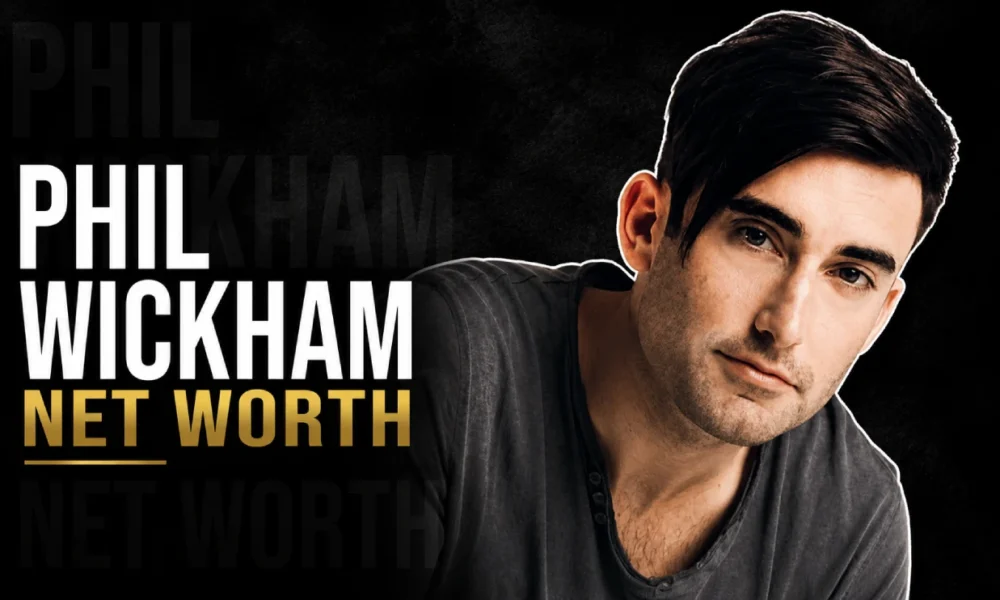
Phil Wickham’s estimated net worth in 2026 is between $3 million and $6 million, built across two decades of Christian music, a catalog of globally licensed worship songs, consistent touring, and compounding royalty income. While no official figure has been publicly disclosed, this range reflects his recording history, CCLI chart dominance, RIAA Platinum-certified singles, and the long-term value of his publishing rights.
Table Of Content
- Who Is Phil Wickham? Career Milestones That Built His Wealth
- Phil Wickham’s Net Worth in 2026 — The Estimate Explained
- How Phil Wickham Makes Money: 5 Income Streams Explained
- How CCLI Royalties Actually Work: The Economics Behind Worship Music
- The Hidden Asset: Why Music Catalogs Are Million-Dollar Investments
- Phil Wickham vs. Other Worship Music Leaders
- How Music Professionals Should Think About Net Worth
- Common Financial Mistakes That Limit Wealth — Even for High-Earning Musicians
- Conclusion
But the number alone misses the story.
What makes Phil Wickham’s financial trajectory instructive — whether you’re a musician, a creative professional, or simply someone curious about how faith-based music generates real wealth — is the mechanism behind it. Church licensing systems, copyright law exemptions, and the economics of songs sung by millions of people every Sunday create a wealth-building engine that looks nothing like a traditional career.
Who Is Phil Wickham? Career Milestones That Built His Wealth
Phil Wickham — full name Philip David Wickham — was born on April 5, 1984, in San Diego, California, and grew up in a family deeply rooted in Christian ministry. His father, John Wickham, played in early bands for the Maranatha! Music label, and both parents served as worship leaders in their congregation. Phil began leading worship for his youth group at Maranatha Chapel at just 13 years old, encouraged by his parents to learn popular praise songs and write his own.
He released his first album, Give You My World, in 2003, launching a full-time music career. He has since produced fourteen worship albums, including a self-titled album (2006), Cannons (2007), Heaven & Earth (2009), The Ascension (2013), Living Hope (2018), Hymn of Heaven (2021), I Believe (2023), and his most recent release, Song of the Saints (2025).
Key career milestones that directly shaped his financial trajectory:
- 2008 — Released his first live worship album, Singalong, as a free download. It received over 8,000 downloads within a week, and his self-titled album re-entered the iTunes Top 25 Christian Albums two years after its initial release — demonstrating the long tail of worship music
- 2013 — This Is Amazing Grace reached #1 on multiple Christian music charts and topped the year-end Christian Airplay chart. The song has since been certified Platinum by the RIAA
- 2013 — The Ascension peaked at No. 39 on the Billboard 200, his highest-charting album on that chart at the time
- 2018 — Living Hope (co-written with Brian Johnson) debuted at No. 1 on the Billboard Christian Albums chart and became a multi-year CCLI Top 25 staple, generating sustained royalty income
- 2021 — Hymn of Heaven debuted at No. 1 on Billboard’s Top Christian Albums chart. Battle Belongs reached No. 2 on the Hot Christian Songs chart, House of the Lord hit No. 1, and the title track reached No. 2
- 2025 — Song of the Saints continued his run of consistent releases, maintaining his presence in the contemporary worship space
Each chart-topping song isn’t just a cultural moment — it’s a long-term financial asset generating royalty income every time it’s streamed, broadcast, or performed in a licensed church setting.
Phil Wickham’s Net Worth in 2026 — The Estimate Explained
| Estimate Category | Range |
|---|---|
| Conservative Estimate | $3 million |
| Mid-Range Estimate | $4–5 million |
| Upper Estimate | $6 million+ |
Note: These figures are industry-informed estimates based on publicly available career data, not verified financial disclosures. Treat them as directional, not definitive.
The range reflects:
- Publishing rights value tied to his catalog — potentially the largest single asset
- Accumulated touring revenue across 20+ years of live performance
- Streaming and licensing income from a catalog with hundreds of millions of streams
- Merchandise and media partnerships with Christian publishers and labels
- Social media earnings across YouTube, Instagram, and TikTok — with a combined audience exceeding 5.5 million followers
His long-term relationship with Fair Trade Services (his record label) and his status as a co-writer on globally licensed songs means income isn’t dependent on any single album cycle — it compounds quietly in the background.
Phil Wickham’s Social Media Earnings
Beyond traditional music revenue, Phil Wickham’s digital presence across YouTube, Instagram, and TikTok generates substantial income:
| Platform | Estimated Monthly Earnings |
|---|---|
| YouTube | $385,000 – $472,000 |
| $28,000 – $38,000 | |
| TikTok | $5,400 – $8,500 |
| Total Monthly (All Platforms) | $418,000 – $519,000 |
| Estimated Annual (All Platforms) | $5,005,000 – $6,213,000 |
These figures are algorithm-based estimates from social media analytics platforms and represent potential earnings — not confirmed income. They reflect platform partner earnings and sponsorship pricing based on audience size, engagement rate, and viewership metrics.
His total audience across platforms exceeds 5.5 million followers and has grown steadily — adding over 200,000 new followers in the second half of 2025 alone, with particularly strong growth on YouTube.
How Phil Wickham Makes Money: 5 Income Streams Explained
Understanding a musician’s income is key to understanding how wealth is built — and why it looks different from a traditional salary.
1. CCLI Royalties and Church Music Licensing
This is the financial engine of his career — and the one most people don’t fully understand.
Every time a church sings This Is Amazing Grace or Living Hope during a service, the church is operating under a CCLI (Christian Copyright Licensing International) license. A portion of that license fee flows back to the songwriter as a royalty.
Here’s how the system actually works:
CCLI charges each church an annual license fee based on congregation size — ranging from as low as $49 to over $4,260 per year. That license grants permission to reproduce song lyrics, project them on screens, distribute chord sheets, and make limited copies for worship teams. In exchange, churches report which songs they’ve used, and CCLI distributes royalties to the songwriters and publishers proportionally.
CCLI partners with more than 3,500 publishers worldwide, connecting catalogs representing over 600,000 songs with churches across the globe. The organization has been administering fair and accurate royalty payments for more than 35 years.
With over 300,000 churches holding CCLI licenses in the U.S. alone, and Phil Wickham’s songs consistently ranking in the CCLI Top 25, this creates a reliable, recurring income stream. A single song in the CCLI Top 25 can generate an estimated $50,000–$200,000+ annually in licensing royalties — and Phil Wickham has multiple songs in that tier.
- Important legal context: Under U.S. copyright law (17 USC §110), churches are actually exempt from copyright infringement when performing or displaying songs during religious services. Singing a song in church — whether live worship or played over speakers — is explicitly legal regardless of CCLI status. CCLI’s primary value isn’t legal protection — it’s administrative convenience: standardized lyrics, sheet music access, transposition tools, and a royalty distribution system. This distinction matters because it means CCLI’s revenue model depends on providing genuine value to churches, not on fear of litigation.
- Contribution to annual income: While CCLI doesn’t disclose individual royalty amounts, songs of Phil Wickham’s stature in the worship space likely generate $100,000–$300,000+ annually from licensing alone — a figure that compounds as new songs enter rotation while older hits maintain usage.
2. Streaming and Digital Royalties
Platforms like Spotify, Apple Music, and YouTube pay per-stream royalties — typically $0.003–$0.005 per stream on Spotify. With songs like Battle Belongs crossing 50+ million streams and This Is Amazing Grace achieving RIAA Platinum status, digital royalties add up meaningfully across a 14-album catalog.
| Platform | Approximate Rate per Stream |
|---|---|
| Spotify | $0.003–$0.005 |
| Apple Music | $0.007–$0.010 |
| YouTube | $0.001–$0.003 |
These rates are low on a per-stream basis, but across a deep catalog with hundreds of millions of cumulative streams, they generate substantial annual revenue — especially when combined with YouTube partner earnings from his music videos and worship content.
3. Touring and Live Events
Live performance remains the highest single-event revenue generator for most artists. Phil Wickham regularly headlines worship nights, church conferences, and concert tours across North America. He has also led worship at events like Soul Survivor and collaborated on tours with artists like Shane & Shane.
After deducting touring expenses (production, crew, travel, venue costs), net touring income varies widely — but consistent touring over 20+ years contributes substantially to cumulative wealth.
4. Merchandise, Books, and Media
Album sales (physical and digital), branded merchandise, and devotional content sold through ministry and retail channels add additional layers of income — particularly valuable during active album release cycles. His Christmas albums — Songs for Christmas (2010) and Christmas (2019) — also generate recurring seasonal revenue, with the latter spending 12 weeks on the Billboard Christian Albums chart.
5. Sync Licensing and Media Placements
Songs placed in films, TV, YouTube channels, and online ministry content generate sync licensing fees — one-time payments that can range from hundreds to tens of thousands of dollars depending on placement.
How CCLI Royalties Actually Work: The Economics Behind Worship Music
Understanding Phil Wickham’s wealth requires understanding the infrastructure that generates it — and CCLI is that infrastructure.
The CCLI Business Model
CCLI operates as a royalty collection agency specific to Christian music, filling a niche role that recognizes faith communities use music in contexts not easily served by traditional commercial licensing. Its model works in three steps:
- Churches pay an annual license fee ($49–$4,260, based on congregation size)
- Churches report song usage — which songs they’ve projected on screens, photocopied for choirs, or distributed as chord sheets
- CCLI distributes royalties to songwriters and publishers based on reported usage data
The system gives churches access to legally vetted lyrics, chord charts, and lead sheets through CCLI’s database — including a transposition feature that lets worship teams change song keys instantly.
What CCLI Covers — And What It Doesn’t
A common misconception — even among church leaders — is that CCLI provides blanket copyright protection. The reality is more nuanced.
Under 17 USC §110 of U.S. copyright law, performing a nondramatic musical work during a religious service is explicitly not an infringement of copyright. This means singing worship songs in church — whether live or over speakers — is legal regardless of CCLI status.
Where CCLI becomes relevant is in reproduction rights: projecting lyrics on screens, printing song sheets for worship teams, creating children’s church songbooks, or making recordings of services that include copyrighted music. These activities technically require permission from copyright holders, and CCLI provides a blanket license that covers them.
In the UK, CCLI operates alongside other Collective Management Organizations (CMOs) like PRS for Music and PPL, each with a defined mandate under both contract law and statutory frameworks. CCLI’s role is specialized: providing licensing solutions within faith-based contexts that traditional commercial licensing bodies don’t easily serve.
CCLI’s value proposition isn’t legal fear — it’s convenience and standardization. The fact that hundreds of thousands of churches voluntarily pay for this service means the royalty pool for top songwriters is substantial and predictable.
How Royalties Flow to Songwriters
| Step | What Happens | Direction |
|---|---|---|
| 1 | Church pays annual CCLI license | Church → CCLI |
| 2 | Church reports song usage to CCLI | Church → CCLI |
| 3 | CCLI calculates per-song royalty share | CCLI internal |
| 4 | Royalties distributed to publishers and songwriters | CCLI → Publisher → Songwriter |
| 5 | Songwriter receives royalty payment | Publisher → Phil Wickham |
The exact percentage a songwriter receives depends on their publishing deal. Co-writers — like Phil Wickham and Brian Johnson on Living Hope — typically split royalties according to their co-writing agreement. Songwriters who also hold publishing rights retain a larger share of each royalty payment.
The Hidden Asset: Why Music Catalogs Are Million-Dollar Investments
In recent years, a wave of major artists — from Bob Dylan to Justin Timberlake to Sting — have sold their music catalogs for eight- and nine-figure sums. This trend has reshaped how the industry thinks about songwriting as a wealth-building asset.
For worship musicians like Phil Wickham, the conversation is different but equally relevant. His catalog — spanning fourteen albums and multiple CCLI Top 25 songs — represents a stream of royalty income that could last decades. Even without a blockbuster catalog sale, the present value of that income stream is substantial.
Why worship music catalogs are uniquely valuable:
- Predictable demand: Churches sing the same songs repeatedly, often for years. Unlike pop hits that fade, worship songs like This Is Amazing Grace (2013) remain in heavy rotation over a decade later
- Recession-resistant revenue: Church attendance and licensing fees are relatively stable regardless of economic conditions
- Global reach: CCLI operates internationally, meaning Phil Wickham’s songs generate royalties from churches worldwide
- No trend decay: Worship music doesn’t follow the same viral lifecycle as pop or hip-hop. A good worship song accumulates value over time rather than spiking and crashing
- Emotional permanence: As Phil Wickham himself has reflected, the ultimate goal for a worship song is for it to transcend the songwriter and belong to the church — much like It Is Well With My Soul transcended Horatio Spafford. When that happens, the song’s earning potential becomes essentially permanent
Whether Phil Wickham has sold, retained, or partially licensed his publishing rights is not publicly known. But the asset class itself — a catalog of CCLI-licensed worship songs — is one of the most durable wealth vehicles in the music industry.
Phil Wickham vs. Other Worship Music Leaders
How does Phil Wickham’s estimated $3–6 million stack up against other prominent worship leaders? While verified figures are rare, industry-informed estimates provide useful context:
| Worship Leader | Estimated Net Worth | Notable Songs |
|---|---|---|
| Chris Tomlin | $3–5 million | How Great Is Our God, Good Good Father |
| Matt Redman | $4–6 million | 10,000 Reasons, Bless the Lord |
| Phil Wickham | $3–6 million | This Is Amazing Grace, Living Hope, Battle Belongs |
| Kari Jobe | $2–4 million | Revelation Song, The Blessing |
| Brooke Ligertwood | $2–5 million | What a Beautiful Name, King of Kings |
Note: These figures are industry estimates, not verified financial disclosures.
The key differentiator isn’t the raw number — it’s the income structure. Worship leaders whose songs rank in the CCLI Top 25 have a built-in recurring revenue advantage over artists who depend primarily on album sales and touring. Phil Wickham’s multiple CCLI chart entries — combined with his RIAA Platinum certification and 5.5-million-strong social media following — give him one of the most diversified income profiles in the worship space.
How Music Professionals Should Think About Net Worth
For creative professionals — and musicians in particular — net worth works differently than for salaried employees. Understanding the distinction is critical.
The Net Worth Formula:
Net Worth = Total Assets − Total Liabilities
For music professionals, assets fall into three categories:
| Asset Category | Examples | Liquidity |
|---|---|---|
| Current assets | Cash, savings, checking accounts | High (convertible within 12 months) |
| Investment assets | Retirement accounts (SEP-IRA, Roth IRA), brokerage accounts, publishing rights | Medium to low |
| Personal use assets | Home, car, instruments, recording equipment | Low (not intended for sale) |
For a musician like Phil Wickham, the publishing rights in the “investment assets” category are likely worth more than everything else combined — but they’re also the hardest to value and the least liquid.
Key liabilities for self-employed musicians:
- Mortgage or rent on property, studio, or rehearsal space
- Business operating costs (touring, equipment, production)
- Self-employment tax obligations (which add approximately 15.3% on top of income tax)
- Any outstanding loans or business debts
The critical insight: For most salaried professionals, net worth grows primarily through savings and home equity. For musicians like Phil Wickham, net worth grows through asset accumulation — particularly the compounding value of a song catalog that generates income 24/7, across thousands of churches, year after year.
Common Financial Mistakes That Limit Wealth — Even for High-Earning Musicians
These aren’t just musician problems, but they hit creative professionals disproportionately hard:
- No tax strategy: Self-employed musicians face combined federal and self-employment tax rates that can exceed 40% without proper planning. Quarterly estimated payments, business deductions, and retirement account contributions are not optional — they’re essential.
- Ignoring SEP-IRA contributions: The 2025 SEP-IRA contribution limit is $70,000 (or 25% of net self-employment earnings). This is one of the most powerful tax-advantaged savings vehicles available to independent earners. Skipping it leaves significant money on the table.
- Undervaluing intellectual property: Many songwriters don’t know what their catalog is worth — or don’t hire someone who does. As catalog sales in the music industry reach record valuations, understanding your IP’s worth is a financial necessity, not a luxury.
- Lifestyle inflation: Touring income can spike dramatically after a hit song. If spending rises proportionally, net worth stays flat despite higher earnings.
- High-interest debt: Credit card balances at 20–28% APR destroy wealth faster than almost any investment can build it.
As the Christian music industry matures and the business behind worship songs becomes increasingly complex, having professional financial and legal guidance isn’t a luxury — it’s a career necessity.
Conclusion
Phil Wickham’s estimated $3–6 million net worth wasn’t built through a single hit or a viral moment. It was built song by song, tour by tour, and royalty payment by royalty payment — through a catalog of worship music that churches sing week after week, generating passive income through CCLI licensing, streaming royalties, and publishing rights that compound quietly over time.
The lesson isn’t just about music. It’s about building durable, recurring revenue assets — whether that’s a song catalog, a software product, a rental property, or a body of work that keeps earning after the initial effort is done. For Phil Wickham, the intersection of faith-based music, institutional licensing infrastructure, and consistent creative output created a wealth-building engine that most financial advisors would envy.


No Comment! Be the first one.